
Direct Vent vs. Ventless vs. Electric Fireplaces
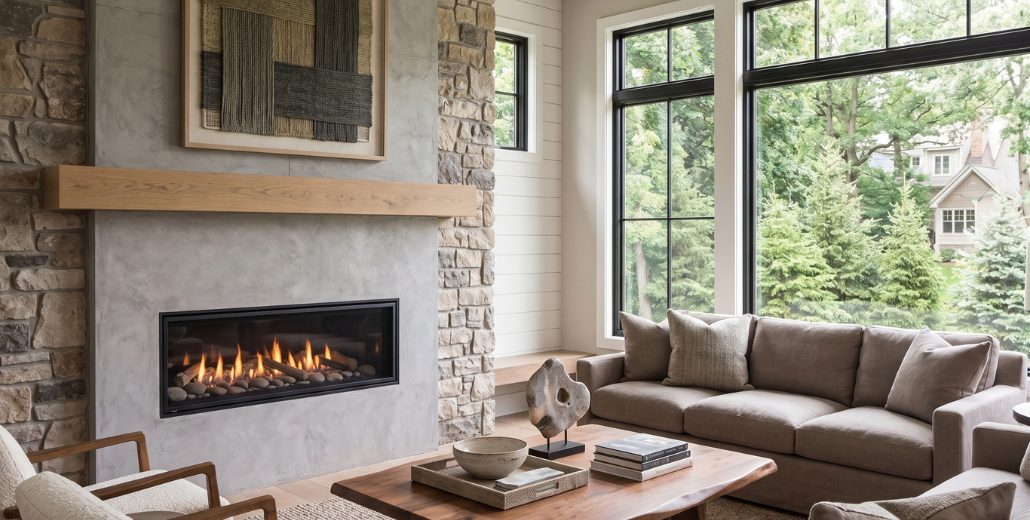
If your home does not already have the fireplace you want, venting can become one of the most important decisions in the project.
A direct-vent gas fireplace, vent-free gas fireplace or log set, and electric fireplace can all create a focal point and provide some level of warmth, but they work in fundamentally different ways.
The main difference is not simply gas versus electric.
It is how the fireplace gets its energy, whether combustion takes place, where combustion air comes from, where exhaust goes, how much installation infrastructure is required, and what role the fireplace is expected to play in the room.
For homeowners comparing fireplace options for West Michigan homes, understanding those differences before choosing a model can prevent the project from being designed around a fireplace that does not fit the home's construction or the homeowner's expectations.
Key Takeaways / Summary
- Direct-vent gas fireplaces use real combustion but keep the combustion system separated from the room. They draw combustion air from outdoors and vent combustion products outdoors through an approved vent system.
- Vent-free gas systems do not use an outdoor vent. Because combustion occurs inside the room, product requirements, room conditions, indoor-air considerations, manufacturer instructions, and applicable codes need careful review.
- Electric fireplaces do not burn fuel. They need no combustion vent, but their electrical requirements vary by model.
- No chimney does not mean no planning. Direct vent may use a wall or roof termination, vent-free systems still have gas and room requirements, and electric models still require appropriate electrical service and installation conditions.
- The best option depends on the room and the goal. Real flame, heat output, placement flexibility, remodeling conditions, wall design, and everyday use should all be considered together.
The main decision is not which category is universally best. It is which fireplace system works best with the home, the room, and the way the homeowner expects to use it.
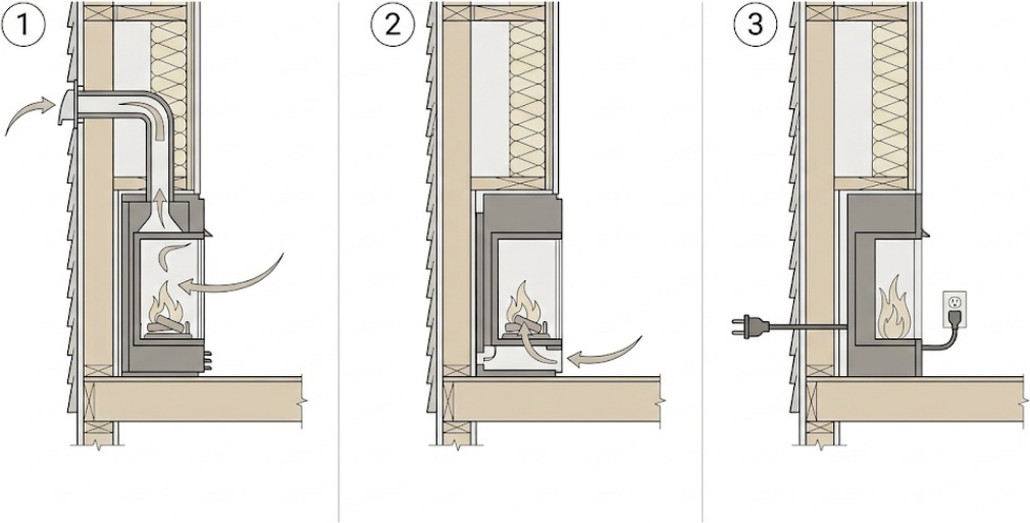
- Direct vent gas
- Vent-free gas
- Electric
What Is a Direct-Vent Gas Fireplace?
A direct-vent fireplace burns natural gas or propane inside a sealed combustion system.
It takes combustion air from outdoors and sends combustion products back outdoors through a manufacturer-approved venting system.
The U.S. Department of Energy's fireplace combustion and ventilation guidance describes direct-vent sealed-combustion equipment as obtaining its combustion air directly from outside.
For homeowners, the practical advantages often include:
- A real gas flame
- Combustion separated from the indoor room
- No traditional masonry chimney required for many installations
- Horizontal or vertical venting possibilities depending on the exact model
- A wide range of traditional and contemporary fireplace styles
- Heat output suitable for many supplemental-heating applications
Direct vent still requires planning. Vent diameter, route, termination position, clearances, framing, gas supply, electrical requirements, and surrounding materials vary by fireplace model and manufacturer instructions.
Practical tip: Do not decide on fireplace placement before confirming where an approved vent can actually terminate outside the home.
Does a Direct-Vent Fireplace Need a Chimney?
Not necessarily.
Many direct-vent gas fireplaces can exhaust through an exterior wall or through the roof using a listed vent system instead of a traditional masonry chimney.
This is one reason direct vent can work well when homeowners want to add a fireplace to a house that does not already have one.
However, the exact vent route is product-specific.
A fireplace should not be selected on the assumption that the vent can simply go wherever there is an outside wall. Windows, doors, rooflines, decks, grade, other building openings, and the fireplace manufacturer's requirements can all influence the final termination location.
What Is a Vent-Free or Ventless Gas Fireplace?
A vent-free system, sometimes called ventless or unvented, burns gas without connecting the appliance to an exterior combustion vent.
VanderWall's current gas log selection includes vented and vent-free log sets, so homeowners may encounter this terminology while comparing ways to use an existing fireplace.
The critical difference is that a vent-free combustion appliance does not send its combustion products through an exterior vent.
That makes the indoor environment part of the product-selection decision.
The EPA advises avoiding unvented stoves, fireplaces, and space heaters indoors when possible and recommends venting combustion sources outdoors to reduce exposure to indoor pollutants.
Homeowners can review EPA guidance on unvented indoor combustion appliances for additional context.
Are Vent-Free Fireplaces Allowed in Michigan?
This should not be answered with one universal yes or no for every project.
The correct answer depends on the appliance, installation location, current Michigan residential requirements, the authority having jurisdiction, manufacturer instructions, and other project conditions.
Michigan's Department of Licensing and Regulatory Affairs provides access to the current Michigan construction codes.
Requirements can also change over time.
Practical tip: If a vent-free product is being considered, confirm the exact model and installation location first. Then verify current manufacturer requirements and applicable local regulations before treating the product as approved for the room.
What Is an Electric Fireplace?
An electric fireplace creates a flame effect without burning gas or wood.
Because there is no combustion, it does not require a combustion-air intake or exhaust vent.
Electric fireplaces can be especially useful when the homeowner wants:
- Flexible fireplace placement
- No gas line
- No combustion vent through the wall or roof
- Flame appearance without combustion
- Lower routine maintenance
- Flame-only operation on models that support it
- A feature-wall fireplace where major vent routing would be difficult
The electrical requirement should still be verified for the exact model.
Some products use common household circuits, while others may require dedicated circuits, hardwiring, or different voltage depending on size and heating capability.
Practical tip: Select the electric fireplace before finishing the feature wall so the electrician can work from the actual product requirements instead of a generic outlet assumption.
Direct Vent vs. Ventless Fireplace: The Core Difference
Both systems can use natural gas or propane, but they manage combustion differently.
A direct-vent fireplace isolates the combustion process behind a sealed system and exchanges combustion air with the outdoors.
A vent-free product uses room air and does not exhaust through an exterior vent.
That difference affects:
- Indoor-air considerations
- Exterior venting
- Installation location
- Wall construction
- Gas planning
- Clearances
- Heat behavior
- Applicable installation requirements
For many homeowners, this difference matters more than the visual style of the fireplace.
Direct Vent vs. Electric Fireplace: What Changes?
The biggest difference is combustion.
A direct-vent fireplace burns gas and creates a real flame. An electric fireplace uses electrical energy and a simulated flame presentation.
That changes the project in several ways.
Direct Vent May Require
- Natural gas or propane
- An approved vent route
- Exterior termination
- Fireplace-specific framing
- Electrical service where required
- Professional installation and commissioning
Electric May Require
- Correct electrical service
- Wall framing or recess dimensions for built-in models
- Manufacturer-required clearances
- Coordination with cabinetry, televisions, and finish materials
Electric eliminates combustion venting, but it does not eliminate the need to coordinate the product with the wall.
Which Option Provides More Heat?
Heat performance varies significantly by model, so a fireplace category should not be assigned one universal BTU rating.
Gas fireplaces are available across a broad range of heat-output levels. Electric models are commonly used for supplemental room comfort, though electrical configuration and model design affect their heating capability.
Rather than comparing category averages, review the specifications for the exact products under consideration.
VanderWall's gas fireplace BTU guide explains why room size, ceiling height, layout, efficiency, and heating goals matter in addition to the advertised BTU number.
Practical tip: Decide whether the fireplace is primarily for ambiance, supplemental comfort, or stronger room heating before comparing heat-output specifications.
Which Option Gives You the Most Placement Flexibility?
Electric fireplaces usually have the fewest combustion-related placement constraints because they do not burn fuel or require an exhaust vent.
Direct-vent fireplaces offer considerable flexibility compared with traditional chimney-dependent systems, but the approved vent path and exterior termination still influence placement.
Vent-free systems remove the exterior vent requirement but introduce a different set of room, air, product, and code considerations.
The best location also depends on the way the room functions.
Before deciding, consider:
- Furniture arrangement
- Television location
- Windows
- Exterior walls
- Gas access
- Electrical access
- Traffic flow
- Surrounding masonry
VanderWall's guide to fireplace placement and room function provides additional planning guidance.
What About Indoor Air Quality?
This is one of the most important distinctions between a direct-vent and vent-free gas appliance.
Direct vent separates combustion from the indoor room and sends combustion products outdoors.
Vent-free combustion happens within the occupied space without an exterior exhaust vent.
The EPA notes that indoor nitrogen dioxide concentrations can be higher in homes with unvented gas heaters and recommends vented appliances when replacing unvented ones.
For homeowners who want no combustion in the room at all, electric eliminates fuel combustion entirely at the fireplace.
This is one reason indoor-air priorities should be part of the product conversation rather than comparing fireplaces only by appearance and heat.
Which Fireplace Is Easier to Add to an Existing Home?
There is no single answer because existing homes create different limitations.
Electric May Be Practical When:
- Running a combustion vent would be difficult
- No gas line is available
- The fireplace is primarily a visual feature
- The room is being remodeled around a media or feature wall
Direct Vent May Be Practical When:
- The homeowner wants a real gas flame
- A suitable exterior vent route can be created
- Gas or propane can reach the location
- Supplemental heat is an important goal
Vent-Free May Enter the Discussion When:
- An exterior vent route is impractical
- A suitable gas application is being considered
- The exact product is permitted and appropriate for the room
- The homeowner understands the indoor-air and operating considerations
The existing conditions should be evaluated before assuming any category will automatically be the easiest.
Do Not Confuse a Gas Log Set With a Direct-Vent Fireplace
These terms are sometimes used interchangeably even though they describe different products.
A gas log set is installed within an appropriate fireplace or firebox.
A direct-vent fireplace is its own manufactured fireplace system with a sealed combustion chamber and specific venting requirements.
VanderWall's fireplace terminology guide explains the distinction between gas inserts, gas logs, and gas direct-vent fireplaces in more detail.
Knowing which product category you are discussing is important because installation, heating performance, venting, and the surrounding construction can be very different.
Consider the Finished Wall, Not Just the Fireplace
Each fireplace type affects the surrounding wall differently.
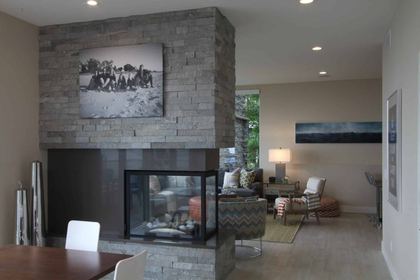
A built-in direct-vent fireplace may influence framing depth, vent pathways, stone, mantel clearances, and television placement.
An electric fireplace may allow a shallower or differently constructed feature wall depending on the product.
A vent-free installation may avoid an exterior vent but still needs product-specific clearances and appropriate surrounding materials.
Homeowners should decide whether the final wall will include:
- Stone or brick
- A mantel
- A television
- Cabinetry
- Built-in shelving
- Full-height finish materials
Selecting the fireplace early allows those pieces to be designed around confirmed dimensions.
Think About Everyday Operation
The right fireplace should fit how often the homeowner expects to use it.
Ask:
- Will the fireplace run for several hours on cold evenings?
- Is it mainly for occasional ambiance?
- Do you want a real flame?
- Do you want to operate the visual effect without heat?
- How important is supplemental heating?
- How much routine service or maintenance do you want?
An electric fireplace may fit a homeowner who values visual flexibility and simple operation.
Direct vent may fit someone who wants real flame and stronger gas-heating capability while keeping the combustion system separated from the room.
Vent-free products require a more specific conversation about the application and room conditions.
Fireplace Type Selection Guide
Choose Direct Vent as a Starting Point When:
- You want a real gas flame.
- Heat output matters.
- You prefer combustion air and exhaust to be separated from the room.
- The home can accommodate an approved vent route.
Explore Electric When:
- Installation flexibility is a major priority.
- You do not want gas combustion.
- You want flame appearance with or without heat where the model supports it.
- An exterior vent route would complicate the project.
Evaluate Vent-Free Carefully When:
- No exterior vent route is available.
- A vent-free gas application is being considered.
- The exact room and product meet all manufacturer and applicable code requirements.
- Indoor-air and moisture considerations have been discussed.
These are planning directions, not universal installation approvals.
Requirements vary by fireplace model, manufacturer instructions, installation conditions, fuel type, and applicable codes.
Questions to Ask Before Choosing a Fireplace Type
- Do I want a real flame or is a simulated flame acceptable?
- Is the fireplace primarily for ambiance or supplemental heat?
- Can gas or propane reach the location?
- What electrical service does the exact product require?
- Can a direct-vent termination be installed in an approved location?
- Does the room have an exterior wall?
- Will the fireplace be part of a television or feature wall?
- Does the product affect mantel or finish-material clearances?
- If vent-free gas is being considered, is it appropriate and permitted for this specific application?
- What routine service or maintenance does the product require?
- Can I see the fireplace operating before choosing?
Compare Operating Fireplaces in Person
Specifications help narrow the options, but fireplace categories can feel very different when viewed in person.
Seeing operating models can help homeowners compare:
- Real versus simulated flame
- Viewing area
- Heat level
- Firebox depth
- Log and media options
- Controls
- Overall scale
Homeowners can compare fireplace options in person at VanderWall's Spring Lake and Grand Rapids showrooms.
Bring photos of the room, approximate wall dimensions, and any plans showing windows, doors, televisions, or cabinetry. Those details can help move the conversation from "Which fireplace looks best?" to "Which fireplace actually works here?"
How VanderWall Helps Homeowners Compare Fireplace Systems
VanderWall Brothers has served West Michigan since 1922 and works across fireplace product selection, installation, service, gas logs, inserts, stone, brick, and surrounding fireplace materials.
The team can help homeowners compare fireplace systems while considering the room, installation requirements, heating goals, fireplace dimensions, venting, and the finished feature wall.
That support is especially useful because venting and installation requirements are tied to the exact product rather than the general fireplace category.
The Best Fireplace Type Depends on the Home
Direct vent, vent-free gas, and electric fireplaces solve different project problems.
Direct vent provides real gas combustion within a sealed system that exchanges combustion air with the outdoors.
Vent-free gas eliminates the exterior combustion vent but requires careful attention to the product, room, indoor-air considerations, manufacturer requirements, and applicable codes.
Electric eliminates combustion and provides the greatest flexibility in many wall-placement situations, but electrical requirements and heating capability still vary by model.
The best decision begins with the room rather than the product catalog.
Identify where the fireplace needs to go, how much heat you expect, whether real flame matters, what infrastructure the home can support, and how the finished wall should look.
Then compare products that fit those conditions.
If you are deciding between a direct-vent gas fireplace, gas logs, or an electric fireplace, talk with the VanderWall team. Bring a photo or plan of the room and the team can help you understand which fireplace options make sense for the space. Call (616) 842-4500 or visit www.vanderwallbros.com.
What we do
This is work we take on
Reading up is the first step. When you want it built, priced or supplied, these are the pages that cover it.
Keep reading
How Sun and Wind Shape Outdoor Living Spaces
An outdoor living layout can look good on a plan and still feel uncomfortable once people begin using it.
What Changes When You Replace an Existing Fireplace
Replacing a fireplace is different from choosing one for new construction.
Phased Home Improvement Planning in West Michigan
Not every home improvement project needs to happen at once.
Thinking about a project like this?
Reading about it only gets you so far. Tell us the room and we will tell you what is possible in it.
Rather just ask someone?
Call the showroom. If it takes two minutes on the phone we would rather tell you than have you read around it.