
What Changes When You Replace an Existing Fireplace
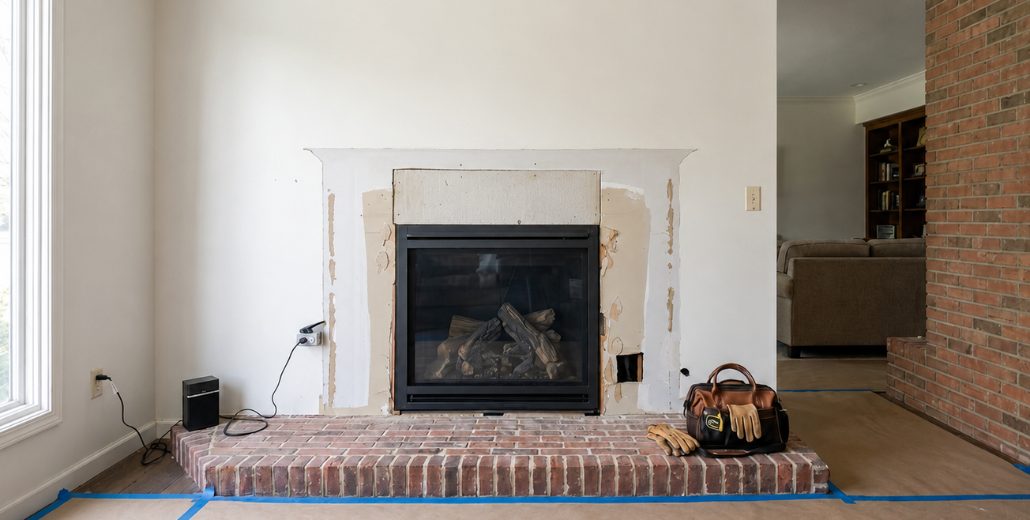
Replacing a fireplace is different from choosing one for new construction.
In a new home, framing, venting, utilities, and surrounding finishes can often be planned around the selected fireplace. During a replacement, those conditions already exist.
That means a fireplace replacement in West Michigan usually starts with evaluating the existing opening, venting, framing, utilities, masonry, hearth, and mantel before choosing the final product.
Homeowners comparing fireplace options for West Michigan homes should consider not only which model they prefer, but also how well it works with the home that is already there.
Replacement Starts With the Existing Conditions
Before selecting a new fireplace, the existing system needs to be understood.
The assessment may include:
- Fireplace type and opening dimensions
- Chimney or venting configuration
- Framing and available wall depth
- Gas and electrical access
- Hearth and mantel dimensions
- Stone, brick, or tile surrounding the fireplace
VanderWall’s fireplace installation and replacement services begin by understanding the actual space rather than assuming every replacement follows the same process.
Know What Type of Fireplace You Have
The replacement process depends partly on what is currently installed.
The home may have:
- A masonry wood-burning fireplace
- A factory-built wood fireplace
- A gas fireplace
- A gas or wood-burning insert
- A pellet or electric fireplace
These systems can use different openings, venting methods, clearances, fuel connections, and installation requirements.
Identifying the existing system helps determine which replacement options are practical.
The New Fireplace May Not Fit the Old Opening Exactly
Fireplace replacement is not always a simple one-for-one exchange.
A new model may differ in:
- Width and height
- Firebox depth
- Viewing-area dimensions
- Framing requirements
- Vent location
- Trim and clearance requirements
Even small dimensional differences can affect the surrounding stone, mantel, television, cabinetry, or wall construction.
The exact replacement model should therefore be compared with measurements from the existing space before installation begins.
Venting and Chimney Conditions Matter
An existing home may already have a masonry chimney, factory-built chimney system, direct-vent termination, or another venting configuration.
The replacement fireplace may not use that system in exactly the same way.
The project team may need to review:
- Existing vent type and condition
- Flue or liner condition
- Vent dimensions
- Connection points
- Compatibility with the proposed fireplace
The Chimney Safety Institute of America provides chimney inspection information for homeowners evaluating chimneys, fireplaces, and related venting systems.
Professional fireplace planning and installation guidance from the National Fireplace Institute also reinforces the importance of product-specific fireplace and venting knowledge.
Changing Fuel Types Can Change the Project
Replacing wood with gas, changing an older gas fireplace to a newer model, installing an insert, or moving to electric can affect the scope of work.
The project may need to consider:
- Gas availability
- Electrical requirements
- Venting changes
- Combustion-air needs
- Removal of existing components
- Wall or framing modifications
The U.S. Department of Energy provides additional fireplace ventilation and combustion-air guidance explaining how fireplace type can affect ventilation planning.
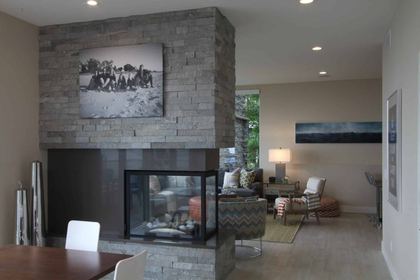
The Surrounding Stone or Brick May Be Part of the Decision
Existing masonry can significantly influence fireplace replacement.
If the current stone or brick is in good condition and still fits the homeowner’s style, preserving it may be a priority. In that case, the replacement fireplace may need to fit within tighter dimensional limits.
Consider:
- Whether the existing masonry can remain
- How closely the new opening aligns with it
- Whether trim can cover dimensional differences
- Whether additional noncombustible material is required
- Whether updating the complete feature wall makes more sense
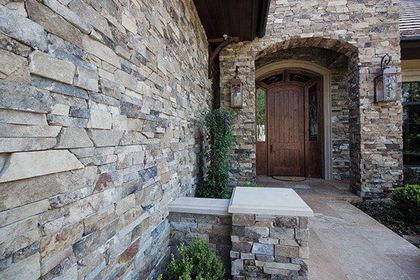
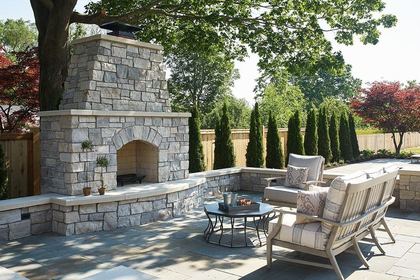
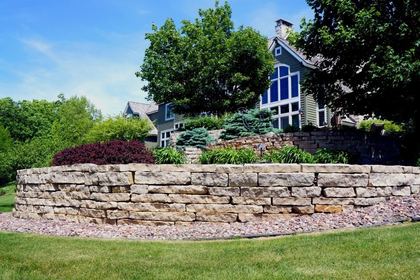
Homeowners considering a larger redesign can compare stone and masonry options for fireplace projects.
The Hearth, Mantel, and Television May Need Review
A replacement fireplace can also affect the features around it.
The existing hearth may need to remain, change size, or be replaced. A mantel installed for the old fireplace may no longer fit the proportions or requirements of the new model.
If a television is located above the fireplace, homeowners should also review:
- Fireplace height
- Mantel position
- Television height
- Available wall space
- Electrical and communication wiring
Planning the entire wall together usually creates a more balanced result than treating the new fireplace as an isolated appliance.
Existing Framing and Utilities May Need Modification
The wall behind the fireplace was built around the previous unit.
A new model may require changes to:
- Opening width or height
- Wall depth
- Headers or adjacent framing
- Gas connection location
- Electrical access
- Vent pathways
Exterior conditions may also matter if the fireplace vents through a wall, roof, or chimney chase.
The installation plan should use the current requirements for the exact replacement fireplace rather than assuming the existing construction will work unchanged.
Some Conditions May Not Be Visible Until Removal Begins
Fireplace replacement is remodeling, which means some construction remains hidden until the old unit is removed.
Removal may reveal:
- Unexpected framing
- Old utility routes
- Unused vent components
- Previous repairs
- Different dimensions than expected
- Hidden masonry conditions
A site assessment can reduce uncertainty, but homeowners should understand that minor adjustments may still be necessary once the existing fireplace is opened.
An Insert and a Full Fireplace Replacement Are Different
A fireplace insert is generally designed to fit within an appropriate existing fireplace opening.
A full replacement may involve removing the existing factory-built fireplace and modifying framing or the surrounding wall before another fireplace is installed.
VanderWall’s Fireplace Inserts: Everything You Need to Know provides additional background for homeowners considering an insert.
Replacement Can Improve the Entire Fireplace Wall
A fireplace replacement does not need to reproduce the old arrangement.
If the existing fireplace has always felt too small, dated, too high, or disconnected from the room, replacement can be an opportunity to reconsider:
- Fireplace size and proportions
- Stone or brick
- Hearth design
- Mantel placement
- Television location
- Built-in cabinetry
The goal should be to improve both how the fireplace operates and how it belongs in the room.
Measure More Than the Fireplace Opening
Useful project information includes:
- Overall wall width
- Ceiling height
- Fireplace opening dimensions
- Hearth size
- Mantel height and depth
- Nearby windows, doors, or cabinetry
- Television dimensions
- Available wall depth
Photos of the fireplace, chimney or exterior vent, and surrounding wall can also help during early planning.
If available, bring the current fireplace manufacturer, model number, installation year, manual, and service records.
Decide What You Want to Keep
Before shopping for the replacement fireplace, decide which existing features matter most.
You may want to preserve:
- The stone or brick
- The mantel
- The hearth
- The cabinetry
- The television location
- The overall wall design
The more existing features that need to remain unchanged, the more those dimensions may influence fireplace selection.
If the entire wall can change, homeowners may have greater flexibility in product size and design.
Compare Replacement Options in Person
Once the existing conditions are understood, homeowners can compare fireplaces that fit the project.
Seeing products operating in person makes it easier to evaluate:
- Viewing-area size
- Overall proportions
- Flame presentation
- Firebox depth
- Logs or media
- Trim options
Homeowners can compare replacement fireplace options in person at VanderWall’s West Michigan showrooms.
Bringing photographs and approximate measurements of the existing fireplace can make the conversation more productive.
Questions to Ask Before Fireplace Replacement
- What type of fireplace is installed now?
- Will the new fireplace fit the existing opening?
- Can the existing venting or chimney be used?
- Does framing need to change?
- Can the existing stone, hearth, and mantel remain?
- Do gas or electrical locations need adjustment?
- Will exterior venting or finishes be affected?
- Are there conditions that cannot be confirmed until removal?
Clear answers help homeowners understand the full replacement project before selecting the final fireplace.
How VanderWall Supports Fireplace Replacement
VanderWall Brothers works with homeowners across fireplace selection, replacement, installation, inserts, service, and related masonry products.
The process begins by understanding the existing space and determining which replacement options fit both the technical conditions and the desired room design.
Through fireplace support throughout West Michigan, VanderWall serves homeowners in Grand Rapids, Spring Lake, Grand Haven, Holland, Muskegon, Hudsonville, and surrounding communities.
A Fireplace Replacement Starts With What Is Already There
With fireplace replacement, the project does not begin with an empty wall.
The opening, chimney or venting system, framing, utilities, hearth, mantel, masonry, and surrounding room already influence what comes next.
Some features may remain. Others may need modification. Understanding those conditions before choosing the final product helps homeowners approach the project with clearer expectations.
The goal is not simply to remove one fireplace and install another.
It is to choose a new fireplace that works with the home that already exists.
If you are considering replacing an older fireplace, talk with the VanderWall team about the existing space and the options available for your home. Call (616) 842-4500 or visit www.vanderwallbros.com.
What we do
This is work we take on
Reading up is the first step. When you want it built, priced or supplied, these are the pages that cover it.
Keep reading
How to Choose the Right Fireplace Size: Proportions and Viewing Area
Fireplaces are often compared by width. A homeowner may ask whether a 42-inch, 50-inch, or 60-inch fireplace will fit…
How Early Material Decisions Help Protect Project Schedules
Construction schedules are often affected by decisions that appear small at the beginning of a project.
How to Coordinate Stone and Brick With Your Home’s Style
Stone and brick can shape the entire character of a home.
Thinking about a project like this?
Reading about it only gets you so far. Tell us the room and we will tell you what is possible in it.
Rather just ask someone?
Call the showroom. If it takes two minutes on the phone we would rather tell you than have you read around it.