
Gas Fireplace Insert Installation: Who Does It and What the Day Involves
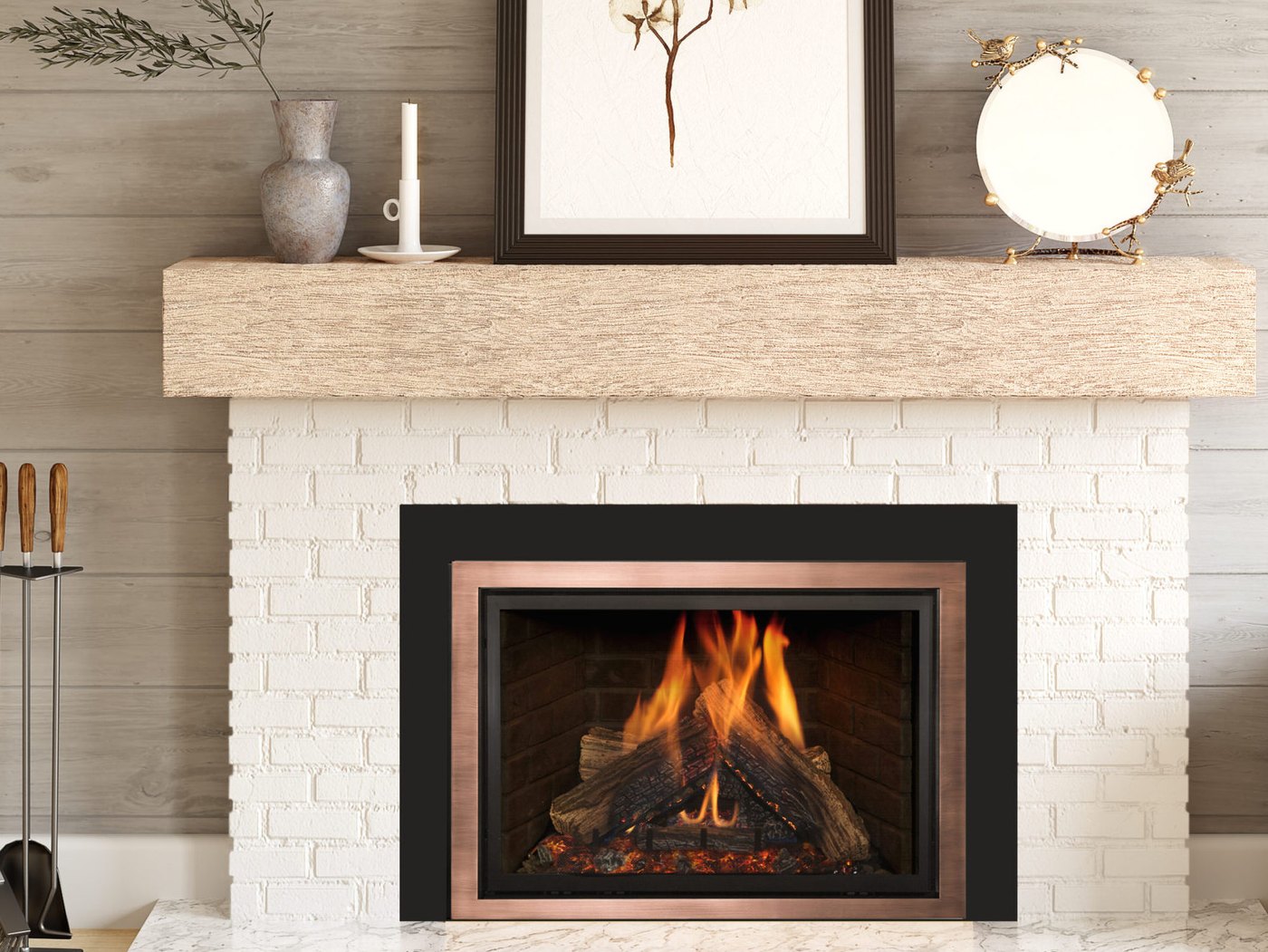
A gas fireplace insert turns an old wood-burning fireplace into a sealed gas heater. It slides into the opening you already have, so it can look like a simple swap. The work behind it is gas piping, venting and electrical, most of it licensed work in Michigan.
This post covers who may do each part, what gets checked first, what happens on the day and what you keep at the end. VanderWall Brothers' chimney and fireplace service team installs inserts from the brands the company sells. The examples below come from the current Kozy Heat Nordik 34i insert manual (Rev. 6, April 2025).
Still choosing a model? Start with what to know before choosing a gas fireplace insert.
Key Takeaways / Summary
- Gas work is licensed work in Michigan. A licensed mechanical contractor can install the insert and pull the permit.
- The chimney and the opening get checked first. Each insert has a minimum opening and chimney size.
- A new vent runs the full height of the chimney. A direct vent insert gets its own listed pipes from the firebox to a new cap.
- The gas gets tested twice. First for leaks, then for pressure at the valve.
- Doing it yourself is legal only in a narrow case. Michigan lets an owner install a heating system in the single-family home they live in, with a permit and an inspection. Kozy Heat's warranty is void unless a licensed, authorized technician or contractor installs it.
Who Is Allowed to Install a Gas Insert in Michigan?
The Michigan Department of Licensing and Regulatory Affairs (LARA) licenses mechanical contractors. Its licensing page says a licensed mechanical contractor can install, alter and service equipment and secure permits. Each work classification takes at least 3 years of experience and its own exam. The ones that touch gas hearth work include:
- Fuel Gas Piping
- Fuel Gas Piping and Venting
- LP Distribution Piping
- Solid Fuel and Vented Decorative Gas Appliances
If anyone other than the dealer quotes the gas side, ask which classifications their license covers and who pulls the permit.
The insert also needs power. The Nordik 34i plugs into a grounded 120-volt outlet that must be live at all times, with no switch in it. If your fireplace has no outlet, adding one is electrical work. Ask who handles it and whether it needs its own permit.
VanderWall Brothers' own NFI and CSIA certified crew installs the fireplaces the company sells. The same people come back to service them.
Can You Install a Fireplace Insert Yourself?
Michigan law allows it in one narrow case. Section 339.5819 of the Skilled Trades Regulation Act lets an owner personally install a heating system in a single-family home that is, or will become, their residence. The owner pulls the permit from the local building department and gets the inspection once the equipment is running. A rental does not qualify. Your building department decides how the rule applies to an insert, so ask first.
The manufacturer leaves little room. Kozy Heat's manual says only a qualified person should install the gas line. Its warranty says the appliance must be installed by a licensed, authorized service technician or contractor, or the warranty is void. Warranty labor is paid only to an authorized dealer.
So a homeowner install can be legal and still cost you the warranty. Your part is clearing the room, taking rough measurements and choosing the look. The older fireplace inserts guide covers sizing basics.
What Gets Checked Before Installation Day?
Most surprises turn up before the truck arrives. The Nordik 34i manual sets these checks:
- The existing fireplace. The insert goes into a masonry or factory-built wood-burning fireplace installed to code. Smoke shelves and baffles held on with fasteners can come out. Cutting the old fireplace's sheet metal is prohibited.
- The chimney. It has to be noncombustible, clean and in good working order. The chimney sweep post covers what an inspection looks at.
- The opening. The Nordik 34i needs at least 23-3/4 inches of height, 34-1/8 inches of front width and 16-3/8 inches of depth. Every model has its own table.
- The chimney size and height. This model needs a masonry flue of at least 6 by 8 inches or a factory-built chimney of at least 7 inches, 10 to 40 feet tall.
- The gas supply. On natural gas the manual sets a 5 inch water column minimum at the inlet, measured with every other gas appliance in the house running. A line too small for the whole house shows up here.
- The mantel and hearth. A combustible mantel has to meet the manual's clearances. The bottom of the insert has to sit level with the finished hearth or above it, or the safety barrier will not fit right.
If an insert will not fit, see replacing an existing fireplace.
What Happens on Installation Day?
These steps follow the Nordik 34i manual. Other models differ in the details.
- The old fireplace is prepared. The damper is removed or blocked fully open. The old chimney cap comes off. Anything removed has to be kept so it can go back in if the insert ever comes out.
- The liner goes down the chimney. This model vents through two 3 inch flexible pipes that run the full height of the chimney. One carries exhaust out. The other brings outside air in to burn the gas, so the insert does not use the air in your room.
- The cap is set and sealed. A listed termination cap goes on the chimney on a bead of sealant, with exhaust and intake on the right collars.
- The insert is set. It slides in, the vent adapter is screwed down and the unit is leveled.
- The gas is connected. A manual shutoff valve and a flexible connector attach at the control valve. If the house piping is pressure tested above 1/2 psi, the insert is disconnected first.
- Every joint is leak tested. The manual calls for soapy water on every connection, whether made in the field or at the factory.
- The pressure is checked. The installer reads inlet and burner pressure at the valve with a manometer, then confirms each test port sealed.
- The insert is finished and lit. Panels, logs, glass and trim go in. On first light the flames start blue and turn yellow over about 15 minutes. Flames that stay blue, or turn dark orange with black tips, mean the air setting needs adjusting.
- A warning label goes in. A label inside the old firebox says the fireplace was converted and cannot burn wood again unless the original parts go back and the local authority approves it.
- The safety barrier goes on. It comes in the box.
Why Does the Screen in Front of the Glass Stay On?
The glass on a gas insert gets hot enough to burn. In December 2012 the ANSI Z21.88/CSA 2.33 standard added a barrier requirement for gas fireplaces whose glass passes 172 degrees F. The Nordik 34i is certified to that standard for vented gas fireplace heaters. The Hearth, Patio & Barbecue Association says new certified fireplaces, stoves and inserts made after January 1, 2015 include a barrier that must be installed.
Kozy Heat's manual says the barrier shall be installed to protect children and other at-risk people. A damaged one gets replaced with Kozy Heat's own. The gas fireplace service post covers why it goes back on after every service visit.
Do You Need a Carbon Monoxide Alarm?
The current Michigan Residential Code is still the 2015 edition, in effect since February 8, 2016. Its state amendment, Rule 408.30520, requires carbon monoxide alarms when work needing a building permit is done in an existing home that has fuel-fired appliances or an attached garage. Your local building department decides whether an insert job needs a building permit. Carbon monoxide has no smell, so have a working alarm in place before the first fire either way.
What Should You Be Handed When the Job Is Done?
- The manual. Keep it. Fill in the blanks up front for model, serial number, install date and dealer.
- The permit record. Ask who pulled the permit and when the inspection is. The job is not closed until it passes.
- Proof of purchase. Kozy Heat's warranty asks for it, with the model and serial number, on any claim.
- A walk-through. Lighting, the remote, the gas shutoff and the barrier.
- A service plan. The manual says the insert should be inspected before use and at least once a year by a professional service person.
Start With a Photo of Your Fireplace
VanderWall Brothers has served West Michigan since 1922. Its own crew measures, installs and services inserts. Bring photos of the fireplace and the chimney top. Send them through the contact page, call (616) 842-4500, or stop in at the Spring Lake or Grand Rapids showroom to see inserts burning.
Sources
- Hussong Mfg. (Kozy Heat), Nordik 34i Installation and Operation Manual, Rev. 6, April 2025, for the ANSI Z21.88/CSA 2.33 certification, the existing fireplace and chimney requirements, the minimum opening, the chimney size and height limits, the 120-volt outlet, the inlet pressure, the installation steps, the leak and pressure tests, the conversion label, the safety barrier, the mantel and hearth rules, the yearly inspection and the warranty's licensed installer condition.
- Michigan Department of Licensing and Regulatory Affairs, mechanical contractor licensing, for what a licensed mechanical contractor may do, the 3 year experience rule, the exam for each classification and the classification names.
- Michigan Legislature, MCL 339.5819, Skilled Trades Regulation Act, for the owner-occupant exception, the permit and the inspection.
- Michigan Department of Licensing and Regulatory Affairs, current construction code books, for the 2015 Michigan Residential Code being current since February 8, 2016.
- Michigan Administrative Code, R 408.30520, for carbon monoxide alarms in existing homes when permitted work is done.
- U.S. Consumer Product Safety Commission, staff draft letter on Petition CP 11-1, gas fireplaces with glass fronts, for the December 2012 barrier requirement in ANSI Z21.88/CSA 2.33 and the 172 degree F threshold.
- Hearth, Patio & Barbecue Association, Glass Safety FAQs, for barriers on new certified fireplaces, stoves and inserts made after January 1, 2015.
Installation steps here are general. Your insert's own manual, your local building department and a licensed installer govern the work on it.
What we do
This is work we take on
Reading up is the first step. When you want it built, priced or supplied, these are the pages that cover it.
Keep reading
Can You Put a TV Above a Gas Fireplace?
Yes, a television can often be installed above a gas fireplace, but the wall should be designed for that combination…
Retaining Walls in West Michigan: Height, Drainage, and the Rules That Apply
A retaining wall is the only thing in a yard that is holding something back every hour of its life. A patio sits still…
Gas Fireplace Smells: What's Normal and What's Not?
A gas fireplace should not leave you guessing whether an odor is normal or a warning sign.
Thinking about a project like this?
Reading about it only gets you so far. Tell us the room and we will tell you what is possible in it.
Rather just ask someone?
Call the showroom. If it takes two minutes on the phone we would rather tell you than have you read around it.