
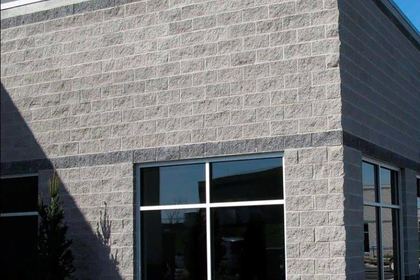
How to Coordinate Stone and Brick With Your Home’s Style
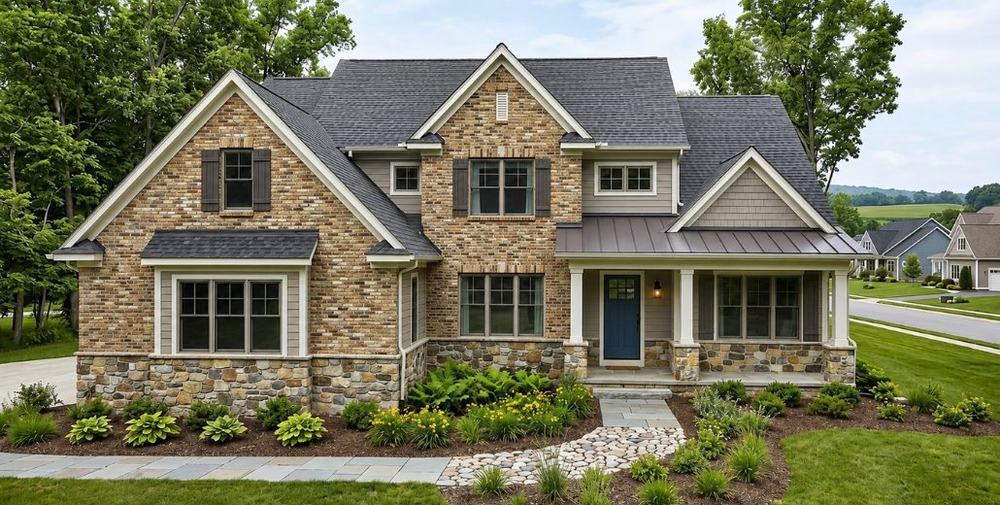
Stone and brick can shape the entire character of a home.
They may frame the entrance, define the foundation, surround a fireplace, cover an exterior wall, or connect the house to a patio and outdoor living area. Because masonry carries so much visual weight, choosing the right material involves more than finding a color that looks attractive on its own.
The stone or brick should feel connected to the architecture, existing finishes, surrounding landscape, and overall scale of the home.
When comparing stone and masonry options for West Michigan homes, homeowners can make clearer decisions by looking at the entire property rather than one product sample at a time.
Begin With the Architecture of the Home
The style of the home provides a useful starting point for masonry selection.
A traditional home may work naturally with classic brick shapes, warm stone colors, or more defined mortar joints. A contemporary home may benefit from cleaner lines, larger stone profiles, restrained color variation, or a simpler brick pattern.
Homeowners should consider:
- The shape and roofline of the home
- The amount of exterior detail
- The size and style of the windows
- The design of the entrance
- Whether the home feels traditional, modern, rustic, transitional, or mixed
- How much visual texture is already present
The goal is not to follow a strict design rule. It is to choose masonry that supports the architecture instead of competing with it.
Look at the Home’s Complete Color Palette
Masonry should not be selected in isolation.
The siding, roofing, trim, windows, doors, gutters, flooring, cabinetry, and surrounding landscape all contribute to the home’s color palette.
Before choosing stone or brick, identify the main undertones already present.
- Warm materials may include cream, tan, brown, rust, or warm gray.
- Cool materials may include blue-gray, charcoal, black, or crisp white.
- Neutral materials may contain a mixture of warm and cool tones.
A masonry product does not need to match every surface. It should share enough color relationships to feel like it belongs.
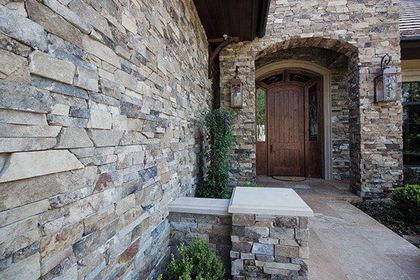
For example, stone with small charcoal accents may connect well with dark window frames. Brick with warm brown variation may coordinate with a wood entry door or warmer roof color.
Avoid Matching Every Material Too Closely
Coordination and matching are not the same thing.
When every material has nearly the same color, the exterior can lose depth. When the materials are too different, the home may feel visually divided.
A balanced combination usually includes:
- One dominant material
- One supporting masonry material
- A limited number of accent colors
- Enough contrast to define important features
- Repeated tones that connect separate areas
The strongest combinations often feel related without appearing identical.
Compare Natural and Manufactured Stone Carefully
Both natural and manufactured stone can support a wide range of home styles.
Natural stone products contain variation created by the material itself. Individual pieces may differ in color, edge shape, texture, and mineral pattern. This variation can give a project a more organic and individual character.
Manufactured stone options are available in a broad range of profiles, colors, textures, and arrangements. This can make it easier to find a defined design direction for a fireplace, exterior accent, outdoor kitchen, or other feature.
Homeowners should compare more than appearance when reviewing the two categories. Project location, installation requirements, surrounding materials, available space, and the desired level of variation should all be considered.
For a broader comparison, VanderWall’s guide to manufactured stone versus real stone provides additional background.
Consider the Texture of Nearby Materials
Texture changes how heavy, detailed, traditional, or modern a masonry feature feels.
A home with detailed siding, decorative trim, and strong roof patterns may not need another highly textured material. A simpler exterior may benefit from stone or brick that adds more depth.
Homeowners should compare:
- Smooth or rugged stone surfaces
- Regular or irregular stone shapes
- Clean or distressed brick faces
- Deep or shallow mortar joints
- Uniform or varied color distribution
Too many strong textures can make the exterior feel busy. Too little texture may make a large surface feel flat.
The right balance depends on what is already present around the masonry.
Choose a Scale That Fits the Feature
Scale is easy to overlook when looking at small samples.
A large stone profile may feel appropriately grounded on a full exterior wall but too heavy around a smaller fireplace. A small brick or detailed stone pattern may look refined in a limited area but feel busy when used across a large surface.
Before selecting a material, consider:
- The total size of the masonry area
- The height of the wall or fireplace
- The size of nearby windows and doors
- The viewing distance
- Whether the masonry is the main feature or a supporting accent
Material scale should support the proportions of both the feature and the home.
Think About Where the Material Begins and Ends
The transition points around masonry affect how finished the project feels.
Stone and brick may meet siding, trim, roofing, flooring, countertops, landscaping, or another masonry product. These connections should feel deliberate.
Homeowners and builders should review:
- Outside corners
- Window and door edges
- Foundation transitions
- Fireplace openings
- Mantel and hearth connections
- Changes between stone and brick
- Where masonry meets patios or walkways
Clear transition planning can help the material feel integrated rather than applied as an afterthought.
Do Not Overlook Mortar Color
Mortar is part of the finished design.
Even when homeowners choose the same brick or stone, a different mortar color or joint style can noticeably change the result.
A mortar color close to the masonry may create a quieter and more unified surface. A contrasting mortar can make each individual brick or stone shape more visible.
Homeowners should review mortar samples beside the actual masonry material whenever possible. The final choice should also be considered alongside trim, siding, flooring, or other nearby finishes.
Use Brick Patterns With the Architecture in Mind
Brick involves more than color.
Size, orientation, bond pattern, mortar, and placement all influence the finished appearance. Some patterns feel more traditional and detailed, while others create cleaner horizontal or vertical lines.
When reviewing brick products and patterns, consider whether the pattern supports the architecture or adds more visual activity than the home needs.
A restrained brick arrangement may support a modern exterior. A more familiar running pattern may fit naturally with a traditional home. Accent patterns can also be useful around entries, fireplaces, windows, or smaller architectural details.
Repeat Materials With Restraint
Repeating masonry in more than one part of the property can create continuity.
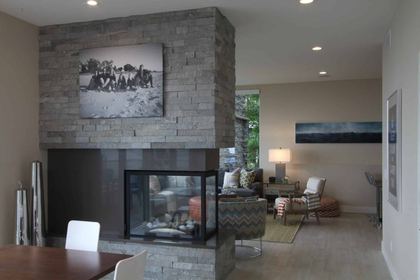
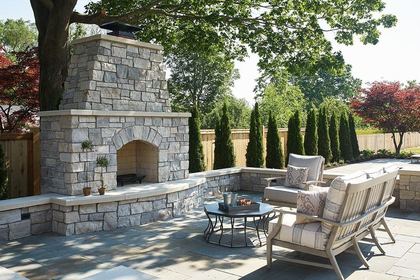
Exterior stone might appear again around an indoor fireplace. Brick from the front elevation might be reflected in a walkway border. A patio material may share colors with the home’s foundation stone.
The repetition does not need to be exact.
Using related tones, textures, or profiles is often enough to connect:
- The home exterior
- The fireplace
- The patio
- The outdoor kitchen
- The entrance
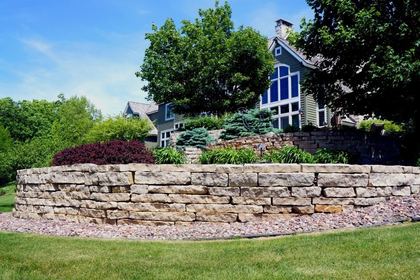
- Landscape walls or columns
Repeating too many materials can make the design feel forced. A few intentional connections are usually more effective.
View Samples in Natural Light
Masonry color can look different depending on the light, surroundings, and viewing distance.
A sample viewed under showroom lighting may change when placed beside the home in morning sun, afternoon shade, or overcast weather.
Whenever practical, homeowners should:
- View several pieces rather than one sample
- Look at the material from different distances
- Compare it beside the siding, roofing, or flooring
- Review it during more than one time of day
- Consider how the variation appears across a larger area
This helps reduce the risk of choosing a material based on a single small section that does not represent the full installation.
Compare Stone and Brick in Person
Online images are useful for gathering ideas, but they do not always show true texture, depth, scale, or color variation.
Homeowners can compare masonry materials in person at VanderWall’s Spring Lake and Grand Rapids locations.
Seeing brick, natural stone, manufactured stone, pavers, fireplaces, and related products together can make it easier to understand how the materials may work across the full project.
Homeowners can also discuss installation needs and identify the masonry tools and project supplies that may be required as planning moves forward.
How VanderWall Supports Masonry Selection
VanderWall Brothers works with homeowners, builders, and contractors throughout West Michigan to help simplify masonry decisions.
The team can help clients compare natural stone, manufactured stone, brick, hardscape materials, fireplace surrounds, and related products while considering the larger home design.
That process helps move the conversation beyond choosing a sample and toward understanding how the finished material will relate to the complete project.
The Right Material Should Feel Natural to the Home
A successful stone or brick selection should not feel separate from the rest of the property.
It should support the architecture, connect with existing colors, balance nearby textures, and fit the scale of the feature.
Homeowners do not need every surface to match. They need a clear relationship between the materials.
By comparing architectural style, undertones, texture, scale, mortar, transition points, and natural light, homeowners can choose masonry that feels intentional now and remains connected to the home over time.
If you are comparing stone, brick, or other masonry materials for an upcoming project, talk with the VanderWall team. Call (616) 842-4500 or visit www.vanderwallbros.com.
What we do
This is work we take on
Reading up is the first step. When you want it built, priced or supplied, these are the pages that cover it.
Keep reading
Retaining Walls in West Michigan: Height, Drainage, and the Rules That Apply
A retaining wall is the only thing in a yard that is holding something back every hour of its life. A patio sits still…
Gas Fireplace Smells: What's Normal and What's Not?
A gas fireplace should not leave you guessing whether an odor is normal or a warning sign.
Can You Put an Outdoor Kitchen on a Paver Patio?
Yes, many outdoor kitchens can be installed on a properly planned paver patio, but the pavers themselves are only part…
Thinking about a project like this?
Reading about it only gets you so far. Tell us the room and we will tell you what is possible in it.
Rather just ask someone?
Call the showroom. If it takes two minutes on the phone we would rather tell you than have you read around it.