
What to Know Before Choosing a Gas Fireplace Insert
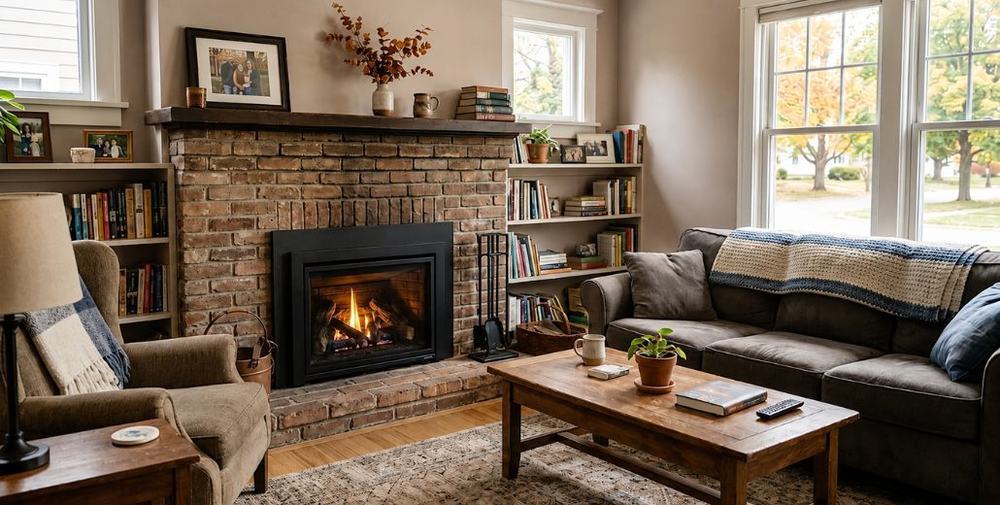
An older fireplace can still be one of the most important features in a home.
But over time, some homeowners find that the fireplace is not as practical as they want it to be. It may be difficult to use, less efficient than expected, or no longer aligned with how the room functions day to day.
For many West Michigan homeowners, a gas fireplace insert can be a practical way to update an existing fireplace without starting from scratch. It can help make the fireplace easier to use, cleaner to operate, and more connected to everyday living.
Before choosing an insert, it helps to understand what it is, what it affects, and what should be reviewed before installation.
What Is a Gas Fireplace Insert?
A gas fireplace insert is a fireplace unit designed to fit into an existing fireplace opening.
Instead of relying on an open masonry fireplace, the insert creates a more contained system with its own firebox, burner, and venting requirements. The goal is to make the existing fireplace area more useful while keeping the finished look connected to the home.
For homeowners comparing gas fireplace inserts and fireplace options, the main question is whether the existing fireplace and surrounding area can support the insert properly.
That is why inserts should be reviewed as part of a full fireplace plan, not only as a product choice.
When Does a Gas Fireplace Insert Make Sense?
A gas fireplace insert may make sense when a homeowner wants the comfort of a fireplace with less day-to-day maintenance than a traditional wood-burning setup.
It may also be worth considering when the existing fireplace is rarely used because starting, maintaining, or cleaning up a wood fire feels inconvenient.
Common reasons homeowners consider a gas fireplace insert include:
- An older fireplace that is no longer used often
- A desire for easier operation
- Less cleanup compared to wood burning
- A more finished look in the room
- A fireplace update during a remodel
- A need to make the existing fireplace area more practical
For builders and contractors, inserts may also come up during remodels, older-home updates, or living room improvements where the homeowner wants to keep the fireplace location but improve how it works.
What Should Be Checked Before Choosing an Insert?
The existing fireplace opening is only one part of the decision.
Before choosing a gas fireplace insert, several details should be reviewed:
- The size and condition of the existing fireplace opening
- The chimney or venting path
- Gas line access
- Electrical needs, if required by the product
- Clearances around the unit
- Surround, hearth, and mantel materials
- How the finished fireplace will fit the room
These details can affect which insert options are practical for the home.
They can also affect installation planning. A gas fireplace insert is not only about finding a unit that looks right. It needs to fit the existing conditions and support safe, reliable use over time.
Homeowners who want more background on fireplace and hearth planning can review fireplace and hearth appliance planning guidance from the National Fireplace Institute.
How Does an Insert Change the Look of the Room?
A gas fireplace insert can make an older fireplace feel more current, but the surrounding details still matter.
The insert itself is only one part of the finished feature. The surround, hearth, mantel, stone, brick, tile, or trim all influence how the fireplace fits the room.
In some homes, the existing brick or stone can stay and continue to give the fireplace character. In other homes, the surrounding material may need to be updated so the new insert feels more connected to the room.
Homeowners should think about the full fireplace area, including:
- The insert style and viewing area
- The surround material
- The hearth size and finish
- The mantel or wall treatment
- The furniture layout around the fireplace
When those decisions are considered together, the finished fireplace feels more intentional and less like a quick replacement.
Why Product Selection Should Happen Early
Gas fireplace inserts come in different sizes, styles, and feature options.
Waiting too long to choose a product can affect the rest of the project. The insert may influence gas line planning, electrical access, venting, surround materials, and installation timing.
For homeowners, early selection helps clarify what is possible before other room decisions are made.
For builders and contractors, early selection helps reduce delays and prevents late changes around framing, finish materials, or utilities.
This is especially important in older homes, where existing conditions may not match what the homeowner expects. The fireplace opening, chimney, and surrounding materials should be reviewed before the project is treated as a simple product swap.
Why Seeing Fireplace Inserts in Person Helps
Photos can help homeowners understand general style, but they do not always show scale, flame appearance, trim details, or how an insert feels in a real room.
Seeing fireplace inserts in person can make the decision more practical.
It allows homeowners to compare different models, ask questions, and understand how the insert may work with existing brick, stone, tile, or mantel details.
Homeowners can visit a fireplace showroom in Spring Lake or Grand Rapids to compare fireplace products, insert options, and surrounding material choices more clearly.
For homeowners in the Greater Grand Rapids area, VanderWall also provides fireplace support near Grand Rapids. The team also serves Spring Lake, Kentwood, and nearby Lakeshore communities.
How Inserts Compare With Continuing to Burn Wood
Some homeowners are not sure whether to keep using their existing wood-burning fireplace or move toward an insert.
The right answer depends on how the fireplace is used, how much maintenance the homeowner wants, and what the existing fireplace condition allows.
EPA Burn Wise notes that many traditional fireplaces are not highly efficient for heating, and homeowners may consider gas, pellet, or EPA-certified wood fireplace inserts for improved performance compared with an open fireplace. Homeowners comparing options can review fireplace insert education from EPA Burn Wise for additional context.
For homeowners still considering wood-burning appliances, EPA also provides guidance on choosing fireplace and stove appliances, including efficiency, emissions, and the size of the space being heated.
A gas fireplace insert will not be the right answer for every home, but it can be a strong option when the homeowner wants easier use and a cleaner day-to-day fireplace experience.
A Clearer Way to Update an Older Fireplace
A gas fireplace insert can help make an existing fireplace more practical, but the decision should be made carefully.
Homeowners should look at the fireplace opening, venting, gas access, surrounding materials, room layout, and how the fireplace will be used. Builders and contractors should also confirm product requirements early enough to support a smoother project.
When these details are reviewed together, the fireplace update becomes easier to understand and easier to plan.
VanderWall Brothers helps homeowners, builders, and contractors compare fireplace inserts, gas fireplaces, masonry materials, and fireplace product options across West Michigan, including Grand Rapids, Spring Lake, Kentwood, and surrounding Lakeshore communities.
If you are considering a gas fireplace insert or updating an older fireplace, connect with a VanderWall specialist. Call (616) 842-4500 or visit vanderwallbros.com.
What we do
This is work we take on
Reading up is the first step. When you want it built, priced or supplied, these are the pages that cover it.
Keep reading
Gas Fireplace BTU: What Homeowners Should Know
BTU ratings appear on almost every gas fireplace specification sheet, but the biggest number is not automatically the…
Material Submittals: What Builders Should Confirm
A material can be selected and still create problems on the jobsite if the project team is not working from the same…
How to Choose Stone Veneer Colors for Your Home
Choosing stone for a home involves more than finding a color that looks good on a sample board.
Thinking about a project like this?
Reading about it only gets you so far. Tell us the room and we will tell you what is possible in it.
Rather just ask someone?
Call the showroom. If it takes two minutes on the phone we would rather tell you than have you read around it.