
Why Are My Pavers Sinking? Causes and What to Check
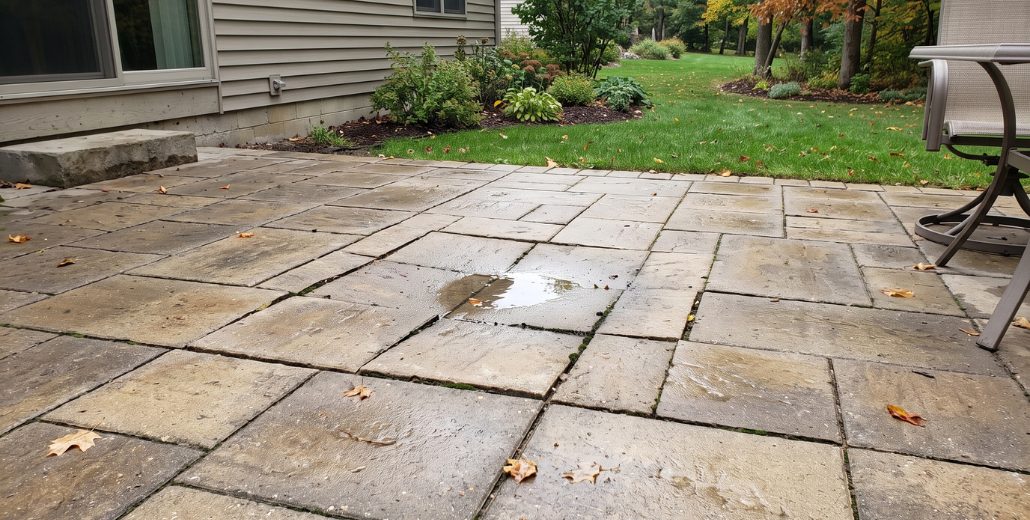
If your paver patio has started to dip, rock, or collect water in one area, the problem usually begins below the surface.
Pavers themselves are rigid units. When they sink or become uneven, the supporting soil, aggregate base, bedding layer, drainage, or edge restraint has usually moved or lost support.
The good news is that paver systems are modular, so some settlement can be repaired without replacing the entire patio. The important step is identifying why the movement happened before simply lifting and resetting the visible pavers.
Key Takeaways / Summary
- Sinking pavers usually point to a support problem below the surface. Poor compaction, weak soil, water movement, or disturbed base material are common contributors.
- One low paver and a whole settled section are different problems. The pattern can help determine whether the issue is localized or extends deeper into the patio system.
- Adding more joint sand does not rebuild a failed base. Joint material helps the pavers work together, but it is not the structural support below them.
- Drainage matters. Water can soften the subgrade, move bedding or base material, and worsen settlement around edges, downspouts, and low areas.
- Some repairs can be localized. More widespread movement may require rebuilding a larger section so the base and drainage can be corrected properly.
Why Do Pavers Sink?
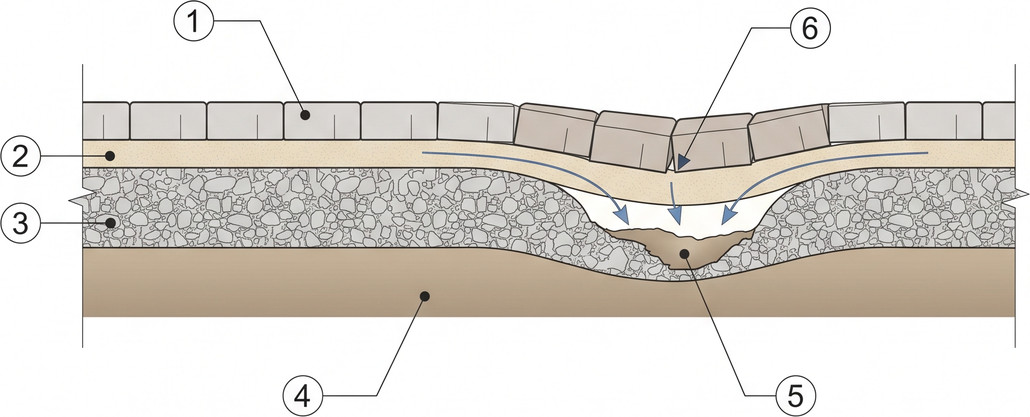
- Concrete pavers
- Bedding layer
- Compacted aggregate base
- Soil subgrade
- Localized loss of support or settlement
- Water movement
An interlocking paver patio is more than the pavers you see. It typically includes prepared soil, a compacted aggregate base, a bedding layer, the pavers, joint material, and edge restraint.
The Concrete Masonry & Hardscapes Association explains in its construction guidance for interlocking concrete pavement that proper subgrade and base compaction are critical to minimizing settlement. CMHA also notes that base requirements vary with soil, drainage, moisture, climate, and intended use.
When one of those supporting layers moves, the finished paver surface usually follows it.
1. The Soil or Base Was Not Compacted Enough
Loose soil or aggregate can continue compacting after the patio is finished. As that material settles, the pavers above it drop.
This may appear as a shallow depression, a long low area, or several pavers moving together.
Settlement is especially worth investigating where the ground was recently disturbed, such as around a new home, utility trench, foundation backfill, or previous landscape work.
VanderWall's hardscape guidance emphasizes that subsoil conditions, gravel base, bedding preparation, and installation quality are fundamental parts of a paver project.
2. Water Is Moving Through or Under the Patio
Water is another common contributor to uneven pavers.
A downspout discharging near the patio, poor grading, a low edge, or concentrated runoff can repeatedly saturate or move material beneath the surface.
Look for sinking that occurs:
- Near downspouts
- Beside roof drip lines
- Along the edge of the patio
- Where puddles form after rain
- Near steps or retaining walls
- Where landscaping directs water toward the pavement
CMHA recommends addressing standing water and drainage conditions during construction because saturated or weak soils can reduce pavement performance.
Practical tip: Photograph the patio immediately after a steady rain. Low spots and concentrated runoff are often easier to understand when water is still visible.
3. The Edge of the Patio Has Lost Support
Edge restraints help keep the paver field contained. If an edge moves, erodes, or loses supporting material, the outer pavers can spread, rotate, or settle.
Signs of an edge problem may include:
- Gaps becoming wider near the perimeter
- Outer pavers tipping toward the lawn
- A curved edge losing its original shape
- Joint material washing out repeatedly
- Soil pulling away from the patio edge
Repairing only the surface may not last if the edge and the base beside it remain unstable.
4. Underground Work Disturbed the Base
Utility repairs, drainage work, irrigation, gas lines, electrical runs, and other excavation can disturb an established paver system.
If the excavated soil and base are not restored and compacted correctly, the repaired strip may settle later.
CMHA's maintenance guidance for interlocking concrete pavement calls for the subgrade and base to be properly compacted when pavement is reinstated after underground work.
If settlement follows a straight line across the patio, ask whether a trench or utility was previously installed there.
5. The Patio Is Carrying a Load It Was Not Planned For
A pedestrian patio and a surface supporting vehicles or heavy permanent features do not necessarily need the same base design.
Outdoor kitchens, masonry features, hot tubs, vehicles, or other concentrated loads can change what the pavement system needs to support.
If a heavy feature was added after the original patio was built, settlement around that feature deserves closer evaluation.
For outdoor kitchens specifically, VanderWall's guide to planning an outdoor kitchen on a paver patio explains why the existing base and kitchen construction should be considered together.
Does Freeze-Thaw Weather Make Pavers Sink?
Cold weather alone does not explain every uneven patio, but water, weak soil, and freezing conditions can interact.
CMHA notes that colder climates and continually wet or weak soils can require greater base thickness than a basic pedestrian installation over well-drained soil.
In West Michigan, that makes drainage and base preparation especially important. A patio that repeatedly holds water beneath or beside the pavers may be more vulnerable to seasonal movement.
Can You Fix Sinking Pavers by Adding Sand?
Not if the support problem is below the bedding layer.
Adding joint sand may improve the joints, but it does not correct poorly compacted soil, missing base material, erosion, or a drainage problem.
Likewise, simply adding extra bedding sand beneath a low paver can raise it temporarily without explaining why the area settled.
A lasting repair begins by determining what material moved and why.
What Can the Pattern of Settlement Tell You?
The shape of the problem can provide useful clues.
- One or two low pavers: potentially a localized bedding or base issue.
- A settled strip: possible previous trench or disturbed ground.
- A low edge: check edge support, erosion, and nearby drainage.
- A puddle in the middle: review both settlement and the patio's overall drainage.
- A large uneven section: the problem may extend into the base or subgrade rather than only the surface.
These patterns are clues, not a substitute for inspecting what is underneath.
Can Sunken Pavers Be Repaired Without Rebuilding the Whole Patio?
Often, yes.
Because individual pavers can be lifted and reinstalled, a localized problem may be corrected by opening the affected area, repairing or replacing supporting material, restoring the correct elevation, and resetting the original pavers.
More extensive reconstruction may be appropriate when:
- Settlement affects a large area
- The original base is inadequate throughout the patio
- Drainage needs major correction
- Several edges are failing
- The patio needs a different finished slope
- A new heavy feature changes the required support
The goal is not simply to make the surface look level again. It is to correct the condition that caused the movement.
What Should Homeowners Check Before Planning a Repair?
- Mark the affected area. Note whether the problem is growing.
- Watch the patio during rain. Record puddles, runoff, and downspout discharge.
- Check the edges. Look for spreading, gaps, erosion, or missing support.
- Think about previous excavation. Utilities or landscape changes may explain a settled strip.
- Identify new loads. Note anything heavy added after the patio was installed.
- Take photos and rough measurements. These make an initial project conversation more useful.
Look Below the Paver Before Replacing the Paver
Sinking pavers are usually a symptom of movement somewhere in the pavement system rather than a failure of the paver itself.
Compaction, drainage, base condition, edge support, underground work, and loading all influence how a patio performs over time.
VanderWall Brothers supplies pavers and hardscape materials and works with outdoor living projects throughout West Michigan. Homeowners can compare paver and hardscape options in person at the Spring Lake and Grand Rapids showrooms.
If your patio has developed low spots or uneven sections, send photos and project details to the VanderWall team. The pattern, location, drainage conditions, and intended use can help determine what should be evaluated before a repair or renovation moves forward.
What we do
This is work we take on
Reading up is the first step. When you want it built, priced or supplied, these are the pages that cover it.
Keep reading
West Michigan Outdoor Living Spaces: Planning Guide
Outdoor living spaces are no longer treated as small add-ons at the end of a home project.
How to Choose the Right Fireplace for Your West Michigan Home
For most homeowners, the better question is how the fireplace will fit into the way the home is used. A fireplace can…
What to Expect Once Your Home Project Begins
Once a home project begins, most homeowners want to know what happens next. By this stage, the early decisions have…
Thinking about a project like this?
Reading about it only gets you so far. Tell us the room and we will tell you what is possible in it.
Rather just ask someone?
Call the showroom. If it takes two minutes on the phone we would rather tell you than have you read around it.