

Can You Put an Outdoor Kitchen on a Paver Patio?
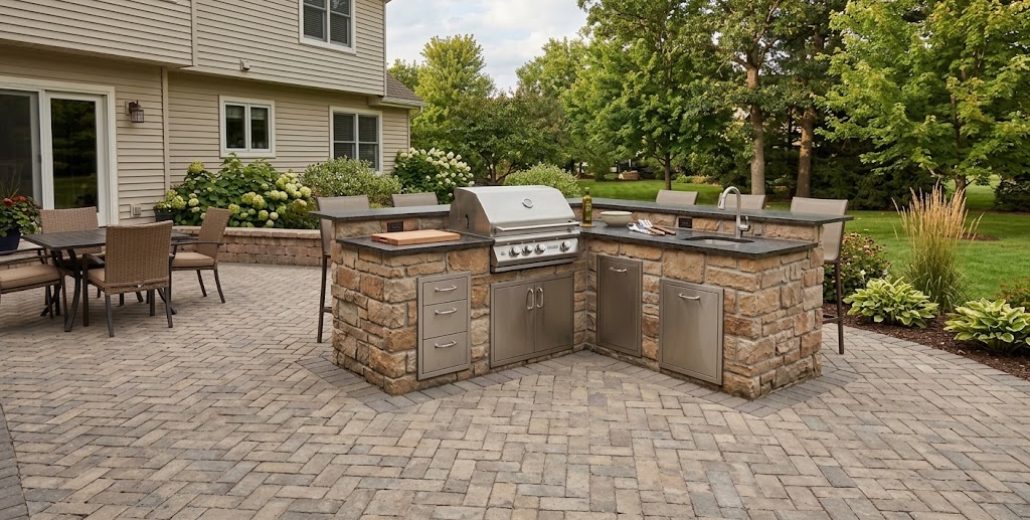
Yes, many outdoor kitchens can be installed on a properly planned paver patio, but the pavers themselves are only part of the answer.
What matters most is the complete system underneath them, the condition of the patio, the weight and construction of the kitchen, the location of utilities, drainage, and whether the patio was designed for the loads the finished kitchen will create.
An existing patio that works perfectly for a table and chairs should not automatically be assumed to be ready for a heavy masonry island, stone countertop, grill, refrigerator, and other equipment.
For homeowners considering outdoor kitchen options in West Michigan, evaluating the patio first can help determine whether the existing surface can remain, needs localized changes, or should be incorporated into a new hardscape plan.
Key Takeaways / Summary
- Yes, outdoor kitchens can often be installed on pavers. The correct approach depends on the complete patio assembly and the kitchen being installed.
- The base matters more than the visible paver. Compacted soil, aggregate base, bedding, drainage, and edge conditions all influence long-term stability.
- Existing patios should be evaluated before the kitchen is ordered. Settlement, poor drainage, weak edges, and unknown base construction may need attention first.
- Kitchen weight varies significantly. A lightweight modular aluminum kitchen and a heavy site-built masonry island create different loading conditions.
- Utilities should be planned before the finished kitchen is placed. Gas, electrical, water, and drainage may need routes through or beneath the patio.
- There is no universal foundation detail. Soil, climate, patio construction, kitchen design, product requirements, and project conditions determine what support is appropriate.
The Pavers Are Only the Top Layer
When homeowners look at a patio, they naturally focus on the pavers.
Structurally, however, an interlocking paver patio is a complete pavement system.
The Concrete Masonry & Hardscapes Association explains in its interlocking concrete pavement construction guidance that performance depends on preparation and compaction of the soil subgrade, aggregate base, bedding layer, pavers, joints, and edge restraints.
CMHA also notes that base thickness depends on factors including soil type, drainage, moisture, climate, and intended use.
That distinction matters when an outdoor kitchen is added.
A patio may look level at the surface while still having a base that was never planned for concentrated permanent loads.
Practical tip: If you are planning the patio and kitchen at the same time, tell the hardscape installer exactly where the outdoor kitchen will sit before the patio base is designed.
Is a Standard Patio Base Enough?
There is no universal base depth that can be recommended for every outdoor kitchen.
CMHA provides minimum base guidance for ordinary pedestrian patios over suitable soils, but it also states that thicker bases may be necessary in colder climates and over continually wet or weak soils.
An outdoor kitchen introduces another variable: concentrated load.
The appropriate support may depend on:
- Soil conditions
- Drainage
- Climate
- Paver system
- Kitchen footprint
- Kitchen framing material
- Countertop weight
- Appliances
- Masonry finishes
- Additional structures such as a pergola or roof
A project professional should evaluate those conditions rather than simply applying a standard patio detail to every kitchen.
A Lightweight Kitchen and a Masonry Kitchen Are Different Loads
Outdoor kitchens are not all built the same way.
A traditional site-built masonry island can include block, stone veneer, a substantial slab countertop, and several built-in appliances.
Other systems are intentionally designed to reduce weight.
VanderWall currently offers Stoll outdoor kitchens, and Stoll describes its systems as having a lightweight modular aluminum design with weather-resistant framework and customizable appliance configurations.
That does not mean any lightweight kitchen can automatically be placed on any patio.
It means the kitchen construction method is one of the first things that should be identified when evaluating the surface below it.
Practical tip: Confirm the kitchen structure, countertop, and major appliances before deciding whether the existing patio support is adequate.
How to Evaluate an Existing Paver Patio
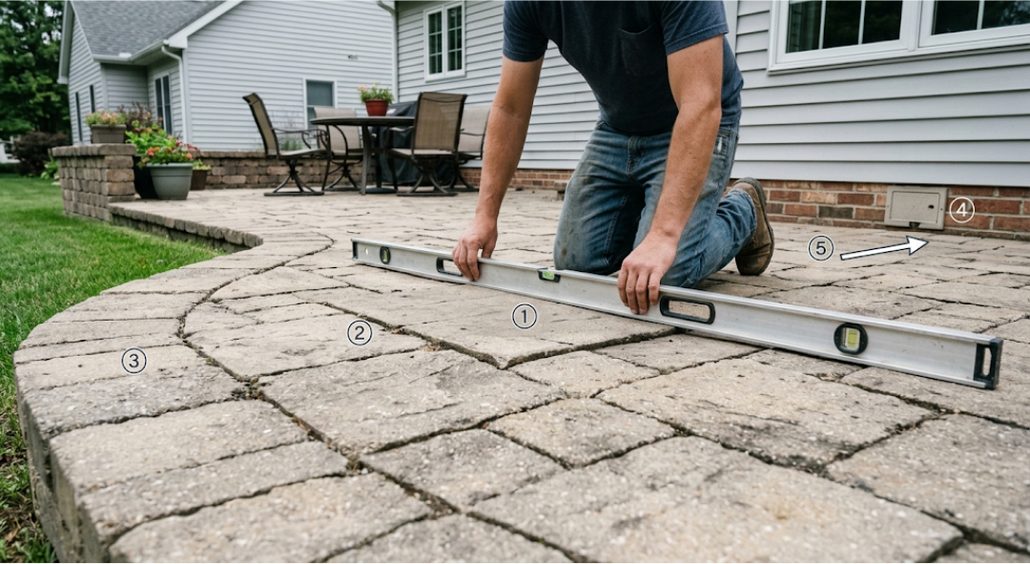
- Surface level and stability
- Signs of settlement
- Edge condition
- Utility access
- Drainage direction
If the patio is already installed, start with its current condition.
Look for:
- Sunken pavers
- Areas that rock or move underfoot
- Uneven joints
- Low spots that collect water
- Failed edge restraints
- Previous repairs
- Separation near steps or foundations
- Areas disturbed by utility work
A patio that already shows settlement should be investigated before placing a permanent kitchen on it.
Also try to determine how the patio was built.
Useful information may include:
- When it was installed
- Who installed it
- What base materials were used
- Approximate excavation and base depth
- Whether the subgrade was compacted
- Whether drainage was installed
- Whether utilities already run beneath it
If those details are unknown, a qualified contractor may need to inspect the area and determine whether sections should be opened before the final kitchen plan is approved.
Do You Need a Concrete Slab Under an Outdoor Kitchen?
Not every outdoor kitchen automatically requires a full concrete slab.
The correct support depends on the design and project conditions.
A properly designed paver system may be appropriate for some kitchens. A heavy masonry island, concentrated structural feature, or attached overhead structure may require a different foundation strategy.
In some projects, additional support may be localized beneath the kitchen while pavers continue through the surrounding patio.
The important point is to design the support around the actual kitchen rather than starting with the assumption that every project must use the same foundation.
Practical tip: If a pergola, pavilion, or roof will be connected to the kitchen area, treat that structure as a separate foundation question. Do not assume the patio base or kitchen island can support structural posts.
Should the Pavers Run Under the Outdoor Kitchen?
They can in many systems, but the correct detail depends on the kitchen and patio design.
Running the paver surface continuously can create a clean finished appearance and may make future changes to the surrounding patio easier.
Other projects may use a dedicated support area beneath a heavy kitchen and install the paver field around it.
Questions to resolve include:
- How is the kitchen supported?
- Does the manufacturer specify a particular mounting surface?
- Will the island need anchoring?
- Could pavers beneath the kitchen ever need service or leveling?
- How will the finished floor meet the kitchen base?
- Will future access to utilities be needed?
The answer should be part of the construction plan, not a decision made after the patio is complete.
Plan Utilities Before the Kitchen Becomes Permanent
An outdoor kitchen can require more utility coordination than the patio itself.
Depending on the appliances, the project may need:
- Natural gas or propane
- Electrical service
- Water supply
- Drainage
- Low-voltage wiring
- Lighting
VanderWall's guide to choosing appliances before outdoor kitchen construction explains why the exact appliance models should be known before openings, utilities, and surrounding construction are finalized.
If the patio is new, utility pathways can be coordinated before the pavers are installed.
If the patio already exists, sections of pavers can sometimes be carefully removed and reinstated for utility work. The affected subgrade and base must then be restored and compacted properly.
CMHA's maintenance guidance emphasizes restoring and compacting disturbed pavement base when paver areas are opened for repairs or underground work.
Practical tip: Do not route utilities based only on where the island looks good in a sketch. Confirm the grill, refrigerator, sink, side burner, outlets, and service-access locations first.
Drainage Still Has to Work After the Kitchen Is Added
An outdoor kitchen changes how people use the patio, but it should not interrupt the way water needs to move across the site.
The kitchen should not create a dam across the intended drainage path or trap water against the house.
Review:
- Existing patio slope
- Low points
- Downspouts
- Drain locations
- Kitchen footprint
- Cabinet or masonry bases
- Patio edges
- Where snowmelt will move
CMHA's technical guidance recognizes drainage and moisture as factors in paver base design, particularly where soil conditions or climate require additional consideration.
West Michigan's freeze-thaw cycles make persistent water around the patio base especially worth addressing before a permanent kitchen is installed.
Keep the Cooking Area Level Without Making the Patio Flat
Outdoor patios need drainage, while grills, refrigerators, doors, drawers, and countertops need to operate correctly.
Those needs must be coordinated.
The solution is not to remove all patio slope.
Instead, the kitchen design and installation should account for the finished patio elevation and slope so cabinets and appliances can be set correctly while the surrounding hardscape continues to manage water.
This becomes particularly important for long islands because even a small slope across a large distance can affect countertop and cabinet alignment.
Think About the Countertop Before Finalizing Support
The countertop can contribute significant weight and can also be sensitive to movement beneath the kitchen.
Natural stone, outdoor-rated manufactured surfaces, metal systems, and concrete all have different fabrication and support considerations.
VanderWall's guide to outdoor kitchen countertop materials for Michigan explains how exposure, appliance cutouts, seams, support, and maintenance should be considered before fabrication.
If the kitchen base settles unevenly, countertop seams, appliance openings, doors, and other finish details may be affected.
Practical tip: Treat the patio, kitchen base, and countertop as one coordinated system rather than three unrelated purchases.
Choose Pavers With the Complete Kitchen in Mind
If the patio has not been built yet, the outdoor kitchen gives you another reason to review paver size and layout carefully.
Large-format slabs, modular pavers, borders, and smaller units may interact differently with:
- The kitchen footprint
- Utility penetrations
- Island edges
- Steps
- Seat walls
- Drain locations
- Future repairs
Homeowners can review VanderWall's guide to choosing patio pavers for the complete project before narrowing the product selection.
A patio usually looks more intentional when the paver layout and kitchen footprint are planned together rather than placing the island wherever the finished pattern happens to allow it.
Can You Add the Kitchen Later?
Yes, but planning ahead makes the later phase easier.
If an outdoor kitchen is likely to be added in a future year, consider its approximate location while the patio is being built.
That can allow the project team to consider:
- Future load conditions
- Utility pathways
- Gas or electrical access
- Drainage
- Kitchen footprint
- Future seating and circulation
VanderWall's planning utilities for a future outdoor kitchen guide provides additional advice for homeowners completing outdoor improvements in stages.
When an Existing Patio May Need Work First
Do not assume that keeping the existing patio is automatically the least expensive or least disruptive solution.
Further evaluation may be warranted when:
- Pavers are already settling
- The patio holds water
- The base construction is unknown and the proposed kitchen is especially heavy
- Utility work will disturb a large portion of the patio
- The new kitchen blocks existing drainage
- The patio edge is failing near the planned island
- The kitchen requires anchoring or support that the current surface cannot provide
- The patio is too small for safe cooking and circulation
Correcting those issues before the kitchen is installed is usually more practical than working around a finished island later.
Outdoor Kitchen on Pavers: Planning Checklist
Before approving an outdoor kitchen on a paver patio, confirm:
- Patio condition: Is the surface stable, level enough for the planned installation, and free from active settlement?
- Base information: Do you know how the patio was constructed, or does it need further evaluation?
- Kitchen construction: Is the island lightweight modular construction, framed construction, or heavy masonry?
- Countertop: What material and approximate configuration will be used?
- Appliances: Are the exact grill, refrigerator, burner, sink, or specialty appliances selected?
- Utilities: How will gas, electrical, water, and drainage reach the island?
- Patio drainage: Will water still move properly after the kitchen is installed?
- Support: Does the kitchen or any attached structure require dedicated support or anchoring?
- Circulation: Is there enough space in front of appliances, doors, drawers, seating, and walking paths?
- Future service: Can appliances and utilities still be accessed after the kitchen is complete?
Compare the Kitchen and Patio as One Project
A paver patio can be an excellent setting for an outdoor kitchen when the hardscape and kitchen are planned together.
VanderWall Brothers works across pavers, masonry, grills, pizza ovens, outdoor kitchen systems, countertops, fire features, and related outdoor-living products.
VanderWall also offers lightweight modular Stoll kitchen systems in addition to products that can become part of larger custom outdoor projects.
Homeowners can compare outdoor kitchen and paver options in person at the Spring Lake and Grand Rapids showrooms.
Bring photos and basic dimensions of the patio, especially if it already exists. Showing the house, patio edges, steps, drains, doors, and planned kitchen area can make the discussion more useful.
Start With What Is Under the Kitchen
The answer to "Can I put an outdoor kitchen on my paver patio?" is often yes, but the decision should begin below the visible surface.
The patio base, drainage, kitchen weight, utilities, countertop, appliances, and support requirements all influence whether the existing surface is ready or whether changes should happen first.
A well-built outdoor kitchen should not simply sit on a good-looking patio. The kitchen and patio should work as one coordinated outdoor-living system.
If you are considering adding an outdoor kitchen to an existing patio or planning both at the same time, talk with the VanderWall team. Bring photos or plans of the space and the team can help you compare outdoor kitchen, paver, masonry, and appliance options for the project.
What we do
This is work we take on
Reading up is the first step. When you want it built, priced or supplied, these are the pages that cover it.
Keep reading
Outdoor Kitchen Planning Tips for Builders
An outdoor kitchen is often one of the most requested features in today’s outdoor living projects. While homeowners…
How to Plan a Patio Around Everyday Use in West Michigan
A patio should do more than fill space in the backyard.
What to Know Before Choosing a Gas Fireplace Insert
An older fireplace can still be one of the most important features in a home.
Thinking about a project like this?
Reading about it only gets you so far. Tell us the room and we will tell you what is possible in it.
Rather just ask someone?
Call the showroom. If it takes two minutes on the phone we would rather tell you than have you read around it.