

Patio Paver Sizes: How to Choose the Right Scale
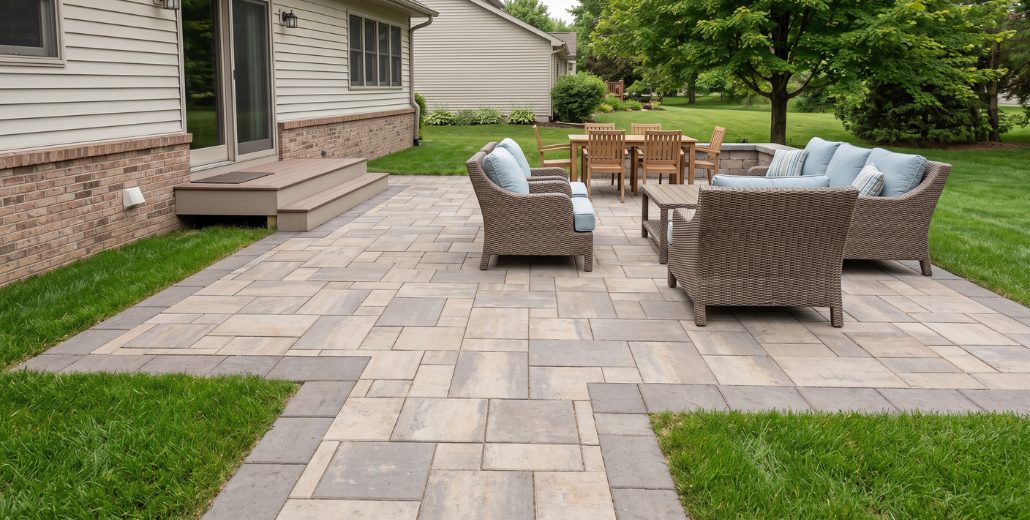
Paver size changes more than the pattern under your feet.
It affects how large or detailed a patio feels, how many joints are visible, how much cutting may be needed, and how the finished surface relates to the home.
For homeowners comparing pavers and hardscape options for West Michigan homes, choosing the right scale can make the patio feel more intentional before color and pattern decisions are finalized.
Why Patio Paver Size Matters
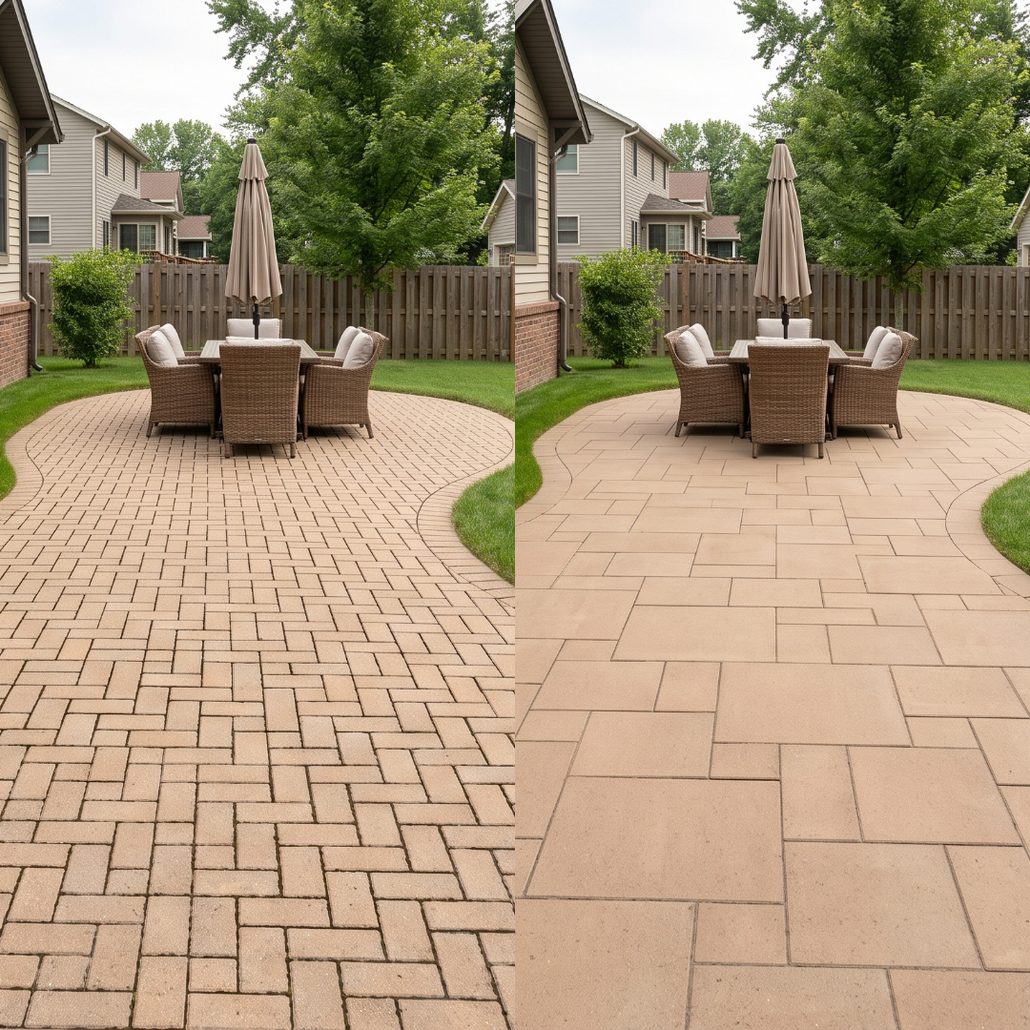
Small and large pavers create different visual rhythms.
Smaller units introduce more joint lines and can support detailed patterns. Larger units reduce the number of joints and often create a cleaner, quieter surface.
Paver size can influence:
- How busy or open the patio feels
- Which patterns are practical
- How many cuts are needed at edges
- How the surface relates to nearby architecture
- How easily curves and tight transitions can be handled
There is no single best size for every patio. The right choice depends on the space, design direction, and specific paver system.
Small Pavers Add Detail and Pattern
Smaller pavers can work well when the project needs visual texture, detailed patterns, or tighter transitions.
They are often useful for:
- Traditional patios
- Walkways
- Borders
- Herringbone or basketweave patterns
- Curves and smaller spaces
Because there are more individual units, the joints become a stronger part of the design.
This can create character, but it can also make a compact patio feel busy when the color blend and pattern are both highly varied.
Large-Format Pavers Create a Cleaner Visual Field
Larger pavers and slabs reduce the number of visible joints across the same area.
That can create a calmer, more contemporary look, especially on simple rectangular patios and larger outdoor rooms.
Belgard's current design guidance shows how larger slabs can make a space feel more expansive and uncluttered.
Homeowners can review an example of large-format paver scale and patio design when comparing the visual effect of larger units.
Large format does not automatically mean better. A very large unit can require awkward cuts if the patio is narrow, irregular, or interrupted by steps and built-in features.
Match Paver Scale to the Shape of the Patio
The overall footprint matters as much as square footage.
A broad rectangular patio can often accommodate larger units with fewer difficult cuts. A narrow walkway or curved patio edge may work more naturally with smaller pieces.
Before selecting a format, consider:
- Patio width and length
- Curves
- Steps
- Columns
- Outdoor kitchen bases
- Fire features
- Drain locations
- Transitions to walkways or lawn
A paver that looks attractive by itself may not be the most balanced choice once those interruptions are added to the layout.
Think About the Number of Cuts
Every patio has edges, and most layouts require some cutting.
Large units can create a clean field, but a compact patio may leave narrow cut pieces along several sides if the dimensions do not work well with the module.
Smaller pavers provide more flexibility around irregular edges, but they also create more individual joints.
The Concrete Masonry & Hardscapes Association notes in its interlocking concrete pavement guidance that paver shape affects available laying patterns and that cut units are used to fit pavement edges.
A simple scaled layout can help homeowners and installers see where cuts are likely before material is ordered.
Paver Size and Pattern Should Be Chosen Together
Some patterns depend on specific shapes and dimensions.
Smaller rectangular units may support herringbone, running bond, basketweave, and other detailed arrangements. Larger slabs often work best with simpler grids, offsets, or modular systems.
Modular paver families combine several compatible sizes so the patio gains variation without appearing random.
Belgard's modular paver size system, for example, uses coordinated dimensions that allow several unit sizes to work together within compatible patterns.
The pattern should be selected from layouts intended for the exact product rather than assuming every size can be arranged in every pattern.
Consider the Architecture of the Home
The patio should feel connected to the scale and style of the home.
Smaller pavers and detailed patterns may complement traditional architecture, brick homes, or spaces where visual texture is already part of the design.
Larger-format pavers can work naturally with:
- Contemporary homes
- Broad windows and doors
- Simple exterior lines
- Large outdoor kitchens
- Open seating areas
These are tendencies, not strict rules. The overall composition matters more than following one style formula.
Mixed Sizes Can Add Interest Without Making the Patio Busy
A multi-size system can provide a middle ground between a uniform grid and a highly detailed small-paver pattern.
Several compatible sizes can create variation while maintaining a consistent material, color palette, and joint structure.
This approach can work especially well when homeowners want visual movement without a highly repetitive pattern.
Keep the rest of the design restrained. If the paver sizes already create movement, too many contrasting colors, borders, and patterns can compete with one another.
Large Pavers Require Careful Base Preparation
Paver selection should never be separated from installation conditions.
Larger units can make variations in the prepared surface more noticeable because each paver spans a greater area.
VanderWall's hardscape guidance emphasizes that the visible paver is only part of the project and that subsoil conditions, gravel base, sand preparation, and installation quality are critical to the finished patio.
Homeowners should discuss base preparation, drainage, and the installation method for the exact paver system before choosing a format based only on appearance.
Confirm Where the Paver Can Be Used
Not every large slab or paver is approved for every application.
A product suitable for a pedestrian patio may not be intended for driveway traffic. Thickness, dimensions, installation system, and manufacturer requirements all matter.
The selected product should be reviewed for the specific application, especially when the project includes:
- Driveways
- Vehicle crossings
- Steps
- Pool areas
- Outdoor kitchens
- Heavy masonry features
Use current manufacturer specifications rather than selecting a product based on size alone.
Compare More Than One Size in Person
Seeing several formats side by side helps homeowners understand joint density, texture, thickness, and overall scale.
VanderWall offers pavers in a variety of patterns, colors, and textures through its West Michigan hardscape selection.
Homeowners can compare paver sizes in person and review how different formats may fit their project.
They can also review VanderWall's guide to common patio paver options before narrowing the product category.
For additional inspiration, VanderWall's paver design ideas show several ways pavers can be incorporated into patios, walkways, fire features, and outdoor kitchens.
A Simple Paver Size Selection Process
1. Measure the Patio
Record the overall dimensions and identify curves, steps, columns, and built-in features.
2. Decide on the Visual Direction
Determine whether the patio should feel detailed and traditional, clean and contemporary, or somewhere between the two.
3. Compare the Pattern and Size Together
Use layouts intended for the specific paver family and look at where cuts will occur.
4. Consider the Home and Furniture
Check whether the paver scale feels balanced with the architecture and the way the patio will be furnished.
5. Review the Product in Person
Compare several sizes, textures, and colors before the final order.
How VanderWall Helps Homeowners Compare Pavers
VanderWall Brothers works with homeowners, builders, and landscape professionals across patios, pavers, retaining walls, masonry, outdoor kitchens, and related hardscape products.
The team can help clients compare material scale, patterns, colors, and application requirements while considering the complete outdoor project.
Seeing materials at full scale can make it easier to understand whether a paver feels appropriately sized before it covers hundreds of square feet.
The Right Paver Size Should Fit the Whole Space
Patio paver size changes the rhythm of the finished surface.
Smaller units can add detail and flexibility. Larger formats can reduce joint lines and create a cleaner visual field. Mixed-size systems can provide controlled variation.
The best choice depends on the patio footprint, pattern, architecture, furniture, installation conditions, and specific product requirements.
Instead of asking only which paver size is most popular, ask which scale makes the complete patio feel balanced.
If you are comparing patio pavers for an upcoming outdoor project, talk with the VanderWall team. Call (616) 842-4500 or visit www.vanderwallbros.com.
What we do
This is work we take on
Reading up is the first step. When you want it built, priced or supplied, these are the pages that cover it.
Keep reading
The Top Landscaping and Hardscaping Trends of 2023
It’s a new year, and the spring season is quickly approaching. There’s no better time for homeowners to give their…
2023’s Top Fireplace Designs
Are you thinking of installing a fireplace this year? Choosing the best option for your home can be challenging…
Can You Add a Fireplace to an Existing Home?
Most of the time, we work with clientele that requests to replace their outdated fireplace with a new and improved one…
Thinking about a project like this?
Reading about it only gets you so far. Tell us the room and we will tell you what is possible in it.
Rather just ask someone?
Call the showroom. If it takes two minutes on the phone we would rather tell you than have you read around it.