
Can You Install Pavers in Winter in Michigan?
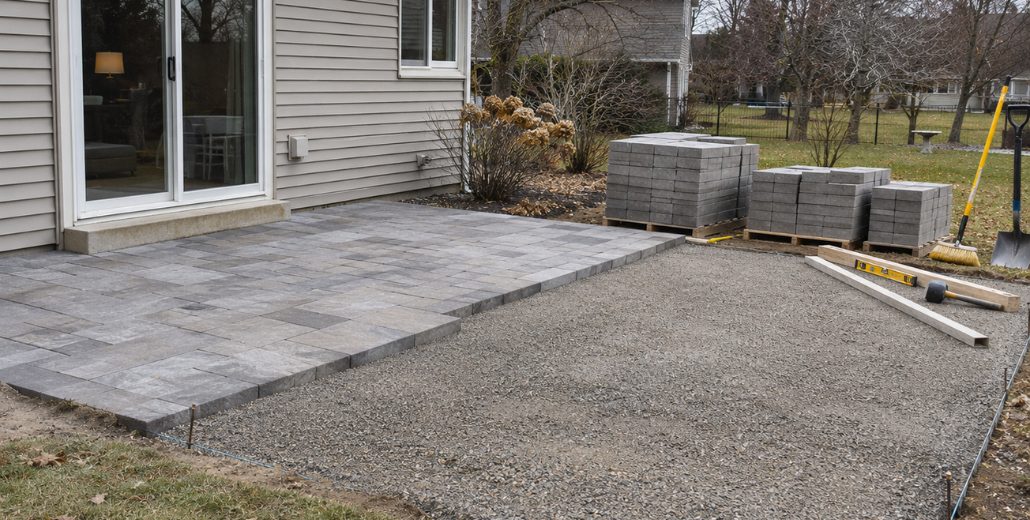
Yes, pavers can sometimes be installed during winter in West Michigan, but only when the ground, base, bedding materials, and weather conditions are suitable. A cold day is not automatically a problem. Frozen ground, saturated bedding sand, or an upcoming freeze during temperature-sensitive finishing work can be.
For homeowners considering a late-fall or winter patio, the question is less about the month and more about whether every layer can be prepared and finished correctly.
Key Takeaways / Summary
- Winter installation is possible in suitable conditions. The soil and base must not be frozen or unsuitable for preparation and compaction.
- Do not install over frozen materials. Frost, ice, heavy snowfall, and saturated bedding can compromise the finished patio.
- Jointing materials have their own temperature rules. Polymeric sand may need a dry, above-freezing period to cure properly.
- Drainage still matters. Snowmelt and freeze-thaw cycles can expose weaknesses in the base and grading.
- Planning can continue even when installation pauses. Material selection, measurements, and layout decisions can happen before spring.
Can Pavers Be Installed When It's Cold Outside?
Sometimes. Interlocking concrete or clay pavers do not depend on warm weather to harden after installation the way freshly poured concrete does. However, the surface units are only one part of a complete paver system.
Below them are the prepared soil, compacted aggregate base, bedding material, and drainage provisions. Each layer must be suitable for construction.
The Concrete Masonry & Hardscapes Association's installation specification advises against placing sand or pavers during heavy rain or snow, over frozen base material, or onto frozen or saturated sand.
Practical tip: Ask the installer what the soil and base conditions are on the actual jobsite, not only what the afternoon air temperature will be.
Why Frozen Ground Is a Problem
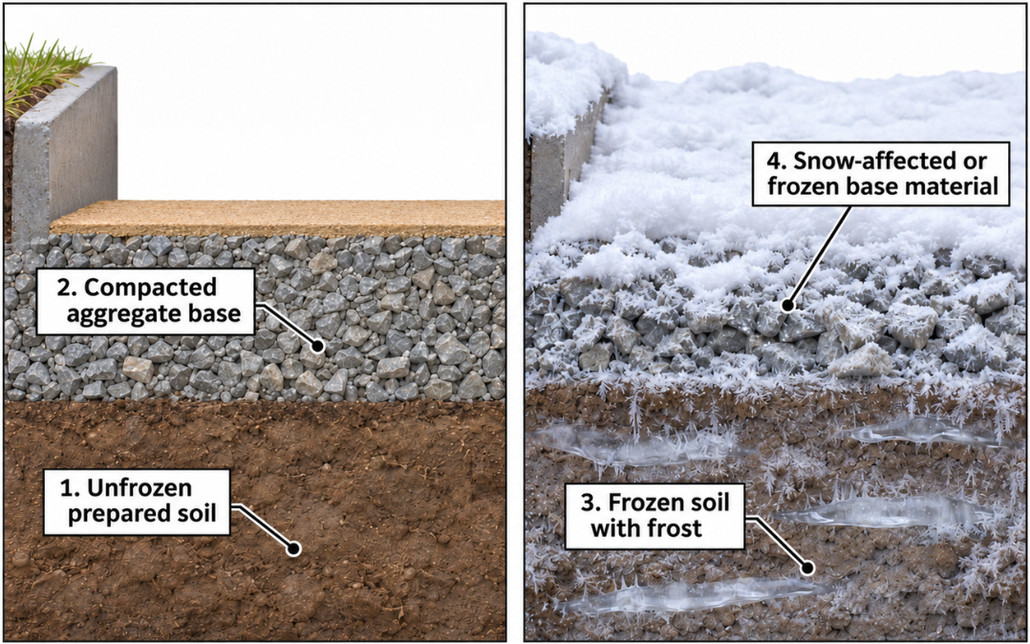
- Unfrozen prepared soil
- Compacted aggregate base
- Frozen soil with frost
- Snow-affected or frozen base material
A paver patio needs a firm, consistently compacted foundation. Frozen soil may temporarily appear hard, but its condition can change substantially after it thaws.
If an unsuitable frozen layer is covered, the thaw can leave weak spots or uneven support beneath the finished patio.
Possible symptoms later include rocking pavers, settled areas, uneven joints, and puddling. Those symptoms can also have other causes, so they are not proof of a winter-installation error.
CMHA's interlocking concrete pavement construction guidance specifically warns against installing frozen base materials or placing base materials on frozen soil.
The solution is not to hide frost beneath more gravel or bedding sand. The installation conditions must be corrected before proceeding.
Cold-Weather Paver Installation: What to Check
A responsible go-or-pause decision should cover the complete installation sequence.
- Soil conditions: Confirm the excavation area is unfrozen, firm, and suitable for preparation.
- Base materials: Check that the aggregate is not frozen and can be compacted to the project's requirements.
- Drainage: Maintain the planned slope and outlet paths for rainfall and snowmelt.
- Bedding layer: Do not place pavers on frozen or saturated bedding sand.
- Surface installation: Confirm the selected pavers and setting method are appropriate for the weather.
- Joint filling: Follow the exact product's temperature, moisture, and curing instructions.
- Site protection: Keep unfinished areas and stored materials protected from snow, standing water, and contamination.
For more on where water should go, review VanderWall's guide to patio drainage before choosing pavers.
Does Polymeric Sand Work in Winter?
Only if the specific product's weather requirements can be met.
Polymeric sand uses binders that need proper activation and curing. Cold temperatures, damp pavers, frost, and unexpected precipitation can interfere with the process.
For example, Alliance Gator's polymeric sand guidance states that its polymeric sand is engineered for installation above 32 degrees F. That is a product-family example, not a universal minimum for all jointing materials.
Some products require warmer temperatures or a longer dry period. Check the specific bag and current technical instructions, including nighttime temperatures and the forecast during curing.
Do not assume that a warm afternoon makes an overnight freeze acceptable. A contractor may choose to delay the final jointing step until conditions meet the selected product's instructions.
What About Mortar, Adhesives, and Sealers?
Not every patio uses the same construction method. Some pavers or natural-stone installations involve mortar, specialty adhesives, or concrete components.
Those materials can have additional cold-weather placement and curing restrictions. Sealers and cleaners may also require particular temperatures and dry surfaces.
Follow the applicable manufacturer's instructions and project specifications rather than applying the requirements for a conventional sand-set patio to every system.
When Should the Work Be Postponed?
Conditions that may justify stopping or rescheduling include:
- Frozen soil or a frozen aggregate base
- Ice or snow in the excavation or bedding layer
- Heavy snowfall or rain during placement
- Soft, saturated soil that cannot be properly prepared
- Jointing or bonding materials that cannot meet their curing requirements
- No practical way to protect unfinished work from incoming weather
A contractor should judge these conditions on site. A fixed calendar cutoff is less useful than the actual ground conditions and the requirements of the selected paving system.
Can You Start the Patio Project Now and Finish Later?
Sometimes, but staging needs a plan. Leaving an excavation, unprotected bedding layer, or partially completed edge exposed through winter can create drainage and safety problems.
Discuss which stages can be completed reliably, how incomplete work will be protected, and what will need to be rechecked after thawing. For some projects, it makes more sense to complete the design and material selection now and schedule construction for a suitable weather window.
That planning can include paver sizes and patterns, dimensions, steps, access routes, and how the patio will connect to the home.
West Michigan Winter Patio Planning Checklist
- Has the contractor confirmed that the soil and base are unfrozen?
- Can the area be graded and compacted correctly?
- Where will snowmelt and rainwater go?
- Are the bedding and pavers dry and suitable for installation?
- Will overnight temperatures meet jointing-material requirements?
- Is there a plan if snowfall interrupts work?
- Are door thresholds, steps, and finished elevations confirmed?
Bottom line: Winter itself is not the deciding factor. Suitable ground, materials, weather, and installation methods are.
Plan Your Patio With VanderWall Brothers
VanderWall Brothers helps West Michigan homeowners compare pavers and hardscape materials for patios, walkways, and outdoor living projects.
Bring your site photos, approximate dimensions, and project goals to the Spring Lake or Grand Rapids showroom, or contact the VanderWall team to discuss material options and installation planning. Weather-dependent construction schedules should be confirmed for the specific project.
What we do
This is work we take on
Reading up is the first step. When you want it built, priced or supplied, these are the pages that cover it.
Keep reading
How to Plan a Patio Around Everyday Use in West Michigan
A patio should do more than fill space in the backyard.
What to Know Before Choosing a Gas Fireplace Insert
An older fireplace can still be one of the most important features in a home.
What Builders Should Confirm Before Fireplace Installation Begins
Fireplace installation is easier to coordinate when the main details are confirmed before the work starts.
Thinking about a project like this?
Reading about it only gets you so far. Tell us the room and we will tell you what is possible in it.
Rather just ask someone?
Call the showroom. If it takes two minutes on the phone we would rather tell you than have you read around it.