
Gas Logs vs. Gas Fireplace Insert: Which Is Better?
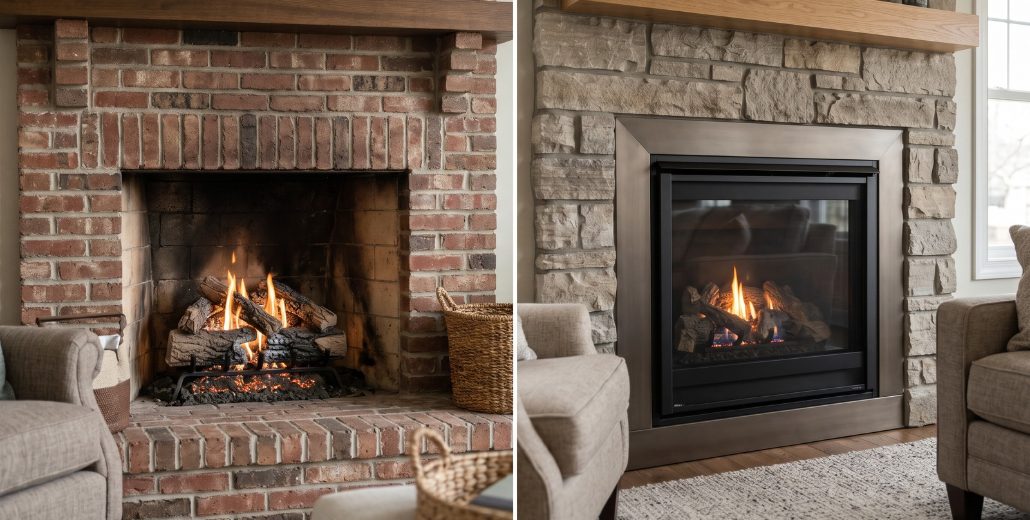
If you have an existing wood-burning fireplace, gas logs are often the simpler choice for realistic flames and convenience. A direct-vent gas fireplace insert is usually the stronger option when you also want useful room heat and a more sealed fireplace system.
Both options can eliminate the work of carrying firewood and cleaning up ash. But they use the existing firebox and chimney differently, which affects performance, installation scope, and total project cost.
Key Takeaways
- Choose vented gas logs primarily for appearance. They operate within an approved existing fireplace and usually provide limited net room heat.
- Choose a direct-vent gas insert for heating. It is a self-contained appliance with sealed glass and a dedicated venting system.
- The existing fireplace must be evaluated. Chimney condition, opening dimensions, fuel supply, and appliance approvals can change the available options.
- Gas logs generally involve a smaller initial project. Inserts typically require more equipment and installation work, but the right comparison is a complete quote.
- Neither choice should be installed based on appearance alone. Product instructions, clearances, and local requirements control the installation.
What Is the Difference Between Gas Logs and a Gas Fireplace Insert?
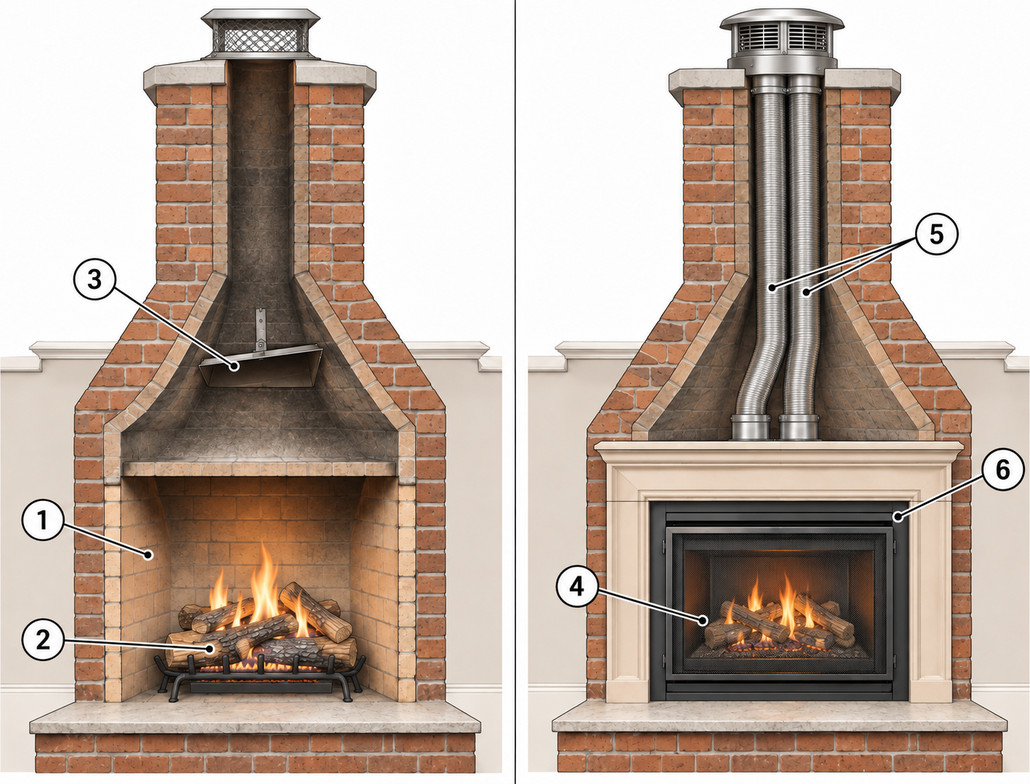
- Existing open masonry firebox
- Vented gas log set
- Existing chimney and damper arrangement
- Sealed direct-vent gas insert
- Dedicated listed vent liners
- Finished insert surround
A vented gas log set includes a burner and decorative logs installed inside an existing, approved wood-burning fireplace. It retains the open-hearth look and sends combustion products through the existing chimney. A vented set requires an appropriate functioning chimney and damper arrangement.
A direct-vent gas insert is a complete fireplace appliance that fits into an existing fireplace opening. It typically has sealed glass, a safety barrier, and its own combustion-air and exhaust vent liners routed through the chimney.
Heat & Glo's wood-to-gas conversion guide identifies both as possible choices for suitable existing masonry fireplaces. The exact options depend on the existing structure and product listing.
Gas Logs vs. Gas Insert: Quick Comparison
| Consideration | Vented Gas Logs | Direct-Vent Gas Insert |
|---|---|---|
| Main purpose | Flame appearance and convenience | Flame appearance and supplemental heat |
| Firebox | Uses existing open firebox | Self-contained unit fitted into opening |
| Venting | Existing approved chimney | Dedicated listed vent system |
| Front appearance | Traditional open hearth | Sealed glass and finished surround |
| Typical project scope | Generally less extensive | Generally more extensive |
| Room heating | Usually limited | Generally more effective |
Which One Provides More Heat?
If room warmth is a main goal, a properly sized direct-vent insert is usually the better starting point. Its sealed combustion system helps retain conditioned room air, while its design transfers heat into the space. Certain models also offer fans and adjustable flame or heat settings.
Vented gas logs create a visible flame, but much of their heat travels up the chimney. The Hearth, Patio & Barbecue Association's gas-log guidance describes vented log sets primarily as decorative appliances.
That distinction matters in West Michigan. Someone who wants an attractive fire for occasional evenings may prioritize a vented log set. Someone hoping to warm a frequently used living room should compare the rated heat output and efficiency of compatible inserts.
Neither should be assumed to replace the home's primary heating system without an appropriate heating assessment.
Which Option Costs Less to Install?
Gas logs typically have a lower initial equipment and installation cost when the existing fireplace and chimney are approved and a suitable gas supply is available.
A direct-vent insert adds the complete appliance, vent liners, a termination system, trim, and potentially electrical work. Opening modifications or surrounding masonry repairs can also affect the budget.
However, there is no reliable universal installed price for every West Michigan home. Your quote may change based on:
- Firebox dimensions and condition
- Chimney inspection findings
- Gas-line location and capacity
- Electrical requirements and controls
- Selected model, surround, and finish materials
- Permit, venting, and installation needs
Compare complete project scopes, not just the appliance sticker prices. VanderWall's fireplace and insert team can help review product options and what installation may involve.
Can Either One Go Into Any Wood-Burning Fireplace?
No. The original fireplace must be identified and checked before either product is selected.
For gas logs, the fireplace and chimney need to be suitable for the listed log set. A factory-built wood-burning fireplace may have specific restrictions on approved gas-log use. A damaged or obstructed chimney is not ready for a vented log installation.
For an insert, opening width, height, and depth matter, along with the fireplace's construction, vent path, mantel and hearth clearances, and the exact insert's listing.
The Chimney Safety Institute of America recommends inspecting chimney and venting systems before installing a new hearth appliance. This applies whether you're considering gas logs or an insert.
Practical tip: Bring clear photos, fireplace opening measurements, and any existing appliance model information to your showroom conversation. Do not make permanent modifications before a qualified installer confirms compatibility.
What About Vent-Free Gas Logs?
Vent-free gas logs are a different category from the vented log sets compared here. They release combustion byproducts, including moisture, into the room rather than sending them through a chimney.
Availability and installation depend on state and local requirements, room conditions, the appliance listing, and manufacturer instructions. They should not be treated as an automatic alternative when the existing chimney is unsuitable.
Ask a qualified fireplace professional to explain permitted options and the indoor-air-quality considerations before choosing a vent-free product.
Which Look Will Fit Your Living Room?
Gas logs preserve more of the existing open-fireplace appearance. The original brick interior, hearth proportions, and traditional opening can remain prominent.
An insert changes the presentation. The glass front, decorative surround, and the viewing area become part of the room's finished composition. That can be an advantage when the goal is a more polished fireplace update.
VanderWall's gas fireplace insert planning guide explains what to review before selecting an insert, including the opening, venting path, and surrounding materials.
What Should You Bring Before Requesting a Quote?
- Photos of the fireplace, hearth, and chimney exterior
- Approximate firebox opening width, height, and depth
- Any fireplace manufacturer or model information
- Whether natural gas or propane is already available
- Your main goal: decorative flames, room heat, or both
- Preferred look and an approximate project budget
A qualified installer will still need to confirm field measurements and installation conditions. Your photos simply make the first conversation more useful.
Compare Gas Logs and Inserts at VanderWall Brothers
For an existing fireplace, the best choice depends on how you want to use it and what the fireplace can safely accommodate. Gas logs often suit homeowners who prioritize a traditional fire appearance. A direct-vent insert is generally the stronger candidate for both flames and supplemental warmth.
VanderWall Brothers helps homeowners across West Michigan compare gas log options, fireplace inserts, and installation needs. Visit the Spring Lake or Grand Rapids showroom, or contact the VanderWall team to discuss your fireplace and request a project-specific estimate.
What we do
This is work we take on
Reading up is the first step. When you want it built, priced or supplied, these are the pages that cover it.
Keep reading
Retaining Walls in West Michigan: Height, Drainage, and the Rules That Apply
A retaining wall is the only thing in a yard that is holding something back every hour of its life. A patio sits still…
Gas Fireplace Smells Like Burning Plastic or Gas? What Is Normal and What Is
A gas fireplace should not leave you guessing whether an odor is normal or a warning sign.
Can You Put an Outdoor Kitchen on a Paver Patio?
Yes, many outdoor kitchens can be installed on a properly planned paver patio, but the pavers themselves are only part…
Thinking about a project like this?
Reading about it only gets you so far. Tell us the room and we will tell you what is possible in it.
Rather just ask someone?
Call the showroom. If it takes two minutes on the phone we would rather tell you than have you read around it.