





Gas Fireplace Smells: What's Normal and What's Not?
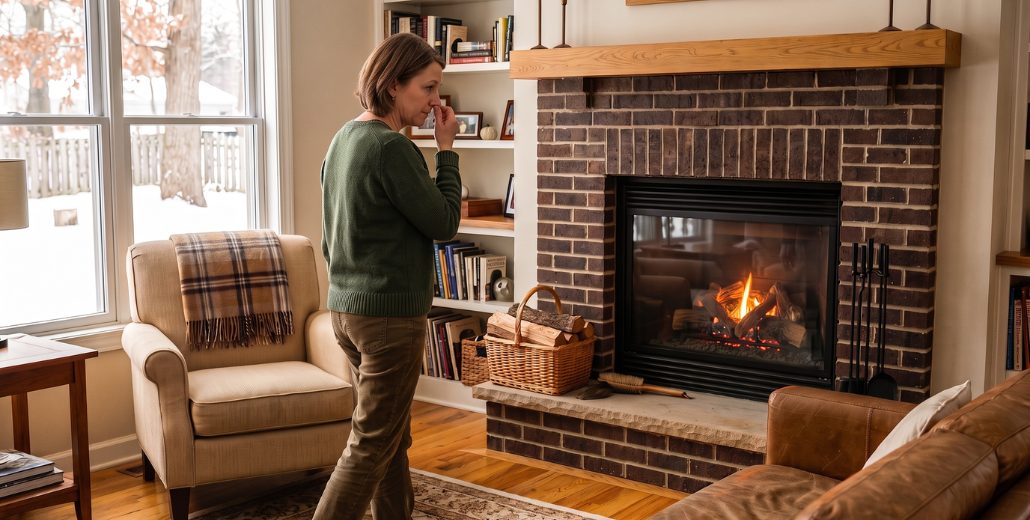
A gas fireplace should not leave you guessing whether an odor is normal or a warning sign.
Some smells can happen when a new fireplace is going through its first burn-in or when dust heats up after months of inactivity. Other odors, especially a rotten-egg or sulfur smell associated with natural gas, should be treated as a potential gas leak.
The safest approach is to identify the type of smell first, avoid taking apart or troubleshooting gas components yourself, and know when to stop using the fireplace and call for help.
Key Takeaways / Summary
- A rotten-egg or sulfur smell is not a wait-and-see situation. Leave the building and report a suspected gas leak from a safe location.
- A new fireplace may produce a temporary non-gas odor. Manufacturers describe a burn-in period as paints, oils, and other manufacturing residues cure.
- The first use after a long break may smell dusty. Dust can collect on fireplace components while the unit is not being used.
- A persistent burning, electrical, plastic, smoky, or unfamiliar odor deserves attention. Stop using the fireplace until the cause is understood.
- Carbon monoxide has no smell. Odor alone cannot tell you whether carbon monoxide is present, so working CO alarms remain important around fuel-burning appliances.
If It Smells Like Rotten Eggs or Sulfur, Leave First
Natural gas is intentionally odorized so people can detect a leak. If you smell a distinct rotten-egg or sulfur odor, do not stand near the fireplace trying to determine whether the burner, pilot, valve, or gas line is responsible.
Consumers Energy advises anyone who smells natural gas or suspects a leak to leave the area immediately, avoid using electrical devices, and call 911 and the utility from a safe place outside.
Follow the utility's natural gas safety guidance rather than attempting to locate or repair the leak yourself.
Practical tip: Do not confuse a true gas odor with the temporary hot-metal or paint-curing smell that can occur with a new fireplace. If you are unsure whether the odor is gas, choose the safer response and leave the area.
Why Can a New Gas Fireplace Smell?
A newly installed fireplace can produce a noticeable odor during its first operation even when the smell is not natural gas.
Napoleon explains that new fireplaces can emit a temporary odor during the initial burn-in as paints and lubricants used during manufacturing cure. Regency similarly notes that paint and manufacturing oils can create an odor during the first fire.
Review the instructions for the exact fireplace model before completing its initial burn-in. Manufacturer procedures vary, including how long the unit should operate and what ventilation is recommended.
For an example of current manufacturer guidance, see Napoleon's fireplace support information.
Practical tip: If the fireplace is brand new, keep the owner's manual available during the first few uses. Do not substitute a general internet burn-in schedule for the instructions supplied with your exact model.
Why Does It Smell Dusty the First Time Each Season?
A gas fireplace that has been off for months can collect ordinary household dust on accessible internal components and air passages.
Napoleon's owner guidance notes that house dust can collect while a fireplace is unused and may create an odor during the first few hours of seasonal operation.
A temporary dusty or hot smell that appears only after a long period of inactivity is different from a rotten-egg gas odor.
Regular cleaning can help reduce seasonal dust buildup, but follow the owner's manual and avoid disturbing the burner, logs, pilot assembly, wiring, or gas components unless the manufacturer specifically identifies the task as homeowner maintenance.
What If It Smells Like Burning Plastic or Chemicals?
Context matters.
On a new fireplace, a temporary manufactured or paint-curing odor may be part of the initial break-in. On an older fireplace that has already been used regularly, a new plastic, electrical, or chemical smell should not automatically be treated as normal.
Possible sources around the fireplace can include objects on or near the mantel, cleaning-product residue, nearby materials becoming unusually warm, or a service issue that requires inspection.
Regency warns that standard household glass cleaners can leave chemical residue on fireplace glass that may create unpleasant odors when the fireplace is restarted. Its gas fireplace maintenance guide recommends using products appropriate for fireplace glass and following the owner's manual.
Practical tip: If an unfamiliar burning or electrical smell persists, shut the fireplace off and have it evaluated rather than repeatedly operating it to see whether the smell disappears.
What If the Fireplace Smells Smoky or Sooty?
A direct-vent gas fireplace is designed differently from an open wood-burning fireplace, so a persistent smoky or exhaust-like smell inside the room should not simply be accepted as part of normal operation.
The correct response depends on the fireplace type. Gas logs, inserts, direct-vent fireplaces, and vent-free systems do not all manage combustion or venting the same way.
VanderWall's guide to direct vent, vent-free, and electric fireplace systems explains those basic differences.
If an odor is persistent, new, or accompanied by visible soot, unusual flame behavior, repeated shutdowns, or other changes in operation, stop using the fireplace and schedule professional service.
Can Carbon Monoxide Have a Smell?
No. Carbon monoxide is colorless, odorless, and tasteless.
That means a home can have a carbon monoxide problem without producing a warning smell. Consumers Energy recommends working carbon monoxide alarms in homes with fuel-burning equipment and provides additional carbon monoxide safety guidance.
If a CO alarm activates, or anyone experiences symptoms that may indicate carbon monoxide exposure, leave the building and follow emergency guidance.
When Should You Stop Using the Fireplace?
Stop using the fireplace and seek appropriate help when:
- You smell rotten eggs or sulfur.
- The odor is strong, persistent, or getting worse.
- You smell burning plastic or an electrical odor from an established fireplace.
- You see soot where it normally does not appear.
- The flame suddenly looks different from its normal operation.
- The fireplace repeatedly shuts down or has delayed ignition.
- You see damaged components or venting.
- A smoke or carbon monoxide alarm activates.
For an actual gas odor, follow the gas utility's emergency instructions first. For non-emergency operating problems, VanderWall provides fireplace inspection, repair, and annual service across West Michigan.
What Can Homeowners Safely Check?
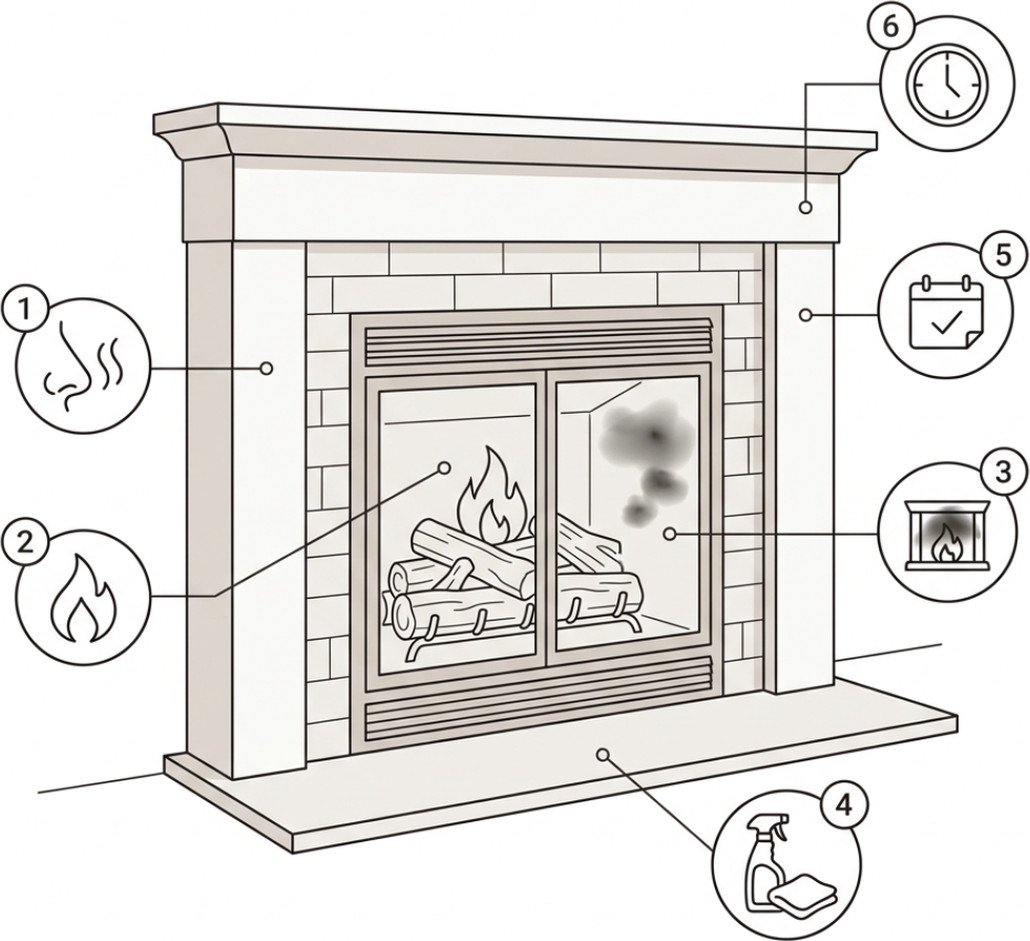
- Type of smell
- Flame or operating changes
- Glass, soot, or visible-condition changes
- Recent changes around the fireplace
- When it starts
- How long it lasts
Homeowners do not need to disassemble the gas system to gather useful information for a service call.
Instead, record:
- What the odor smells like. Dusty, hot metal, chemical, electrical, smoky, musty, or sulfur-like?
- When it starts. Before ignition, immediately after startup, after the fireplace becomes hot, or after shutdown?
- How long it lasts. Seconds, a few minutes, or throughout operation?
- Whether the fireplace is new. Has it completed the manufacturer's initial burn-in?
- Whether anything changed. New paint, cleaning products, mantel decor, construction work, service, or a long period without use?
- Whether performance changed. Flame appearance, noise, shutdowns, glass condition, or soot?
Those observations can help a technician understand the problem without the homeowner opening gas components.
Routine Maintenance Can Prevent Some Odor Problems
Gas fireplaces still need maintenance even though they do not create the ash and wood debris associated with a traditional wood fire.
Manufacturer maintenance guidance commonly includes cleaning glass correctly, keeping airflow areas clear, inspecting accessible components, and having the venting and appliance serviced as appropriate for the model.
VanderWall also provides fireplace owner help videos for basic operating and cleaning tasks that may help homeowners avoid unnecessary service calls.
For anything involving gas supply, combustion, venting, safety controls, or internal service components, use a qualified fireplace service professional and follow the manufacturer's instructions.
Know the Difference Between Temporary and Unexplained
A temporary odor during the manufacturer's initial burn-in or after seasonal dust has accumulated may have a straightforward explanation.
An unexplained smell that appears suddenly on a fireplace that has been operating normally deserves more caution.
The most important distinction is a natural-gas odor. If you smell rotten eggs or sulfur, leave the building and follow your utility's emergency instructions from outside.
For other persistent odors or changes in fireplace operation, talk with the VanderWall service team. Describe the smell, when it occurs, and the fireplace brand and model if known so the team can help determine the appropriate next step.
What we do
This is work we take on
Reading up is the first step. When you want it built, priced or supplied, these are the pages that cover it.
Keep reading
Can You Put Stone Veneer Over a Brick Fireplace?
Yes, stone veneer can often be installed over an existing brick fireplace, but the brick has to be stable, clean…
Buying Cultured Stone in Michigan: How It Is Made, How It Is Sold, and How
People shopping for cultured stone usually arrive with a picture and leave with a question about arithmetic. The look is…
Can You Put Pavers Over a Concrete Patio?
Yes, pavers can often be installed over an existing concrete patio, but only when the slab is stable, drains properly…
Thinking about a project like this?
Reading about it only gets you so far. Tell us the room and we will tell you what is possible in it.
Rather just ask someone?
Call the showroom. If it takes two minutes on the phone we would rather tell you than have you read around it.