
Polymeric Sand vs. Regular Sand for Pavers
For many conventional paver patios, polymeric sand is a good choice because it helps joint material resist washout, weeds, and insect activity. Regular joint sand costs less and is simpler to replenish, but it generally requires more maintenance.
Neither option is automatically right for every project. The best choice depends on the paver system, joint dimensions, drainage, installation conditions, and how the patio will be maintained.
Key Takeaways / Summary
- Polymeric sand contains binding additives. When properly activated and cured, they help the material stay together.
- Regular joint sand stays loose. It is easier to replenish but more susceptible to erosion and displacement.
- Polymeric sand can reduce weeds and washout. It does not eliminate maintenance or correct structural problems.
- Installation requirements matter. Joint depth, surface cleanliness, moisture, and curing conditions affect performance.
- Permeable pavers are different. They generally use specified open-graded joint aggregate to allow water to pass through.
What Is the Difference Between Polymeric Sand and Regular Sand?
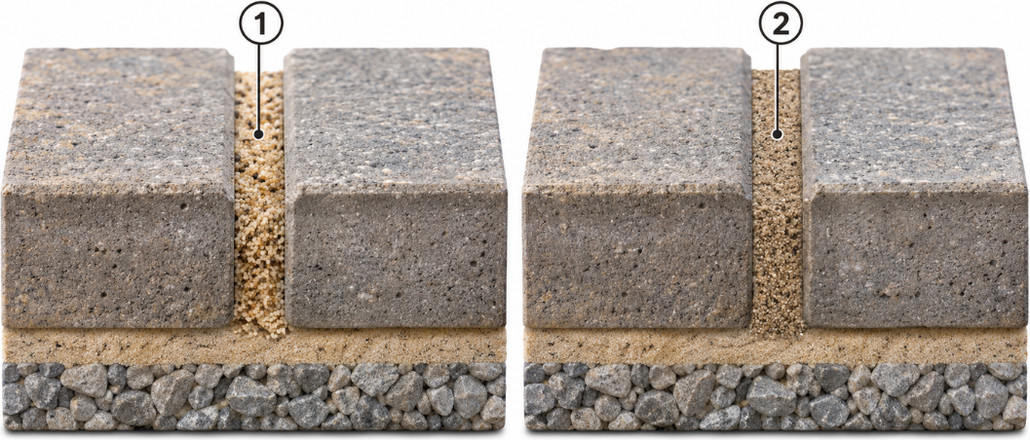
- Regular loose joint sand
- Consolidated polymeric joint sand after curing
Both materials fill the spaces between pavers, but they behave differently after installation.
Regular joint sand consists of appropriately graded mineral particles without polymer binding additives. It remains relatively loose and can be displaced by water, wind, cleaning, or regular use.
Polymeric sand combines graded sand with binders that activate when water is applied according to the manufacturer's directions. After curing, the joint becomes more cohesive and resistant to erosion.
Unilock's patio installation guidance identifies polymeric sand as a common jointing material because it helps resist erosion, weed growth, and insect activity.
The difference is not simply that one sand is stronger. They require different installation and maintenance approaches.
Polymeric Sand vs. Regular Sand: Quick Comparison
| Consideration | Polymeric Sand | Regular Joint Sand |
|---|---|---|
| Binding additives | Yes | No |
| Washout resistance | Generally higher after curing | Generally lower |
| Weed resistance | Helps inhibit growth | Offers less resistance |
| Installation | Requires controlled activation and curing | Simpler filling and consolidation |
| Maintenance | May need eventual repair or replacement | More frequent replenishment may be needed |
| Initial material cost | Generally higher | Generally lower |
When Does Polymeric Sand Make Sense?
Polymeric sand is often appropriate for compatible sand-set concrete or clay paver patios, walkways, and certain driveway installations.
It is particularly useful when homeowners want to reduce recurring joint washout or loose material collecting along the patio edges.
Potential advantages include:
- Better resistance to rain-related joint erosion
- Reduced opportunities for weeds to establish in joints
- Less disturbance from some insect activity
- A more consistent finished joint appearance
- Less frequent joint replenishment when installed correctly
However, the product must be approved for the paver type, joint width, joint depth, and installation conditions.
Do not assume every bag of polymeric sand is suitable for large natural-stone joints, narrow joints, driveways, or existing concrete overlays.
When Might Regular Joint Sand Be Appropriate?
Regular joint sand may be appropriate when the selected conventional paving system allows it and the homeowner accepts more frequent maintenance.
It can also be practical where pavers are expected to be lifted and reset, provided the installation specifications permit ordinary joint sand.
The trade-off is that loose material can gradually wash or move out of the joints.
Important: A permeable paver installation should not automatically use regular sand instead of polymeric sand. True permeable systems generally require clean, open-graded stone in the joints to maintain their intended drainage performance.
Confirm the appropriate joint material with the paver manufacturer.
Joint Sand Is Not the Same as Bedding Sand
The sand between pavers and the bedding material beneath them have different jobs.
Joint sand fills the spaces between the units and contributes to interlock in conventional segmental paving systems.
Bedding sand provides a prepared setting layer beneath the pavers. Below that, the aggregate base supports the overall installation.
Replacing joint sand cannot correct a poorly compacted base, severe settlement, or improper drainage.
For homeowners planning a new surface, VanderWall's guide to types of patio pavers is a useful starting point for comparing the actual paving materials.
Does Polymeric Sand Stop Weeds Completely?
No. Properly installed polymeric sand can make the joints less favorable for weed growth, but it is not a guarantee of a weed-free patio.
Seeds can collect on the surface, organic debris can accumulate, and vegetation may eventually establish where material has deteriorated or joints remain disturbed.
According to Sakrete's guidance for existing patios, polymeric sand can reduce weed growth and erosion, but substantial existing root systems may require more extensive attention.
Routine sweeping, appropriate cleaning, and inspecting joints remain important.
Can You Put Polymeric Sand Over Existing Regular Sand?
Generally, you should not simply spread a thin layer of polymeric sand over loose material already in the joints.
Many products require sufficient clean joint depth to activate and consolidate properly.
For an existing patio, the process typically involves:
- Inspecting the pavers for movement, damage, or drainage problems.
- Removing existing joint material to the depth required by the selected product.
- Clearing debris and allowing the joints and pavers to dry as instructed.
- Filling and consolidating the new sand to the specified level.
- Removing residue from the paver surfaces before water activation.
- Following the exact watering and curing instructions.
Some textured or porous paver surfaces require additional precautions to avoid staining or haze.
If the pavers are sinking or moving, correct the underlying problem before replacing the joint material.
Why Does Polymeric Sand Sometimes Fail?
Even a suitable product can perform poorly when installation conditions are wrong.
Common causes include:
- Insufficient joint depth
- Incorrect material for the joint width
- Residual moisture before installation
- Too much or too little activation water
- Rain before the material has cured
- Polymer dust left on the paver surface
- Continuing movement or drainage problems beneath the patio
Techniseal's polymeric sand instructions specify product compatibility and application requirements. Those directions should take priority over generic installation advice.
What About West Michigan Weather?
West Michigan patios experience rain, seasonal moisture, freezing temperatures, and repeated freeze-thaw conditions.
These conditions make drainage, base preparation, and appropriate joint materials especially important.
Polymeric sand can help resist joint erosion, but it does not waterproof a patio or prevent the movement of an improperly constructed base.
For a new installation, consider paver size and joint layout alongside drainage, base conditions, and joint-material compatibility.
Which Sand Should You Choose?
For a conventional sand-set patio with compatible pavers and joints, polymeric sand is often worth considering when reduced washout and maintenance are priorities.
Regular joint sand can remain a valid choice when specified by the paving system and when periodic replenishment is acceptable.
For permeable paving, follow the manufacturer's open-graded aggregate requirements rather than substituting either material.
The right decision starts with the complete patio system, not only the price or promises printed on the sand bag.
Plan Your Paver Project With VanderWall Brothers
VanderWall Brothers provides pavers and hardscape products for patios, walkways, and other outdoor spaces throughout West Michigan.
Visit the Spring Lake or Grand Rapids showroom to compare materials, or contact the VanderWall team with your project details. Knowing your paver type, joint dimensions, and existing patio condition can help narrow the appropriate installation approach.
What we do
This is work we take on
Reading up is the first step. When you want it built, priced or supplied, these are the pages that cover it.
Keep reading
Why Masonry Details Matter in West Michigan Home Projects
Masonry is often one of the first things people notice in a finished home project.
West Michigan Outdoor Living Spaces: Planning Guide
Outdoor living spaces are no longer treated as small add-ons at the end of a home project.
How to Choose the Right Fireplace for Your West Michigan Home
For most homeowners, the better question is how the fireplace will fit into the way the home is used. A fireplace can…
Thinking about a project like this?
Reading about it only gets you so far. Tell us the room and we will tell you what is possible in it.
Rather just ask someone?
Call the showroom. If it takes two minutes on the phone we would rather tell you than have you read around it.