
Buying Brick From a West Michigan Yard: Matching, Sizes, and How Much to Order
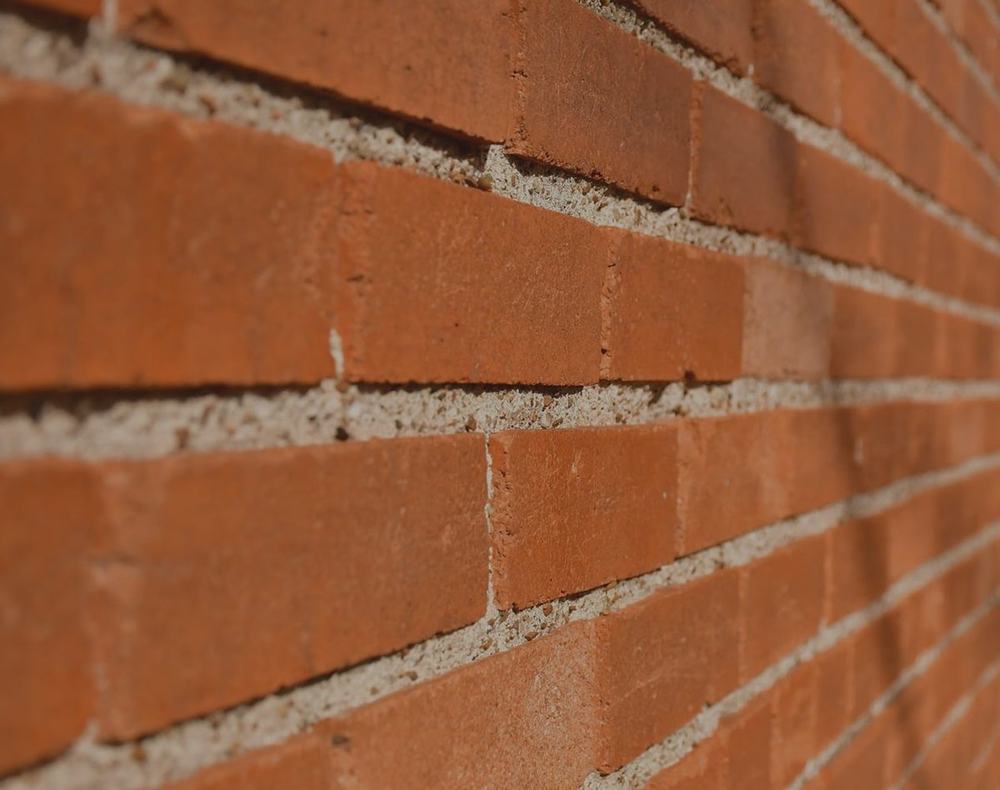
Most brick questions at a supply counter are not about picking a brick. They are about finding one. An addition has to meet a wall that went up 30 years ago. A garage repair needs 40 brick that look like the other 4,000.
VanderWall Brothers has supplied masonry materials in West Michigan since 1922, from showrooms in Spring Lake and Grand Rapids. These are the notes the counter would want you to have before you order.
Key Takeaways / Summary
- Order by dimensions, not by name. Brick names change from one manufacturer to the next. Width by height by length does not.
- A modular brick is 3 5/8 by 2 1/4 by 7 5/8 inches. With a 3/8 inch joint it takes 6.75 brick per square foot of wall.
- Add at least 5 percent for breakage and waste, and 15 to 25 percent on the mortar.
- Buy the whole job from one production run. Color shifts slightly from run to run, and a second order later is where mismatches start.
- Mortar is half of a match. The color and the strength both have to suit the old wall. A mortar stronger than the original can damage it.
- In Michigan, exterior face brick should be Grade SW, the severe weathering grade in ASTM C216.
Matching Brick That Is Already on the Wall
The Brick Industry Association's maintenance guide is candid: locating matching brick may take considerable effort. A replacement has to match the existing brick in color, texture and size, and in its physical properties too.
- Size. Measure a brick on the wall, or better, a loose one. Width (the depth into the wall), height and length, to the nearest 1/16 inch. Size is the one part of a match with no give. A brick that runs taller than its neighbors will not line up with the courses beside it.
- Texture. Smooth, wire-cut, tumbled, sand-faced. Look at the face in raking light, not straight on.
- Color range. Not the color of one brick. Stand back and look at 20 of them. Most walls are a blend, and a match has to reproduce the range, not the average.
The best reference is a real brick. Leftovers sometimes turn up in the garage rafters, under the deck or behind the shed. If there are none, a clean, straight-on photo of the wall in daylight is the next best thing, with a tape measure held across a few courses.
Before the new brick goes up, lay out a small sample panel next to the old wall. That is the Brick Industry Association's recommendation for replacement brick, and the panel should show the full range of colors and textures you are buying.
If the job is about pairing brick with stone or siding rather than matching what is there, that is a design question, covered in coordinating stone and brick with the style of your home.
Brick Sizes, Written the Way They Are Ordered
A brick is described width first, then height, then length, as it sits in the wall. Names like Queen or Norman are handy shorthand, but the Brick Industry Association warns that a brick name can vary from manufacturer to manufacturer. Its advice is to order and specify by the actual dimensions.
These are common sizes from BIA Technical Note 10, with the count per square foot of wall at a 3/8 inch joint:
| Name | Width x height x length (inches) | Brick per sq. ft. |
|---|---|---|
| Modular | 3 5/8 x 2 1/4 x 7 5/8 | 6.75 |
| Standard | 3 5/8 x 2 1/4 x 8 | 6.55 |
| Engineer modular | 3 5/8 x 2 13/16 x 7 5/8 | 5.63 |
| Queen | 2 3/4 x 2 3/4 x 7 5/8 | 5.50 |
| King | 2 3/4 x 2 5/8 x 9 5/8 | 4.55 |
| Norman | 3 5/8 x 2 1/4 x 11 5/8 | 4.50 |
| Utility | 3 5/8 x 3 5/8 x 11 5/8 | 3.00 |
Queen and King vary most. Some are 3 inches wide, and some Kings run 2 3/4 by 9 3/4, which is why the tape measure beats the name.
Modular brick are sized so the brick plus its joint lands on a round module: three courses of modular brick rise 8 inches. Standard, Queen and King are non-modular. BIA notes most brickwork today is modular, but measure before assuming.
How Much Brick to Order
The Brick Industry Association's method is plain arithmetic. Take the net wall area, meaning the gross area minus windows and doors, and multiply by the brick per square foot for your size.
A new wall 24 feet long and 8 feet high is 192 square feet. Take out a 3 by 4 foot window and 180 square feet remain. In modular brick, that is 180 times 6.75, or 1,215 brick.
Then add waste. BIA's guidance is at least 5 percent on the net count, more when the job calls for it, and 15 to 25 percent on the mortar. For this wall, 5 percent takes the order to about 1,276 brick.
For a small repair, count brick instead of square feet. Then order a few extra, because the extras are your future repair stock.
Why the Whole Job Should Come From One Run
Brick is made from natural clay and fired in a kiln. BIA notes that color can vary between production runs and occasionally within the same run. Its selection guide says it outright: it is best to purchase all brick from the same production run.
Manufacturers also make a given shade on a schedule and keep only small stocks of each brick, so a second order six weeks later may come from a different run.
So order the full quantity, plus waste, at once. When the brick arrives, the mason should blend it by pulling from several straps and cubes at the same time. BIA recommends this so small color shifts spread evenly across the wall instead of showing up as a band.
Mortar Is Half of the Match
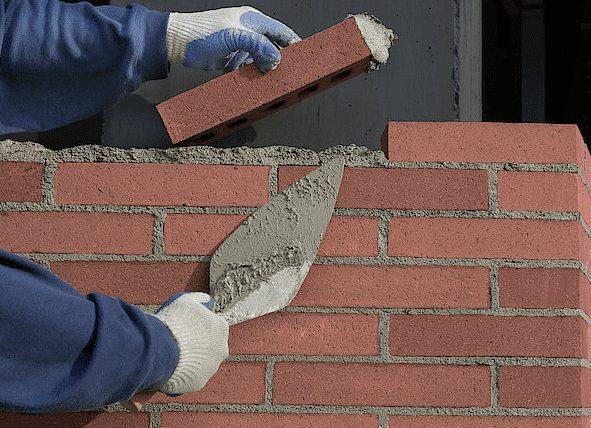
A good brick match still looks like a patch if the mortar is wrong, in either of two ways.
Color. BIA's maintenance guide says repair mortar should match the color of the existing mortar, and pigments may be needed to get there. It also says to compare twice: new samples against the old mortar wetted, then dried samples against it dry.
Strength. ASTM C270 defines the mortar types, and BIA recommends Type N for normal use, including most veneer. For repairs, the rule runs against instinct. Repointing mortar should be equal to or weaker than the original. BIA warns that a stronger mortar concentrates stress at the brick face and can cause spalling. Type O is often used on older brickwork, and Type N may suit newer walls.
Mortar, sand, cement and color additives come off the masonry supplies side of the same counter.
Grade SW, and the Code That Applies
Face brick is made to ASTM C216, which sorts it into two grades by resistance to freezing when saturated. Grade SW is for severe weathering and Grade MW for moderate. On the weathering map BIA reproduces in its selection guide, Michigan sits in the severe region, and there SW is the recommended grade for every exterior exposure. Most manufacturers make brick to SW, BIA notes, but confirm it on the order.
On the code side, Michigan is still working to the 2015 Michigan Residential Code. A July 2025 Court of Claims order stopped the state from implementing the 2021 residential rule set, and the 2015 edition stays in force while that order stands. Anchored masonry veneer is section R703.8. An addition needs a permit, and the local building department has the final word on the wall.
Whether the job wants full brick or a thin brick system is its own decision, covered in thin brick vs. full brick. Covering an old brick fireplace is covered in stone veneer over a brick fireplace.
What to Bring to the Counter
- A sample brick, if there is one to be had. Nothing else matches as well.
- Photos of the wall, straight on, in daylight, with a tape measure across a few courses.
- The brick's dimensions, width by height by length.
- The wall measurements: length, height, and every window and door opening.
- A close photo of the mortar joint, showing its color and its profile.
- New work or repair, and for an addition, whether the plans name a brick.
Where to Start
The brick page covers face brick, thin brick and pavers, and the brands page lists the brick makers VanderWall Brothers carries, including Belden Brick, General Shale and Pine Hall Brick.
Bring the brick, or the photos, to Spring Lake or Grand Rapids, or send them ahead and the counter can start the search before you drive in.
Sources
- Brick Industry Association, Technical Note 10, Dimensioning and Estimating Brick Masonry, for the specified brick sizes, ordering by dimension, brick per square foot, the wall-area method, and the 5 percent brick and 15 to 25 percent mortar waste allowances.
- Brick Industry Association, Technical Note 9B, Selection of Brick, for color variation between runs, buying from one production run, small manufacturer stockpiles, the weathering map and the SW grade recommendation.
- Brick Industry Association, Technical Note 9A, Specifications for and Classification of Brick, for the SW and MW grades in ASTM C216.
- Brick Industry Association, Technical Note 7B, Construction and Workmanship, for blending brick from different straps and cubes.
- Brick Industry Association, Technical Note 46, Maintenance of Brick Masonry, for matching replacement brick, sample panels, mortar color matching and repair mortar strength.
- Brick Industry Association, Technical Note 8B, Mortars for Brickwork, Selection and Quality Assurance, for Type N as the normal choice under ASTM C270, and Type O and Type N for repointing.
- ASTM International, C216 Standard Specification for Facing Brick, for the SW and MW grades.
- Michigan Department of Licensing and Regulatory Affairs, Bureau of Construction Codes, currently open rules, for the July 2025 court order and the 2015 residential code remaining in effect.
- State of Michigan, Michigan Residential Code 2015, section R703.8, for anchored masonry veneer.
Brick counts here are planning numbers, not a takeoff. The requirements for any wall come from the plans and the local building department.
What we do
This is work we take on
Reading up is the first step. When you want it built, priced or supplied, these are the pages that cover it.
Keep reading
The Federal Biomass Stove 25(C) Tax Credit: What It Covered and What Changed
The federal biomass stove tax credit is no longer available for new installations. Section 25(C) of the Internal Revenue…
Your Guide to Fireplace Terminology
For anyone who’d like to install their first fireplace or upgrade to a new style, the terminology they’ll come across…
What Is a Wood Stove?
There’s something about the warmth, coziness, and crackling of a wood fire that just can’t be beat. Fortunately, if…
Thinking about a project like this?
Reading about it only gets you so far. Tell us the room and we will tell you what is possible in it.
Rather just ask someone?
Call the showroom. If it takes two minutes on the phone we would rather tell you than have you read around it.