
Can You Put Stone Veneer Over a Brick Fireplace?
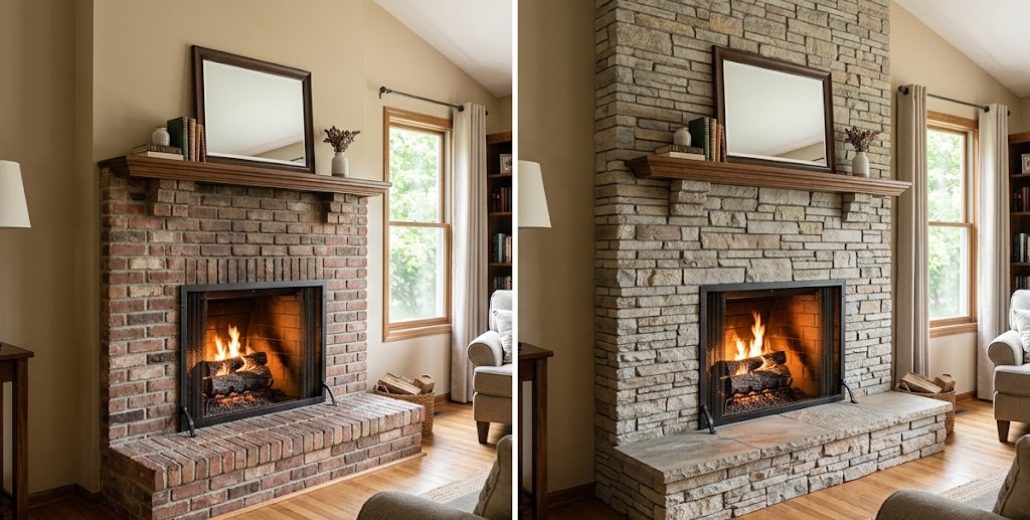
Yes, stone veneer can often be installed over an existing brick fireplace, but the brick has to be stable, clean, properly prepared, and compatible with the selected veneer system.
The important question is not simply whether stone will stick to brick. It is whether the existing fireplace can become a reliable substrate for the new finish without creating problems at the firebox opening, mantel, hearth, corners, or surrounding wall.
For homeowners considering a fireplace update, evaluating the existing brick first can help determine whether resurfacing makes sense or whether more extensive masonry work is the better path.
Key Takeaways / Summary
- Stone veneer can often go over existing brick. The brick and mortar need to be sound enough to support the new finish.
- Surface condition changes the installation approach. Painted, sealed, dirty, loose, or deteriorated brick may need additional preparation before stone can be installed.
- The new stone adds thickness. Firebox trim, hearth depth, mantel location, corners, and nearby cabinetry should be reviewed before the material is selected.
- Fireplace requirements still apply. The existing appliance or firebox, clearances, noncombustible areas, and manufacturer instructions should be confirmed before the surround changes.
- Choose the veneer system after the fireplace is evaluated. Manufactured stone and natural thin stone can both be options, but product-specific installation requirements matter.
When Can Stone Veneer Go Over Existing Brick?
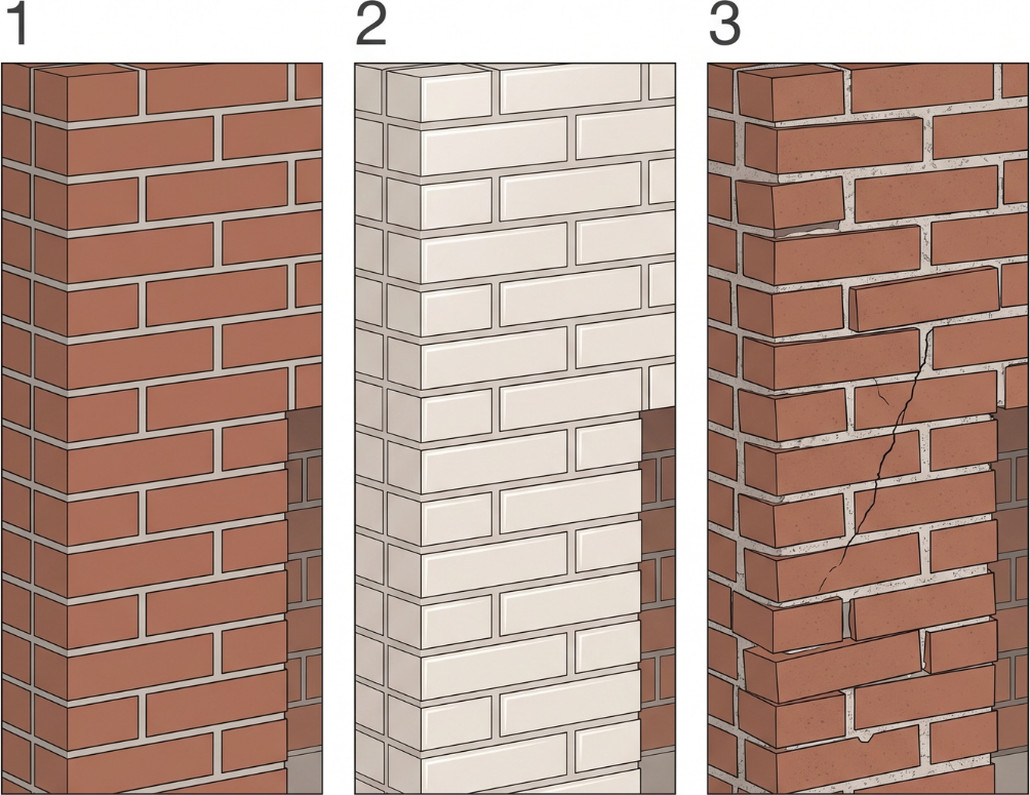
- Sound, clean masonry
- Painted or coated surface requiring an approved preparation method
- Damaged masonry requiring repair before veneer installation
An existing brick fireplace may be a good candidate when the masonry is solid, the mortar joints are stable, and there are no active moisture or movement problems.
The Concrete Masonry & Hardscapes Association's manufactured stone veneer installation guidance emphasizes that veneer performance depends on proper substrate preparation, detailing, and installation. Its guide covers masonry among the backup systems used for adhered manufactured stone veneer.
Before planning an overlay, look for:
- Loose or cracked brick
- Crumbling mortar joints
- Previous patching
- Paint or coatings
- Soot or heavy residue
- Efflorescence or signs of moisture
- Movement around the fireplace opening
If the existing masonry is failing, covering it does not correct the underlying problem.
Practical tip: Take close photos of the brick, mortar joints, firebox opening, hearth, mantel, and both outside corners before selecting the new stone.
Painted or Sealed Brick Needs Extra Attention
Mortar needs an appropriate surface to bond to. Paint, sealers, water repellents, soot, and other contaminants can interfere with that bond.
CMHA's current guide specification for adhered manufactured stone veneer requires masonry surfaces receiving a setting bed to be properly prepared, with no bituminous or water repellent coatings left on the masonry.
That means painted or coated brick should not automatically be treated the same as clean, uncoated masonry.
Depending on the selected veneer system and the condition of the fireplace, the project may require a mechanically attached lath and scratch coat, another approved substrate, or another manufacturer-approved preparation method.
The exact detail should come from the veneer manufacturer's current instructions rather than a generic rule.
The Added Thickness Changes the Fireplace
Stone veneer is thinner than full-depth stone, but it still adds depth to the existing fireplace face.
That can change the relationship between the new finish and:
- The fireplace opening
- Insert or fireplace trim
- Hearth
- Mantel
- Television
- Built-in cabinetry
- Adjacent drywall
- Inside and outside corners
A surround that looks simple in a front-facing photo may have several exposed edges where the additional thickness becomes visible.
Practical tip: Review the fireplace from the side as well as the front. The return at the hearth, wall edges, mantel, and firebox often determines whether the finished stone looks intentional.
Do Fireplace Clearances Change?
The stone finish does not remove the need to follow the requirements for the existing fireplace or insert.
Clearances, noncombustible finishing zones, mantel limitations, hearth requirements, and trim details vary by fireplace type and model.
If the fireplace itself is also being replaced, VanderWall's guide to replacing an existing fireplace explains why the opening, venting, framing, utilities, masonry, hearth, and mantel should be evaluated together.
For a factory-built gas fireplace or insert, use the current installation manual for the exact model. For an existing masonry fireplace, its condition and intended use should be evaluated before the surround is changed.
Practical tip: Do not finalize the stone layout until you know which parts of the existing fireplace need to remain accessible or visible.
Manufactured Stone or Natural Thin Stone?
Both manufactured stone veneer and natural thin stone veneer can create a new fireplace appearance without building a full-depth stone wall.
VanderWall carries manufactured stone veneer as well as natural stone options for fireplace and interior applications.
The choice can affect:
- Stone thickness
- Weight
- Corner pieces
- Color variation
- Texture
- Mortar-joint style
- Installation system
- How the material meets the hearth and mantel
The goal should be to choose a product that works with the fireplace conditions first, then compare color and texture.
Review the Hearth and Mantel Too
An overlay changes the depth of the fireplace face, which can affect the hearth and how an existing mantel meets the new stone.
A raised hearth may need different detailing than a flush hearth, and the selected fireplace or firebox may have specific hearth or mantel requirements. Decide before installation whether those features will remain, be modified, or be replaced.
Practical tip: Treat the fireplace face, hearth, and mantel as one assembly rather than assuming the stone can simply continue over every existing surface.
Plan the Stone Pattern Around the Existing Opening
A successful fireplace update is not only about covering the old brick.
The stone pattern should also make sense around the opening, corners, hearth, and mantel.
Before installation, consider:
- Where full pieces will appear
- Where cuts will be least noticeable
- How corner units will wrap exposed edges
- Whether the stone will stop at the mantel or continue to the ceiling
- How the stone will transition to drywall or cabinetry
- Whether the hearth uses the same material or a contrasting one
Homeowners comparing finishes can use VanderWall's guide to choosing stone veneer colors once the construction approach is clear.
When Might Removal Be the Better Choice?
Installing over brick is not always the right answer.
More extensive removal or rebuilding may make more sense when:
- The brick or mortar is badly deteriorated
- The fireplace wall is already too deep for the room
- The opening needs major resizing
- The hearth needs to be substantially changed
- The fireplace itself is being replaced with a very different product
- Existing moisture or movement needs to be corrected
- The new design requires different framing or wall geometry
The goal should be to preserve what is useful, not to preserve every existing layer simply to avoid demolition.
Questions to Ask Before Covering Brick With Stone
- Is the existing brick and mortar sound?
- Has the brick been painted, sealed, or treated?
- Is there soot, moisture, or deterioration that needs attention?
- What veneer product and installation system will be used?
- How much thickness will the new assembly add?
- How will the new stone meet the firebox or insert trim?
- Will the hearth or mantel change?
- Are matching corner units available?
- Will the stone stop at the mantel or continue higher?
- Do fireplace clearances or service-access requirements affect the layout?
Compare the Existing Fireplace and Stone Together
Stone veneer can be a practical way to change the character of an existing brick fireplace without automatically rebuilding the entire feature wall.
The best projects start by understanding the fireplace that is already there.
VanderWall Brothers carries manufactured and natural stone veneer, brick, fireplaces, inserts, mantels, and related masonry materials, which makes it easier to compare the fireplace and finish as one project.
Homeowners can compare stone samples in person at the Spring Lake and Grand Rapids showrooms. Bring clear photos of the fireplace, including the front, sides, hearth, mantel, and opening.
Evaluate the Brick Before You Cover It
Stone veneer can often transform an existing brick fireplace while allowing much of the original masonry to remain.
But the success of the project depends on more than choosing a stone that looks good.
The brick condition, surface preparation, veneer system, added thickness, fireplace requirements, hearth, mantel, and edge details should all work together.
If you are considering stone over an existing brick fireplace, talk with the VanderWall team. Bring photos and approximate measurements so the team can help you compare stone options and determine what should be evaluated before the project moves forward.
What we do
This is work we take on
Reading up is the first step. When you want it built, priced or supplied, these are the pages that cover it.
Keep reading
Spring Outdoor Living Planning Guide
Fireplaces, Grills & Kitchens in West Michigan As winter fades across West Michigan, homeowners begin turning…
New Product Alert: ProVia Manufactured Stone (with Project Visualizer!)
VanderWall is proud to partner with stone veneer manufacturer ProVia to complement our wide selection of exterior and…
How to Create a Backyard Oasis
Do you like entertaining or just enjoying your yard? Let us help you create a backyard oasis that will have you never…
Thinking about a project like this?
Reading about it only gets you so far. Tell us the room and we will tell you what is possible in it.
Rather just ask someone?
Call the showroom. If it takes two minutes on the phone we would rather tell you than have you read around it.