
What a Wood Stove Installation Involves in a West Michigan Home
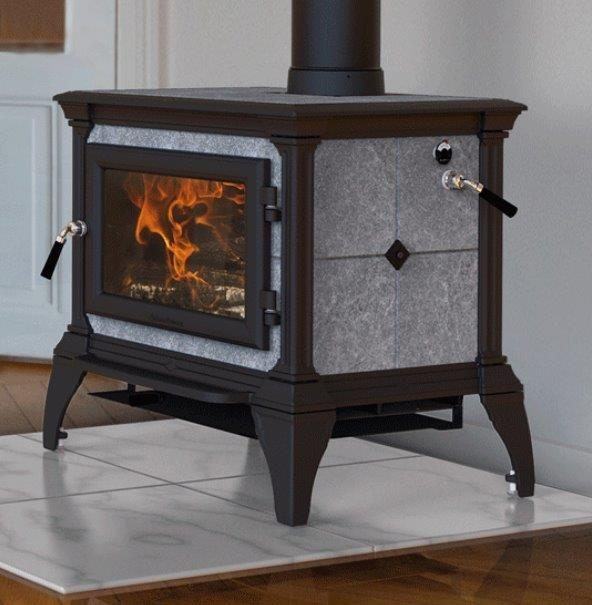
A wood stove looks like a single piece of furniture. The installation is really three things working together: the stove, the chimney it vents into, and the floor and walls around it. Most of the decisions on a stove job are about the second and third.
This post walks through what an installer checks, what goes in, and what you should have in hand when the job is done. If you are still deciding whether a wood stove is the right appliance, start with what a wood stove is and pellet stoves vs. wood stoves.
Key Takeaways / Summary
- The chimney makes the stove work. An existing chimney has to be inspected before a stove is connected to it. A new one has to be the right type, size and height.
- Every stove has its own numbers. Floor protection, wall clearances and pipe clearances come from that model's manual, not from a general rule.
- Floor protection is required on almost every install. Carpet comes out from under it.
- Expect a permit and an inspection. In Michigan, solid fuel appliances are licensed mechanical work.
- New stoves sold today meet the EPA's 2020 smoke limit. Look for the EPA label on the back of the stove.
- VanderWall Brothers installs the stoves it sells with its own crew. The same people come back to service them.
Where Can a Wood Stove Go?
A freestanding wood stove can go almost anywhere a chimney can be run. The usual spots are:
- In front of an existing masonry fireplace. The stove sits on the hearth and vents into the old chimney, usually through a new liner.
- Against a wall with a new chimney. A factory-built metal chimney runs up through the ceiling and roof, or out through the wall and up the outside of the house.
- In a corner or an alcove. These are allowed with many stoves, but the manual sets extra rules for each.
The room matters too. Jotul is one of the brands VanderWall carries, and its manual for the F 500 V3 Oslo says to avoid creating low pressure in the room where the stove runs. An exhaust fan or a clothes dryer can pull air backward through the stove and chimney. An outside air kit can help in some houses, but it is not a guarantee.
The best spot is often the one that lets the chimney run straight up through the warm part of the house.
What Gets Checked on the Chimney?
Jotul puts it plainly in the same manual: the chimney makes the stove work, not the stove that makes the chimney work. Draft is what pulls smoke up and out, and it depends on the chimney's height, size and condition.
An existing chimney
If the stove will use a chimney you already have, it gets inspected first. The F 500 V3 manual calls for an existing chimney system to pass a UL 1482 Level II inspection by a qualified technician or building official. It is a closer look than a routine sweep.
The inspector is looking for things like:
- A sound liner. A masonry chimney needs a fireclay liner at least 5/8 inch thick, or a listed liner.
- The right flue size. For the F 500 V3 the flue can be no smaller than the stove's flue collar and no more than three times its area. Too large lets the smoke cool and creosote build up, so an oversized flue gets relined.
- One appliance per flue. The stove cannot share a flue with a furnace, water heater or another stove.
- Height. The F 500 V3 needs at least 15 feet of chimney. The top has to be at least 3 feet above the roof where it passes through, and 2 feet higher than anything within 10 feet of it.
The chimney sweep post covers what a sweep looks for on a chimney already in use.
A new chimney
A new metal chimney has to be listed to UL 103 HT, the high temperature standard for solid fuel. It goes in with that maker's own listed parts and its own clearances to framing, usually 2 inches.
What Goes Under and Around the Stove?
Floor protection
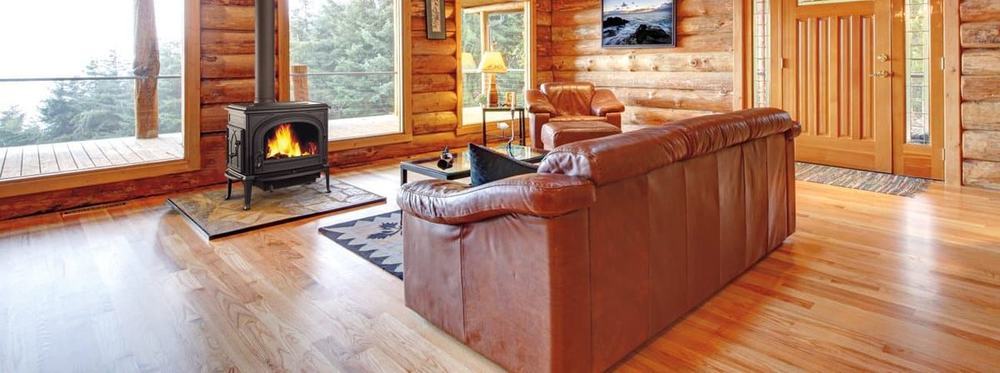
Unless the stove sits on concrete over earth, it needs a noncombustible floor protector under it. For the F 500 V3, that means:
- Continuous noncombustible material, such as stone, tile or brick, with the joints mortared or sealed so embers cannot get through.
- At least 16 inches in front of the door opening and 8 inches to each side of it in the U.S., plus 2 inches under the connector pipe. For this stove that works out to a pad at least 50 1/4 inches wide and 40 3/4 inches deep.
- No carpet underneath. Any carpeting under the protector comes out.
The same manual warns against luxury vinyl flooring within 57 inches of the front of the stove, because heat can damage it. That detail is easy to miss on a remodel.
Clearances to walls
A clearance is the gap between the stove and anything that can burn. Drywall counts. So does fire-rated drywall. So does wood framing hidden behind a stone or tile face.
The numbers come from testing each model. For the F 500 V3 set parallel to the walls with single wall pipe, the manual lists 14 inches to the side wall and 18 inches to the rear. Its own rear heat shield brings the rear clearance down, and listed double wall pipe brings it down further. Corner installs have their own figures.
Mantels and trim near a stove have their own clearances too. The manual lists 30 inches from the stove top to a mantel up to 12 inches deep.
Another stove will have different numbers. The installer measures against the manual for the model you choose, and the inspector checks against the same book.
What Happens on Installation Day?
The details differ by model and by house. The usual order is:
- The floor protector goes down to the size the manual sets.
- The stove is set and leveled at its measured clearances.
- The chimney work is finished. That means a new liner down an existing chimney, or new metal chimney sections through the ceiling and roof, with the cap on top.
- The connector pipe goes in. For the F 500 V3 this is 6 inch, 24 gauge black steel. Galvanized and aluminum pipe are not allowed, because they can give off toxic fumes when heated. Each joint gets three sheet metal screws, the crimped ends point down toward the stove, and the pipe never passes through an attic, closet or ceiling.
- Clearances are checked again once everything is in place.
- The stove is shown to you. The installer walks through the air controls, loading, ash removal and what the stove needs each year.
On VanderWall's fireplace jobs, the stove stays off until any required inspection passes. The crew then comes back to light it with you and show you how to run it.
Permits, Inspections and Who Can Do the Work
The Michigan Department of Licensing and Regulatory Affairs (LARA) licenses mechanical contractors by classification. One of those classifications is Solid Fuel and Vented Decorative Gas Appliances. Each classification takes its own exam.
The Michigan Residential Code in force is still the 2015 edition. Under the state's amendment to it, Rule 408.30520, carbon monoxide alarms are required when permitted work is done in an existing home that has fuel-fired appliances. A wood stove is one. The Jotul manual also asks for CO and smoke alarms in the living area and bedrooms, placed as far from the stove as practical so they do not sound every time you add wood.
Can you install a wood stove yourself? Section 339.5819 of the Skilled Trades Regulation Act lets an owner install a heating system in a single-family home that is, or will be, their own residence, with a permit and an inspection. Your building department decides how that applies to a stove. The gas insert installation post covers the same rule in more detail. Jotul strongly recommends a professional solid fuel technician either way, and says to check with your insurance company about its own requirements.
Is a New Stove Cleaner Than an Old One?
Yes, by a wide margin. The EPA's limit for new wood stoves dropped to 2.0 grams of smoke per hour on May 15, 2020, or 2.5 grams per hour under the optional cordwood test. The EPA says older uncertified stoves release 15 to 30 grams per hour.
Every certified stove carries a permanent EPA label on the back. If you are replacing an old stove, that label is the quickest way to tell what you have. The F 500 V3, for example, is certified at 0.50 grams per hour.
A cleaner stove still needs dry wood. Wet wood smokes, cools the chimney and builds creosote.
What Should You Be Handed When the Job Is Done?
- The manual. It holds the clearances your stove was installed to. Keep it with the house.
- The permit record. Ask who pulled the permit and when the inspection is. The job is not done until it passes.
- A first-fires plan. Jotul's manual sets a break-in procedure for the first fires, and a new painted stove can smell while the paint cures.
- A yearly routine. Jotul calls for an annual stove inspection, and the chimney should be checked and cleaned as needed. VanderWall's chimney and fireplace service handles both.
Start With the Room and the Chimney
Before choosing a stove, take a photo of the room and of any chimney or fireplace you have. Note the floor material and what is behind the walls. That is most of what decides which stoves will fit and how they can vent.
VanderWall Brothers carries wood stoves from Jotul, Hearthstone and other brands in its Spring Lake and Grand Rapids showrooms, where many of them are burning. Its own certified crew installs and services them. See the fireplaces and stoves page or get an estimate to start.
Sources
- Jotul North America, F 500 V3 Oslo Installation and Operation Manual, 139946-22, July 2025, for the UL 1482 listing, the Level II chimney inspection, chimney liner, flue size and height rules, UL 103 HT chimneys, connector pipe rules, floor protection and its dimensions, the vinyl flooring note, wall, corner and mantel clearances, room pressure and outside air, alarms, the professional installer recommendation, the annual inspection and the 0.50 g/hr rating.
- U.S. Environmental Protection Agency, Choosing the Right Wood Stove, for the May 15, 2020 limit of 2.0 g/hr (2.5 g/hr cordwood), the 15 to 30 g/hr figure for older uncertified stoves and the EPA label.
- Michigan Department of Licensing and Regulatory Affairs, mechanical contractor licensing, for the Solid Fuel and Vented Decorative Gas Appliances classification and the exam for each classification.
- Michigan Department of Licensing and Regulatory Affairs, current construction code books, for the 2015 Michigan Residential Code being current since February 8, 2016.
- Michigan Administrative Code, R 408.30520, for carbon monoxide alarms in existing homes when permitted work is done.
- Michigan Legislature, MCL 339.5819, Skilled Trades Regulation Act, for the owner-occupant exception, the permit and the inspection.
- VanderWall Brothers, fireplaces and stoves, for the brands carried, the in-house certified crew and the installation process.
Installation details vary by stove and by house. Your stove's manual, your local building department and a qualified installer govern your project.
What we do
This is work we take on
Reading up is the first step. When you want it built, priced or supplied, these are the pages that cover it.
Keep reading
Polymeric Sand vs. Regular Sand for Pavers
For many conventional paver patios, polymeric sand is a good choice because it helps joint material resist washout…
Having a Fire Pit Built in West Michigan: Gas or Wood, and What It Sits On
A fire pit looks like the simplest thing in the backyard. Having one built still means four decisions: the fuel, how it…
Can You Put an Outdoor Kitchen Under a Covered Patio?
Yes, an outdoor kitchen can often be built under a covered patio, but adding a roof changes how the grill, ventilation…
Thinking about a project like this?
Reading about it only gets you so far. Tell us the room and we will tell you what is possible in it.
Rather just ask someone?
Call the showroom. If it takes two minutes on the phone we would rather tell you than have you read around it.