


Material Submittals: What Builders Should Confirm

A material can be selected and still create problems on the jobsite if the project team is not working from the same information.
The homeowner may have approved one stone color while the purchase order lists another. A fireplace may be chosen before the exact trim is confirmed. A paver sample may look right, but the installed blend may include more variation than the small piece suggested.
For builders and contractors, a clear material submittal process helps connect product selection, approval, ordering, and installation before those details become field questions.
When projects include masonry materials and project supplies, fireplaces, stone, hardscapes, or outdoor living products, the goal is simple: everyone should know what was approved and what is expected to arrive.
What Is a Material Submittal?
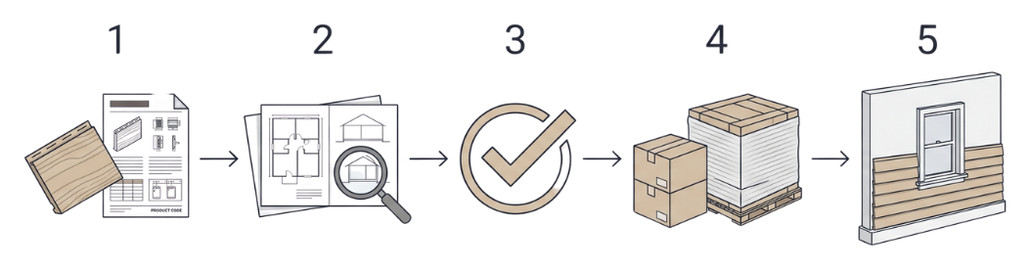
- Product or sample
- Review
- Approval
- Order
- Delivery and installation
A construction submittal provides information about a product or material before it is incorporated into the work.
Depending on the project, it may include:
- Product data
- Physical samples
- Color or finish selections
- Shop drawings
- Installation instructions
- Model numbers
- Manufacturer information
- Mockups
The American Institute of Architects explains common construction submittal types, including shop drawings, product data, and samples.
For residential projects, the process may be less formal than on a large commercial job, but the same principle is useful: confirm the actual product before it is ordered and installed.
Start With the Exact Product, Not the General Category
"Gray stone," "gas fireplace," or "large-format paver" may describe the design direction, but those descriptions are not specific enough for ordering or installation.
A useful approval record should identify details such as:
- Manufacturer
- Product or model name
- Color or finish
- Size or profile
- Quantity
- Accessories
- Installation location
This becomes especially important with fireplace products for West Michigan projects, where the exact model can affect framing, venting, utilities, trim, and surrounding finishes.
Physical Samples Help Confirm What Photos Cannot
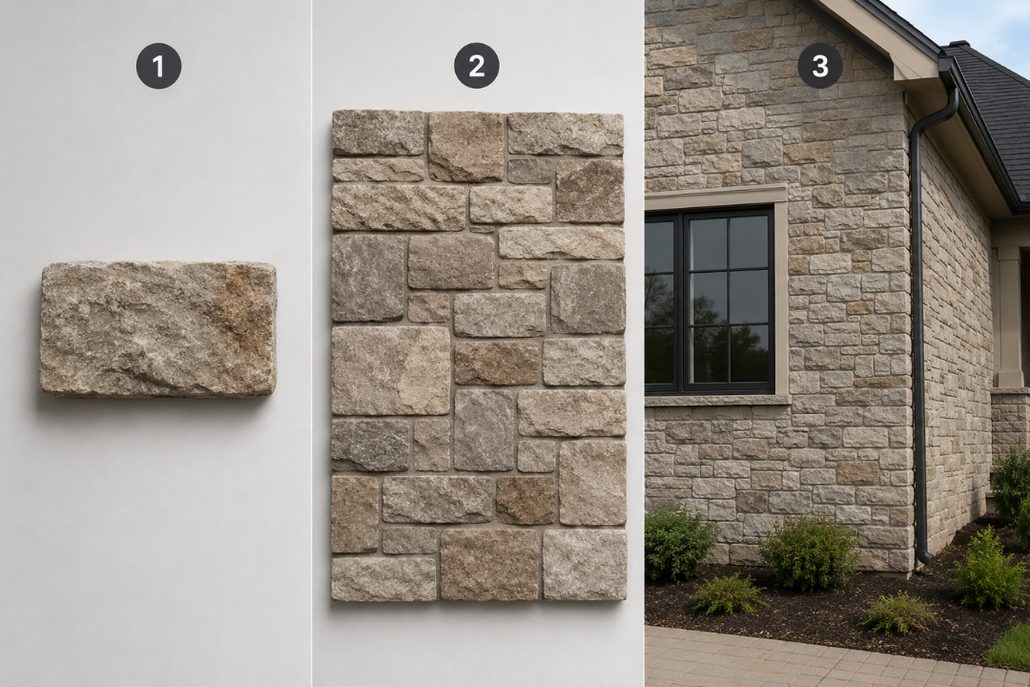
- Individual sample
- Larger blend
- Finished installation
Digital images are useful during early selection, but they do not always show scale, texture, color variation, or surface depth accurately.
Physical samples are especially helpful for:
- Stone and brick
- Pavers
- Mortar colors
- Countertops
- Fireplace finishes
- Metal trim
The approved sample should be clearly identified so the builder, homeowner, supplier, and installer are referring to the same material.
When the material contains natural or manufactured variation, the sample should be treated as a representation of the intended range rather than a promise that every installed piece will look identical.
Product Data Confirms the Technical Side of the Selection
Aesthetic approval is only one part of the decision.
Product data may contain information needed by the trades, including:
- Dimensions
- Clearances
- Weight
- Installation requirements
- Fuel or electrical needs
- Compatible accessories
- Substrate requirements
Builders should review the current product information before releasing work that depends on those dimensions.
AIA guidance on contractor submittal review also emphasizes coordination between submitted information, field conditions, and the requirements of the work.
Approve the Material Before It Is Ordered
An approval made after the order is placed has limited value.
The sequence should allow enough time for the project team to:
- Select the product.
- Review the sample or product data.
- Confirm the exact color, model, or finish.
- Document approval.
- Place the order.
- Verify the delivered material before installation.
This helps reduce situations where a builder must choose between accepting the wrong product, delaying installation, or paying for a replacement.
It also supports the schedule planning discussed in VanderWall's guide to early material decisions and project schedules.
Keep One Current Approval Record
Material information can quickly become fragmented across emails, text messages, estimates, drawings, and photos.
A simple current record can include:
- Product name
- Manufacturer
- Color or finish
- Approved sample photo
- Approval date
- Quantity
- Order status
- Expected delivery date
- Notes about substitutions
If a selection changes, update the record rather than leaving both versions in circulation.
The installer should be able to identify which approval is current without searching through several conversations.
Understand Variation Before the Material Reaches the Site
Some materials naturally include more variation than others.
Stone, brick, and pavers may contain differences in color, texture, size, or surface appearance across multiple pieces.
A small sample can help establish the direction, but a larger display, sample board, or project image may better represent the finished blend.
Homeowners selecting masonry can review VanderWall's guide on how to choose stone veneer colors for more detail about texture, lighting, mortar, and color variation.
Use a Larger Mockup When One Sample Is Not Enough
For highly visible masonry or hardscape work, a larger sample area can answer questions that a single piece cannot.
A mockup may help the team review:
- Overall color balance
- Stone or brick pattern
- Mortar color
- Joint style
- Paver pattern
- Relationship between adjacent materials
The purpose is not to create extra paperwork. It is to resolve visual decisions before the full installation makes those decisions expensive to change.
Substitutions Need a New Review
If the approved product becomes unavailable, a similar-looking replacement should not automatically be treated as equivalent.
A substitution may change:
- Color
- Dimensions
- Texture
- Installation requirements
- Accessories
- Lead time
- Adjacent construction
The replacement should be reviewed using the same basic process as the original selection.
That is particularly important when another trade has already built around the approved product.
Compare the Delivery With the Approved Material
Approval is not the final checkpoint.
Before installation begins, confirm that the material delivered to the site matches the approved selection.
Check the manufacturer, product name, color, model number, quantities, and visible condition where applicable.
For masonry products, the crew may also need to review the blend across multiple pallets or packages rather than judging the entire order from the first few pieces.
Showroom Reviews Can Reduce Selection Back-and-Forth
Some selections are easier to confirm when the builder and homeowner can see materials at full scale.
At VanderWall's West Michigan showrooms, project teams can compare fireplaces, stone, brick, veneer, pavers, and related products in person.
Bringing project photos, rough measurements, plans, or samples of surrounding finishes can make the review more useful.
For a stone or masonry project, seeing several materials together can also help confirm whether the selected products coordinate before they are ordered.
Questions to Confirm Before Releasing a Material
- Is the exact manufacturer and product identified?
- Is the color, finish, size, or profile confirmed?
- Has the homeowner or required reviewer approved it?
- Does the current product data match the selected item?
- Are quantities confirmed?
- Has expected color or texture variation been discussed?
- Does the product affect framing, utilities, or adjacent work?
- Is the approval documented in one current record?
- If a substitution occurs, will it be reviewed again?
- Will the delivery be checked before installation?
How VanderWall Supports Builder Material Decisions
VanderWall Brothers works with builders and contractors across fireplaces, stone, brick, masonry supplies, pavers, outdoor kitchens, and other outdoor living products.
Through builder and project support throughout West Michigan, teams can compare products, review physical samples, and clarify product information before materials move to the jobsite.
A good material approval process does not need to be complicated. It needs to be clear enough that selection, ordering, and installation are all based on the same decision.
Clear Approvals Help Prevent Avoidable Surprises
Material samples and submittals create a checkpoint between design intent and field installation.
They help builders confirm what was selected, give homeowners a clearer understanding of what they approved, and provide installers with more reliable product information.
When exact products, samples, technical data, substitutions, and deliveries are reviewed in order, fewer decisions are left for the jobsite.
That clarity can protect both the finished look of the project and the construction process behind it.
If you are coordinating fireplace, masonry, hardscape, or outdoor living materials for an upcoming project, talk with the VanderWall team. Call (616) 842-4500 or visit www.vanderwallbros.com.
What we do
This is work we take on
Reading up is the first step. When you want it built, priced or supplied, these are the pages that cover it.
Keep reading
White Powder on Brick: Causes and What to Check
White powder on brick is often a condition called efflorescence. It develops when moisture moves through masonry…
Can You Put Stone Veneer Over a Brick Fireplace?
Yes, stone veneer can often be installed over an existing brick fireplace, but the brick has to be stable, clean…
Buying Cultured Stone in Michigan: How It Is Made, How It Is Sold, and How
People shopping for cultured stone usually arrive with a picture and leave with a question about arithmetic. The look is…
Thinking about a project like this?
Reading about it only gets you so far. Tell us the room and we will tell you what is possible in it.
Rather just ask someone?
Call the showroom. If it takes two minutes on the phone we would rather tell you than have you read around it.