





Why Does My Gas Fireplace Glass Turn Black?
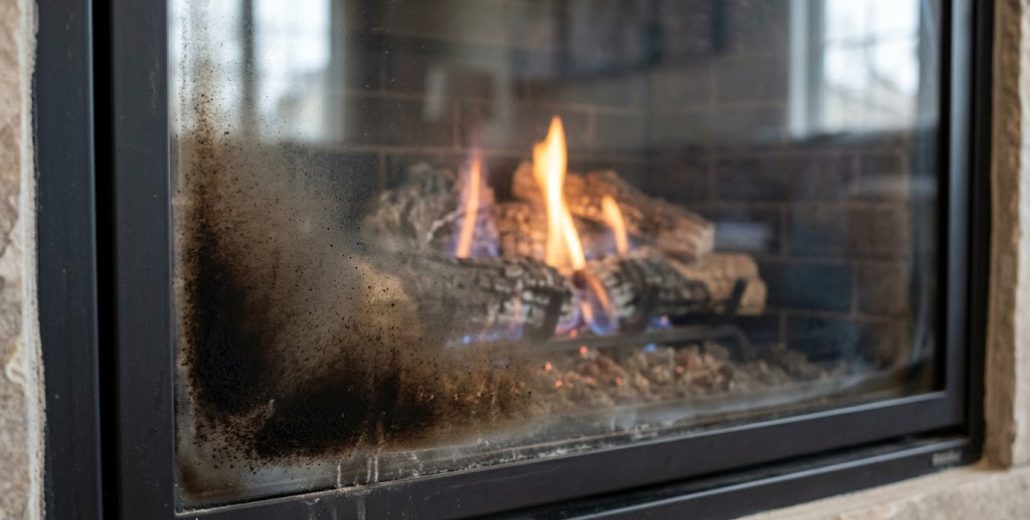
Black glass on a gas fireplace is not always just a cleaning problem.
A light film can develop on fireplace glass during normal use, but a dark black coating or soot that returns soon after cleaning can indicate that the fireplace is not burning as intended.
The useful question is not only how to remove the deposit. It is why the deposit formed.
Key Takeaways / Summary
- Recurring black soot is different from ordinary cloudy fireplace-glass film. Black deposits can be associated with combustion or operating conditions that deserve evaluation.
- Do not adjust gas components yourself. Gas pressure, combustion air, burner operation, venting, and internal fireplace settings should be evaluated according to the exact model and manufacturer instructions.
- Cleaning may remove the symptom without removing the cause. If black soot returns quickly, professional service is more useful than repeated cleaning.
- Watch for other changes. Unusual flame appearance, delayed ignition, strange odors, shutdowns, or excessive soot are important information for a service technician.
- Routine glass film can have other causes. White or cloudy deposits are not necessarily the same condition as black soot.
Is Black Soot on Gas Fireplace Glass Normal?
A small amount of residue does not necessarily tell you exactly how a fireplace is operating, but persistent black soot should not simply be accepted as normal.
Gas fireplace manufacturer troubleshooting guidance, such as Regency's owner manuals, links carbon buildup on the glass to conditions such as a damaged burner or incorrectly installed logs or media.
Those are technician-level conditions rather than homeowner adjustments.
FortisBC also lists excessive soot, delayed ignition, pilot problems, and other operating changes among signs that a gas appliance may need service in its gas-appliance maintenance and safety guidance.
Practical tip: If the glass was recently cleaned and a dark coating returns after only a short period of normal operation, photograph the pattern before cleaning it again.
Black Soot Is Different From White or Cloudy Film
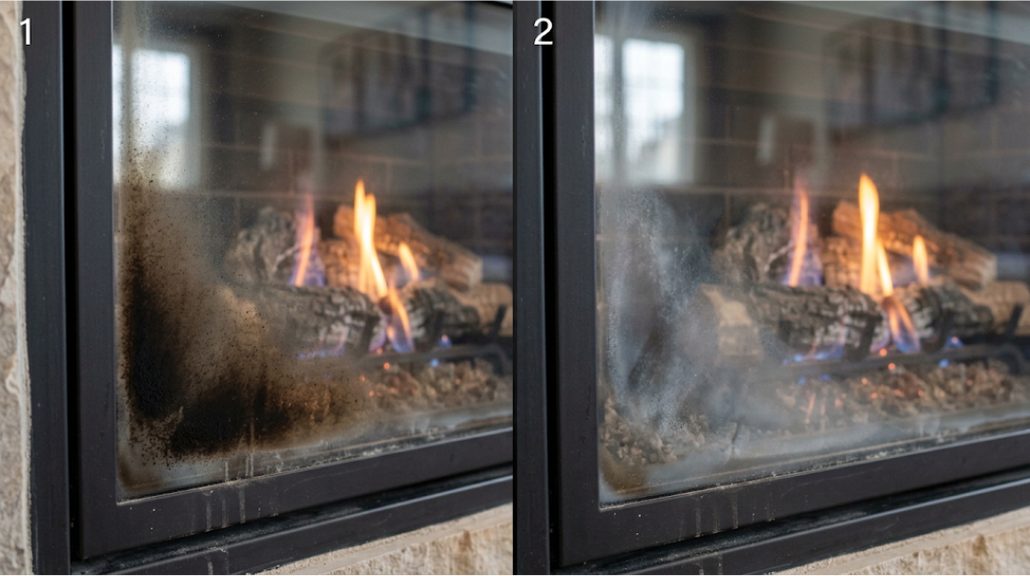
- Black soot or carbon deposit
- White or cloudy fireplace-glass film
Not every mark on fireplace glass is soot.
Gas fireplaces can develop a pale white, gray, or cloudy film from normal combustion-related deposits, minerals, outside air, or residues associated with initial fireplace operation.
Napoleon's gas fireplace glass guidance explains that new fireplaces can leave residue during their initial burn-in, while minerals in the fuel or combustion air may contribute to glass buildup on older units.
A black carbon-like coating is visually different and deserves more attention when it persists or returns quickly.
What Can Cause Black Soot?
The exact cause depends on the fireplace model and how it is installed and operating.
Conditions a qualified technician may evaluate include:
- Gas pressure
- Combustion-air supply
- Burner condition
- Approved log or decorative-media placement
- Air openings
- Venting
- Flame appearance
- Debris or contamination inside the firebox
FortisBC, citing Technical Safety BC, recommends that fireplace service include inspection of the burner, gas valve, ignition system, door gaskets, venting, and air openings.
This is why moving logs, changing burner media, adjusting an air shutter, or changing gas settings without the manufacturer's instructions is not a good general homeowner solution.
Why Does Log or Media Placement Matter?
Gas fireplace logs, stones, embers, or glass media are not always decorative pieces that can be rearranged freely.
The exact fireplace manual determines where approved media belongs and how it interacts with the burner.
Incorrect placement can change the way flames contact the media and how the burner operates.
If the soot appeared after cleaning, service, or moving anything inside the firebox, mention that when scheduling service rather than attempting several different arrangements yourself.
Practical tip: Take a photo before removing any homeowner-serviceable component for cleaning, and always follow the manual for your exact fireplace.
Can You Just Clean the Black Soot Off?
The glass can be cleaned according to the fireplace manufacturer's instructions once the appliance is completely cool, but cleaning does not explain why soot formed.
Napoleon recommends following the fireplace manual and using cleaning methods suitable for fireplace glass rather than ordinary ammonia-based household glass cleaners.
VanderWall also provides fireplace glass cleaning videos for routine owner maintenance.
If the glass remains clear after proper cleaning and the fireplace otherwise operates normally, continue following the manufacturer's maintenance schedule.
If black residue quickly returns, treat it as a fireplace-operation question rather than simply increasing the cleaning frequency.
What Can Homeowners Safely Check?
You can gather useful information without opening gas controls or adjusting the burner.
Record:
- Where the soot appears. One corner, around the edges, directly above the flame, or across the entire glass?
- How quickly it returns. After one use, several days, or an entire season?
- Whether anything recently changed. Cleaning, service, fireplace media, construction work, or a long period without use?
- How the flame looks. Has its appearance changed from normal?
- How the fireplace starts. Is ignition normal, or has it become delayed or noisy?
- Whether other symptoms occur. Odor, shutdowns, unusual sounds, or soot elsewhere?
Those observations can help the service technician diagnose the issue more efficiently.
When Should You Stop Using the Fireplace?
Stop using the fireplace and arrange qualified service when black soot is excessive or accompanied by other abnormal operation, including delayed ignition, unusual flame behavior, repeated shutdowns, damage, or unusual odors.
If you smell the rotten-egg or sulfur odor associated with natural gas, treat that separately as a possible gas leak and follow your gas utility's emergency instructions from outside the building.
VanderWall's guide to gas fireplace smells and warning signs explains that distinction in more detail.
Carbon monoxide is also odorless and invisible. Consumers Energy recommends working CO alarms on every level of the home and annual servicing of fuel-burning appliances by a qualified technician in its carbon monoxide safety guidance.
What Happens During Professional Fireplace Service?
A service visit can look beyond the glass itself.
Depending on the fireplace and complaint, a qualified technician may inspect the burner, ignition components, gas valve, door gasket, venting, combustion-air openings, flame operation, and interior condition.
VanderWall provides fireplace inspection, repair, and annual service throughout West Michigan using its own certified technicians.
Have the fireplace brand and model available if possible, along with photographs showing the soot pattern before cleaning.
Clean the Glass, but Diagnose Recurring Soot
Gas fireplace glass eventually needs cleaning, and not every visible film means something is wrong.
Recurring black soot is different.
If the deposit returns quickly or appears with changes in flame, ignition, odor, or operation, the better next step is to find out why the fireplace is producing it.
If your gas fireplace glass keeps turning black, talk with the VanderWall service team. Share the fireplace brand and model, photographs of the glass, how quickly the soot develops, and any other operating changes you have noticed.
What we do
This is work we take on
Reading up is the first step. When you want it built, priced or supplied, these are the pages that cover it.
Keep reading
What Changes When You Replace an Existing Fireplace
Replacing a fireplace is different from choosing one for new construction.
Phased Home Improvement Planning in West Michigan
Not every home improvement project needs to happen at once.
What to Know About Patio Drainage Before Choosing Pavers
Homeowners often begin a patio project by looking at paver colors, shapes, textures, and patterns.
Thinking about a project like this?
Reading about it only gets you so far. Tell us the room and we will tell you what is possible in it.
Rather just ask someone?
Call the showroom. If it takes two minutes on the phone we would rather tell you than have you read around it.