
White Powder on Brick: Causes and What to Check
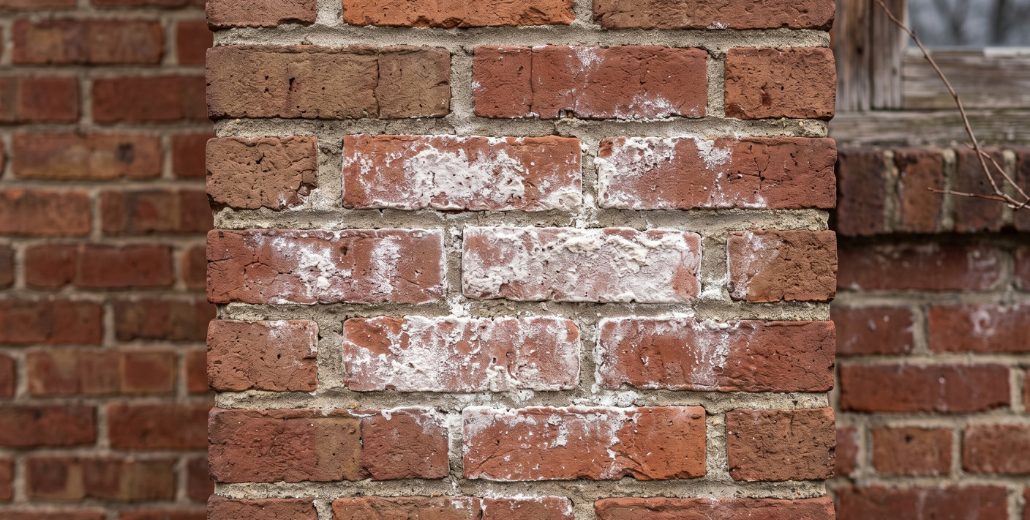
White powder on brick is often a condition called efflorescence. It develops when moisture moves through masonry, dissolves naturally occurring salts, and carries them toward the surface. As the moisture evaporates, a visible white deposit remains.
Efflorescence is commonly a cosmetic issue, but homeowners should pay attention to when it appears and whether it repeatedly returns. Persistent deposits can indicate that water is entering or moving through the masonry.
Before choosing a cleaning method, it helps to understand what the white material may be telling you about the brick.
Key Takeaways / Summary
- White powder on brick is often efflorescence. It occurs when moisture carries dissolved salts to the surface and evaporates.
- The deposit itself is commonly cosmetic. However, recurring staining can indicate an underlying moisture problem.
- New masonry may develop temporary white deposits. Construction moisture can contribute to early efflorescence as materials dry.
- Cleaning alone may not stop recurrence. The moisture source should be identified before deciding how to remove persistent deposits.
- Avoid aggressive cleaning by default. The appropriate method depends on the masonry product, mortar, surface condition, and type of deposit.
What Causes Efflorescence on Brick?
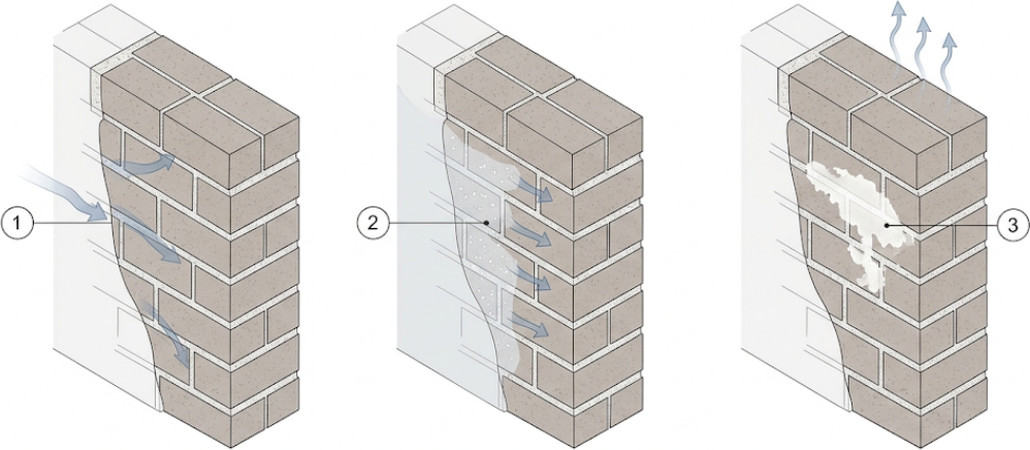
- Moisture enters the masonry.
- Dissolved salts travel with the moisture.
- Moisture evaporates, leaving visible deposits.
Efflorescence develops when three conditions occur together:
- Soluble salts are present in or around the masonry.
- Moisture dissolves those salts and moves through the material.
- Water reaches the surface and evaporates, leaving the salts behind.
The Brick Industry Association explains these mechanisms in its Technical Note 23A, Efflorescence: Causes and Prevention.
Salts can originate from masonry materials, mortar, adjacent construction materials, soil, or water moving through the wall.
The presence of white powder does not automatically mean the brick itself is defective. The more useful question is where the moisture came from.
Why Does Efflorescence Appear on New Brick?
New masonry can sometimes develop white deposits as moisture from construction materials gradually moves out of the wall.
This is commonly described as early-age efflorescence.
Light deposits may diminish as the wall dries and receives normal weather exposure, provided there is no continuing source of excessive moisture.
However, not every white stain on new brick should automatically be classified as ordinary efflorescence. Unusual deposits, extensive discoloration, or accompanying masonry damage deserve closer examination.
Practical tip: Photograph the affected wall when the deposit first appears. Compare its appearance over several weeks rather than immediately applying an unfamiliar cleaning product.
Why Does White Powder Keep Coming Back?
Recurring white deposits may indicate that the wall continues to receive moisture.
Possible contributors include:
- Roof runoff or overflowing gutters
- Downspouts discharging too close to the masonry
- Defective flashing or transitions
- Damaged mortar joints
- Water entering around windows or other openings
- Repeated irrigation exposure
- Moisture moving from surrounding soil
- Improper drainage around masonry features
The Concrete Masonry & Hardscapes Association's water-management guidance identifies uncontrolled moisture as an important factor in masonry deterioration and surface staining.
Practical tip: Notice whether the white residue becomes more prominent after rain, snowmelt, or irrigation. Repeated deposits in one location may help identify where water is entering.
Is Efflorescence Harmful to Brick?
The salt deposit itself is generally an aesthetic concern and does not automatically indicate structural damage.
However, the conditions that allow moisture to move repeatedly through masonry may deserve attention.
Persistent moisture can contribute to other problems, particularly when combined with deteriorated mortar, poor drainage, or seasonal freezing and thawing.
This is relevant for exterior masonry throughout West Michigan, where brick and stone experience varying precipitation, snow accumulation, and winter temperatures.
The goal is to evaluate both the visible deposit and the condition of the wall supporting it.
When Should White Deposits Be Investigated?
Consider having the masonry evaluated when:
- White staining repeatedly returns after cleaning.
- Deposits become heavier in one specific location.
- The wall remains visibly damp.
- Mortar joints are deteriorating.
- Brick faces are flaking, cracking, or separating.
- White streaks develop beneath a window, coping, or other water transition.
- Interior moisture appears near the affected exterior wall.
A light, temporary deposit across recently completed masonry is different from persistent staining concentrated beneath a recurring water source.
Identifying that difference helps determine whether cleaning is sufficient or further investigation is appropriate.
How Do You Remove White Powder From Brick?
The appropriate cleaning method depends on the type of deposit, the brick, the mortar, and their condition.
For some loose, dry efflorescence, gentle removal with an appropriate dry, nonmetallic brush may be a suitable starting point.
However, stubborn deposits, unusual staining, older masonry, and manufactured products may require different treatment.
Before cleaning:
- Identify the material. Confirm whether the affected surface is clay brick, concrete masonry, stone, or manufactured veneer.
- Check for moisture. Address an active water problem before focusing only on the visible stain.
- Review manufacturer instructions. Not every masonry product can tolerate the same cleaning chemicals or procedures.
- Test a small area. Confirm the selected method does not discolor or damage the surface.
- Use appropriate protection. Follow all product-label and professional safety requirements.
The Brick Industry Association also covers efflorescence and stain-removal considerations in its Technical Note 20, Cleaning Brickwork.
Should You Pressure Wash or Use Acid?
Aggressive pressure washing and strong acid cleaning should not be the default response to white deposits.
Excessive pressure can damage mortar and some masonry surfaces or drive additional water into the wall. Improper chemical selection can also create discoloration or damage.
Professional masonry cleaners are developed for specific applications. Their suitability depends on the material and the deposit being treated.
VanderWall carries masonry supplies and cleaning products, including products from PROSOCO and Specco.
Before choosing a cleaner, provide details about the affected material and follow the product manufacturer's current instructions.
Will Sealing the Brick Prevent Efflorescence?
Not automatically.
A water-repellent treatment may be appropriate for certain masonry applications, but it should not be used as a substitute for correcting active drainage or water-entry problems.
The product must be compatible with the masonry and intended wall assembly.
If staining keeps returning, identify the moisture source before applying a coating or repellent. An unsuitable treatment can complicate drying or future maintenance.
What Should Homeowners Check First?
If you notice white powder on an existing brick wall, begin with a simple visual review:
- Record when the staining appeared.
- Photograph the location and approximate affected area.
- Check nearby gutters, downspouts, irrigation, and drainage.
- Look for cracks, damaged joints, or persistent dampness.
- Determine whether the deposits appeared after recent masonry work.
- Avoid covering or aggressively cleaning the area before identifying the likely cause.
If the masonry is being prepared for a new finish, such as stone veneer, the existing condition should be evaluated before covering it. VanderWall's guide to installing stone veneer over existing brick explains why sound masonry and proper surface preparation matter.
Understand the Cause Before Cleaning
White powder on brick is often efflorescence, but the visible residue is only part of the story.
Temporary deposits may occur as new masonry dries. Recurring white stains deserve closer attention because ongoing moisture movement may be involved.
Before selecting a cleaner or surface treatment, identify the masonry product, inspect surrounding conditions, and determine whether water is contributing to the problem.
VanderWall Brothers supplies brick, masonry materials, and professional cleaning products for projects throughout West Michigan.
If you are unsure which product is appropriate for your brick or masonry surface, talk with the VanderWall team. Bring clear photographs of the affected area and the team can help you review suitable material and cleaning-product options.
What we do
This is work we take on
Reading up is the first step. When you want it built, priced or supplied, these are the pages that cover it.
Keep reading
What to Know Before Choosing a Gas Fireplace Insert
An older fireplace can still be one of the most important features in a home.
What Builders Should Confirm Before Fireplace Installation Begins
Fireplace installation is easier to coordinate when the main details are confirmed before the work starts.
Why Masonry Details Matter in West Michigan Home Projects
Masonry is often one of the first things people notice in a finished home project.
Thinking about a project like this?
Reading about it only gets you so far. Tell us the room and we will tell you what is possible in it.
Rather just ask someone?
Call the showroom. If it takes two minutes on the phone we would rather tell you than have you read around it.